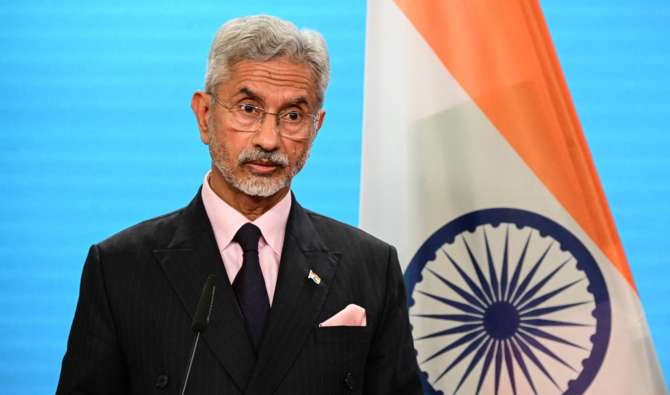
ISLAMABAD: Pakistan on Wednesday criticized Indian External Affairs Minister Subrahmanyam Jaishankar for “producing bellicose punchlines” after he made a series of statements during his visit to Brussels, accusing Islamabad of sponsoring “terrorism” and asserting New Delhi reserved the right to retaliate against militant attacks.
The comments come in the wake of a recent military standoff between the nuclear-armed neighbors, involving the exchange of fighter jets, drones, missiles and artillery fire. Both countries have since launched parallel diplomatic offensives, dispatching delegations to major world capitals to present their versions of events.
New Delhi suspended a longstanding river water-sharing treaty following a gun attack on tourists in Indian-administered Kashmir that it blamed on Pakistan. Islamabad denied any involvement, calling for an impartial international probe before India decided to launch missiles to target what it called was “terrorist infrastructure” in Pakistan.
A US-brokered ceasefire was announced by President Donald Trump on May 10, followed by Pakistan’s call for a “composite dialogue” with its neighboring state which New Delhi has so far resisted.
“Pakistan categorically rejects the irresponsible remarks made by the External Affairs Minister of India during different media engagements in Brussels,” the foreign office said in a strongly worded statement.
“The discourse of top diplomats should aim to promote peace and harmony, rather than producing bellicose punchlines,” it continued. “The tone and tenor of a Foreign Minister should be commensurate with his dignified status.”
The ministry accused India of waging a years-long “malicious campaign” aimed at misleading the global community with a “fictitious narrative of victimhood,” adding that such rhetoric cannot conceal what it described as India’s own “sponsorship of terrorism beyond its borders” or its “state-sanctioned oppression” in Indian-administered Jammu and Kashmir.
“India must also desist from concocting misleading narratives to justify its recent aggressive actions,” the statement said. “Pakistan believes in peaceful coexistence, dialogue and diplomacy. However, it stands resolute in its intent and ability to safeguard its sovereignty against any aggression, as exemplified by its robust response to India’s reckless strikes last month.”
Calling India’s recent remarks a sign of “sheer frustration” after what it termed an “unsuccessful military adventure,” Islamabad said Indian leaders should focus on improving the quality of their discourse rather than remaining “obsessed with Pakistan.”
“The history will judge not by who shouted the loudest but by who acted the wisest,” it added.


![]()

‘Bellicose punchlines’: Islamabad slams India’s top diplomat over anti-Pakistan remarks in Brussels
Short Url
https://arab.news/bqnha
‘Bellicose punchlines’: Islamabad slams India’s top diplomat over anti-Pakistan remarks in Brussels
- Subrahmanyam Jaishankar accused Pakistan of sponsoring ‘terrorism,’ asserted New Delhi’s right to retaliate
- Foreign office says India should raise the quality of its discourse instead of remaining ‘obsessed with Pakistan’
Latest updates


© 2026 SAUDI RESEARCH & PUBLISHING COMPANY, All Rights Reserved And subject to Terms of Use Agreement.