- Weeks after worst military confrontation in decades, India and Pakistan have dispatched top officials to press their cases in US, UK
- Head of Pakistani delegation meets with prominent UK-based Kashmiri leaders and senior British diplomats in London
ISLAMABAD: The head of an official delegation visiting world capitals to present Islamabad’s position following a recent military standoff with New Delhi met senior British officials and Kashmiri diaspora leaders in London this week, urging the UK to play a more active role in defusing tensions with India and restoring the suspended Indus Waters Treaty.
Pakistan and India have launched parallel diplomatic offensives in world capitals weeks after their worst military confrontation in decades last month saw the two nuclear-armed nations exchange missile, drone and artillery strikes until the US and other allies brokered a ceasefire on May 10. The Pakistan delegation is currently in London after visiting the United States and will go onwards to Brussels. Officials of both countries are lobbying for international support over the disputed region of Kashmir, which both countries rule in part but claim in full.
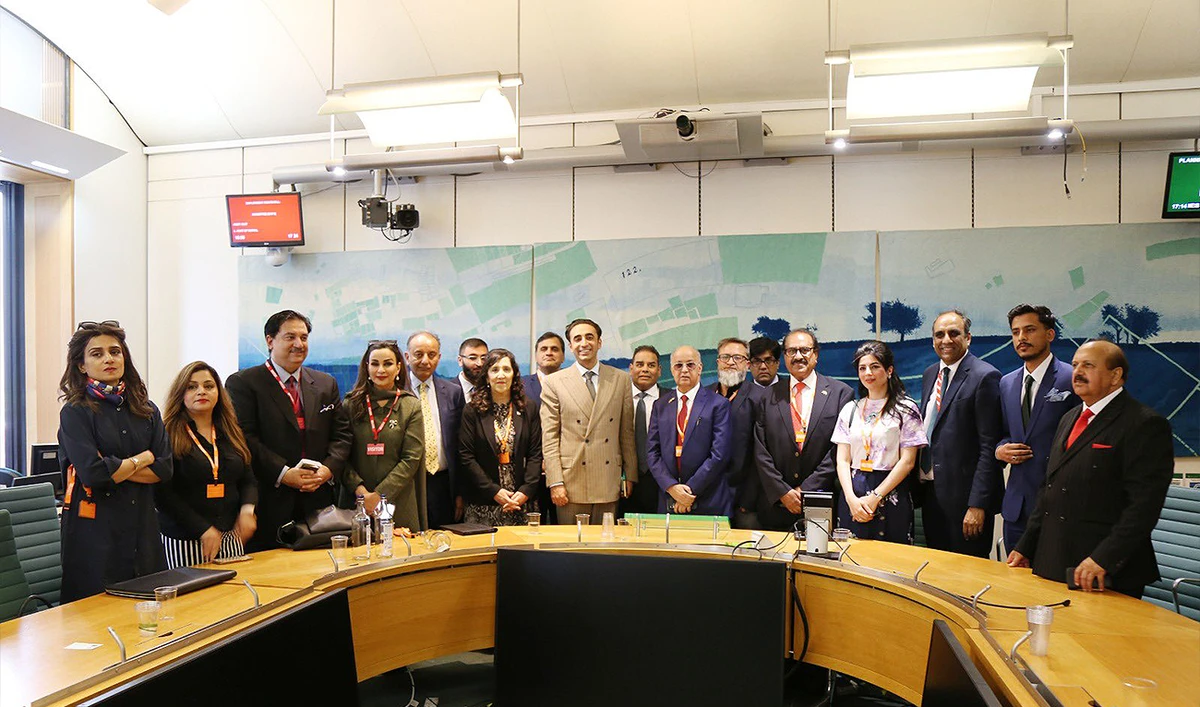
In London on Tuesday, Pakistan’s former foreign minister, who is heading the Pakistani delegation, met with prominent UK-based Kashmiri leaders and senior British diplomats, warning of the dangers of rising hostilities and accusing India of violating long-standing international agreements.
“The Jammu & Kashmir dispute remains the unfinished agenda of the United Nations and the unhealed wound of Partition,” Bhutto Zardari said in a post on X, formerly Twitter. “In all my interactions, Kashmir was central— its people’s inalienable right to self-determination under UNSC resolutions must be upheld.
He also accused India of “aggression, violations of sovereignty, and the illegal suspension of the Indus Waters Treaty,” saying the move endangered over 240 million lives in Pakistan and called for its immediate restoration.
Bhutto Zardari separately met with Christian Turner, former UK High Commissioner to Pakistan and now Britain’s incoming Permanent Representative to the United Nations, as part of Islamabad’s push to rally international diplomatic support.
“Welcomed the UK’s emphasis on diplomacy and dialogue, and encouraged its continued, constructive role in supporting de-escalation and encouraging dialogue for resolution of the Jammu & Kashmir dispute, the unfinished agenda of Partition and British legacy,” the Pakistani leader wrote following a luncheon hosted by Pakistan’s High Commission.
The Pakistani outreach coincides with a parallel tour by a senior Indian delegation led by opposition MP and former UN under-secretary Shashi Tharoor, who is lobbying Western allies to support New Delhi’s position that Kashmir is an internal matter and that Pakistan is stoking tensions for political ends. India also accuses Pakistan of backing separatist insurgents and the attacks they carry out, including one in April 22 which triggered the latest conflict. Islamabad denies the charges.
Pakistan has long maintained that Kashmir is a disputed territory under UN resolutions, while India insists the region’s status was settled after its full constitutional integration in August 2019, a move Pakistan continues to reject as illegal.
The standoff has also drawn concern over shared water resources, particularly the Indus Waters Treaty, a 1960 World Bank-brokered agreement seen as a rare example of cooperation between the two neighbors. Recent Indian actions to suspend the treaty and threaten to halt water flow into Pakistan have added to Islamabad’s grievances.
As tensions grow, both nations are leveraging historic ties with Western powers in an effort to shape the diplomatic narrative. In London, Bhutto Zardari reiterated the need for “restraint, immediate restoration of treaty obligations, and comprehensive dialogue to prevent conflict and secure lasting peace.”
The visits come ahead of a high-level UN session on South Asia later this month, where both Indian and Pakistani envoys are expected to present competing narratives.