

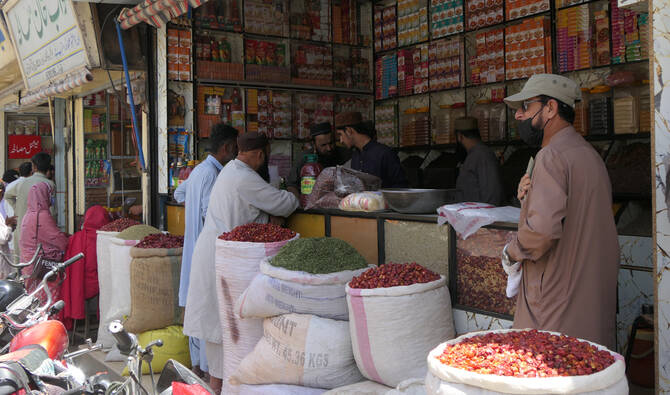

QUETTA: In the narrow, bustling lanes of a fresh produce market in the southwestern Pakistani city of Quetta, the air is thick with the sharp scent of spices - cardamom, black pepper, cumin, and garlic - heralding the arrival of Eid Al-Adha, a time when food becomes a centerpiece of celebration and sacrifice.
At the heart of the activity is Haji Shair Ali, a 41-year-old spice merchant, carefully measuring out mounds of herbs and seasonings with practiced precision. Armed with a metal scoop and a timeworn grinder, he blends his signature spice mixes for the most anticipated meals of the year: kebabs, rosh, biryani, and stews crafted from the meat of sacrificial animals.
“For us the season lasts all year but during Eid al-Adha, demand for spices increases, particularly for barbecue and Pashtun rosh [slow-cooked mutton or lamb] spices,” Ali told Arab News, smiling through the scent of cumin and cloves at his shop in Quetta's Sabzi Mandi.
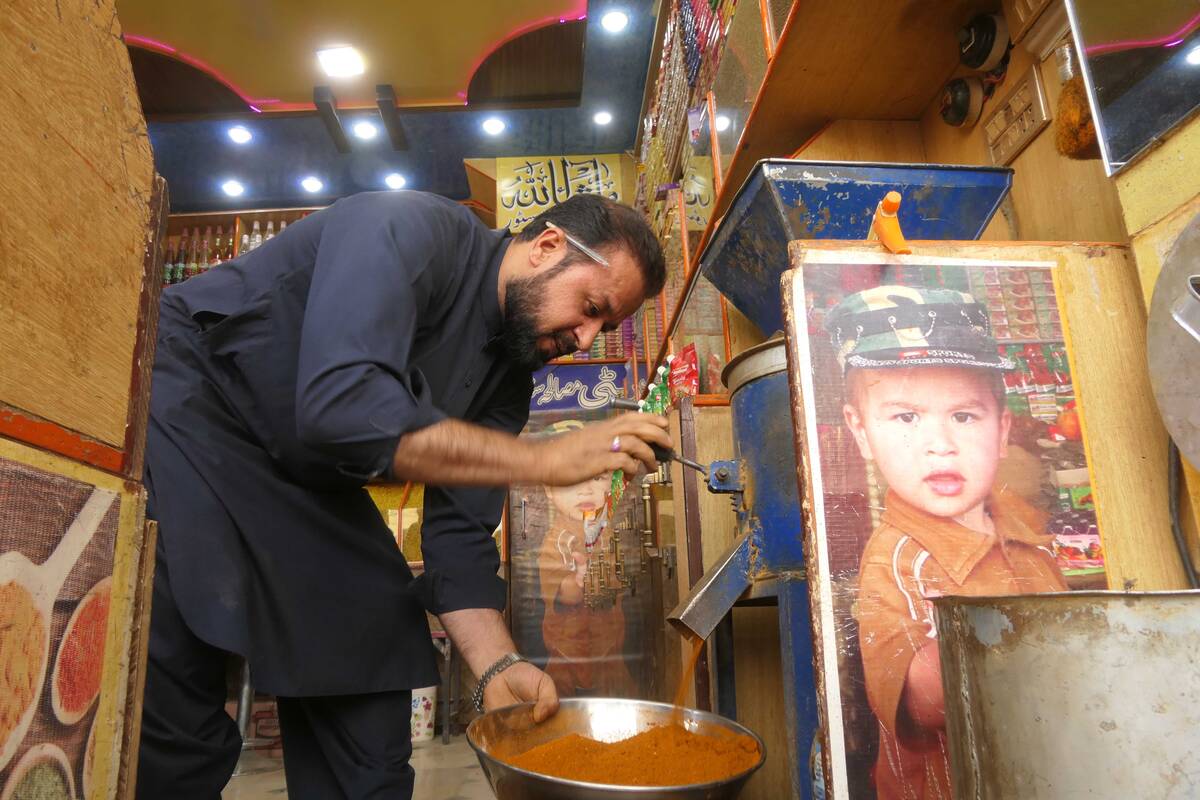
Haji Shair Ali operates the spice grinding machine in his shop in Quetta, Pakistan on June 1, 2025, during Arab News’ special coverage ahead of Eid Al-Adha. (AN Photo)
“Spices are the adornment of dining. If you cook meat without spices, it tastes bland. Thus, the dishes all depend on spices.”
In the weeks leading up to Eid, which will be observed in Pakistan on June 7 following the conclusion of the Hajj pilgrimage, Quetta’s spice trade sees a surge in activity. While much of the Sabzi Mandi is known for fresh fruits and vegetables, the spice vendors become the unsung heroes of the culinary celebrations, supplying the flavor base for feasts shared by families across the country.
Ali’s offerings include not just dry rubs and seasoning powders but also freshly made barbecue sauces, including a house specialty crafted with papaya and kachri, a spice made from wild melon that acts as a natural meat tenderizer.
“Along with kachri powder, we add black pepper, cumin, cinnamon, ginger, nutmeg, coriander and garlic,” Ali said, listing ingredients like a chemist revealing a secret formula.
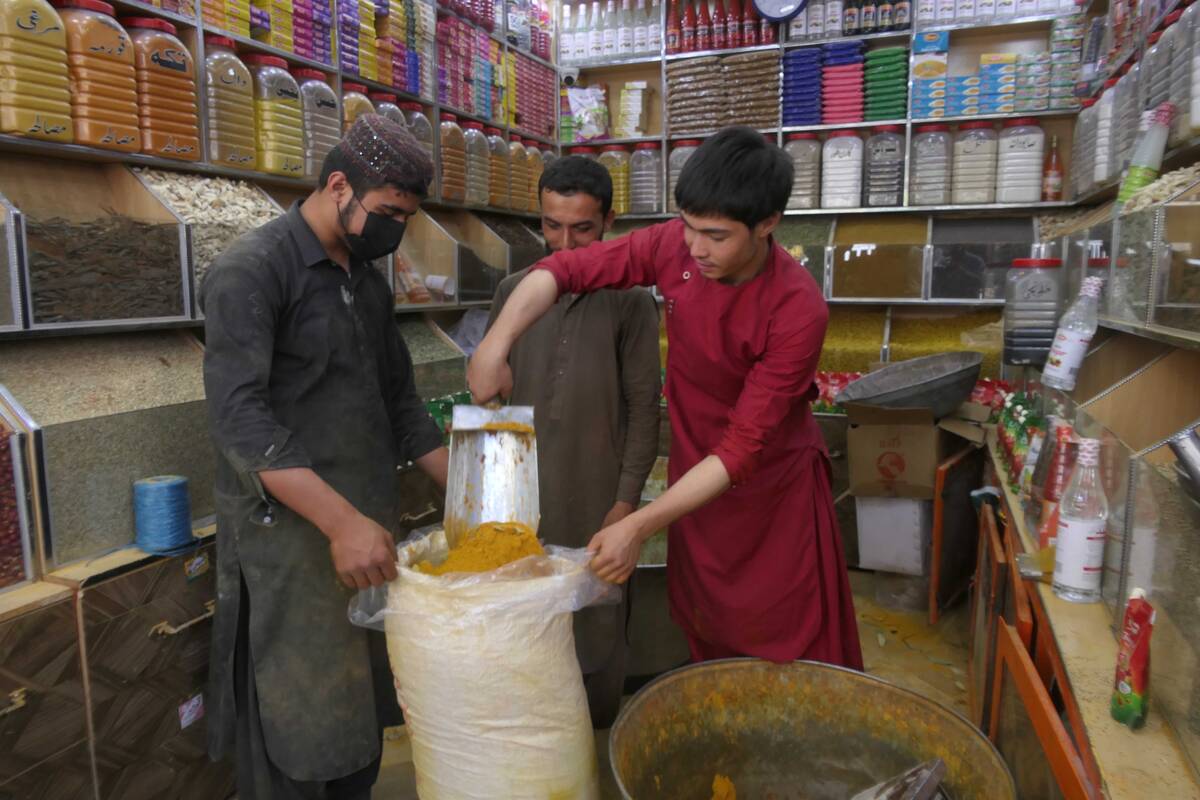
In this photo, taken on June 1, 2025, local spice makers prepare spices to stock for an upcoming Eid season in Quetta, during Arab News’ special coverage ahead of Eid Al-Adha. (AN Photo)
While local buyers continue to crowd the stalls, orders now pour in from across the country. Merchants say demand peaks from Balochistan’s interior as well as urban hubs in Punjab, Sindh, and Khyber Pakhtunkhwa and many spice shops now rely on online sales through social media pages to cater to a national customer base.
As the countdown to Eid continues, Quetta’s spice makers will remain at their grinders late into the night, ensuring every marinade and masala packet makes it to a family kitchen in time for the festival.
“I have prepared different spices for this Eid season, weighing more than 3,000 kgs because we have received many online orders from other cities,” Ali said. “During Eid al-Adha season, we work until midnight, even skipping meals. Ten people work in a single shop to prepare the spice orders in time.”
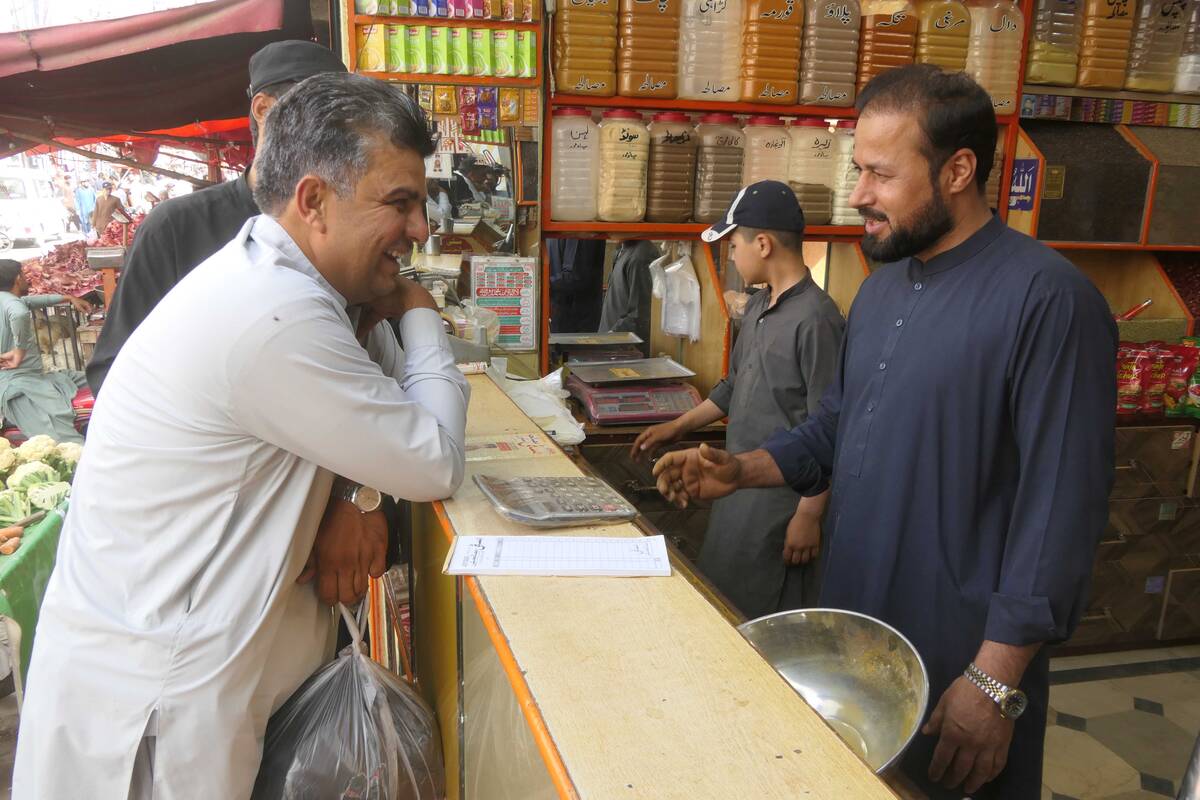
Haji Shair Ali speaks to a customer, Shaharyar Khan, about a custom spice order at his shop in Quetta, Pakistan on June 1, 2025, during Arab News’ special coverage ahead of Eid Al-Adha. (AN Photo)
Customers like Shaharyar Khan, who was stocking up for a backyard Eid barbecue, said the quality during Eid was noticeably better.
“Normally it’s already good, but for Eid, they make it even better so the taste of the food is enhanced,” he said.
Despite the demand, rising prices have frustrated some buyers. Spice merchants attribute the cost increases to inflation, currency devaluation, and the rising prices of imported ingredients from countries like Vietnam, China, India, and Iran.
At the market this week, a kilo of barbecue spice sold for Rs950 ($3.38), up from Rs900 last year, while biryani spice mix was priced at around Rs1,400 ($4.98). Curry blends were going for approximately Rs1,200 ($4.27) per packet.
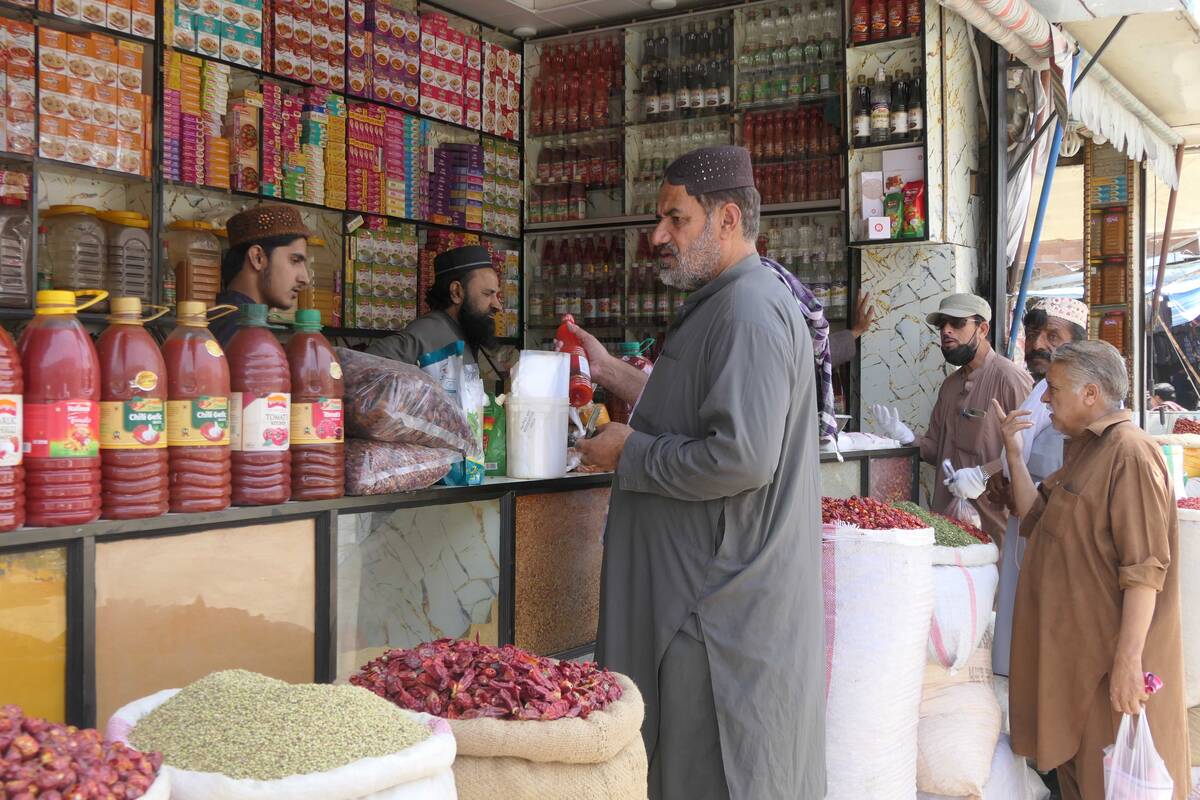
This photo, taken on June 1, 2025, shows general view of people gather at the spice market in Quetta, Pakistan, during Arab News’ special coverage ahead of Eid Al-Adha. (AN Photo)
Still, many say the higher cost was worth it for the quality.
“Last year I bought one kilogram of barbecue spice for Rs900 and this year, it is for Rs950,” said Haji Ajmal, a customer from Kuchlak city near Quetta.
“It’s not a big difference if you compare it to the flavor you get.”


