

KSrelief expands aid efforts across 4 nations

1 / 5
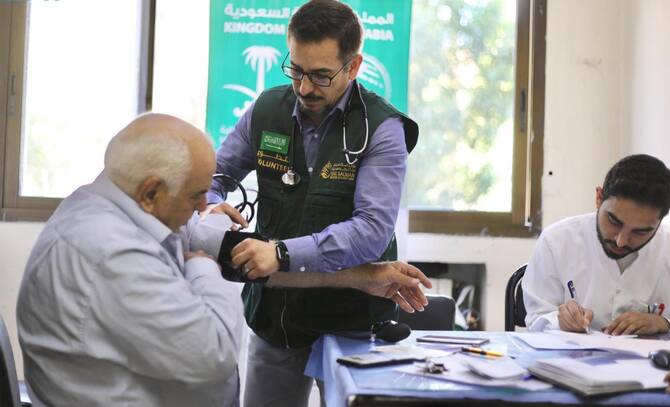
KSrelief completes specialized voluntary medical projects in Damascus, Syria. (SPA)
2 / 5
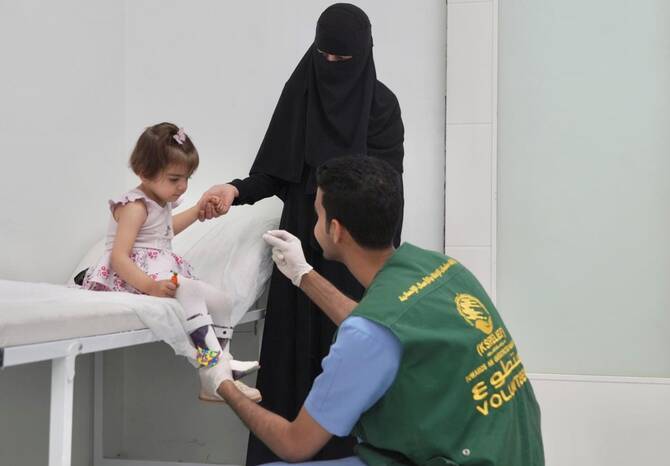
Supported by KSrelief, the Prosthetics Center in Hatay, Turkiye, provides services to beneficiaries with limb loss. (SPA)
3 / 5
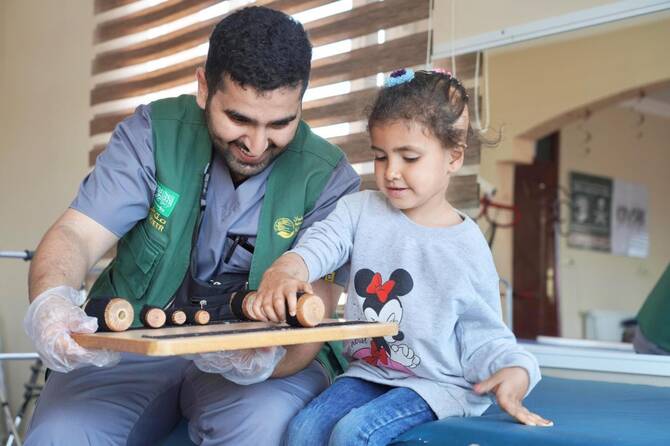
Supported by KSrelief, the Prosthetics Center in Hatay, Turkiye, provides services to beneficiaries with limb loss. (SPA)
4 / 5
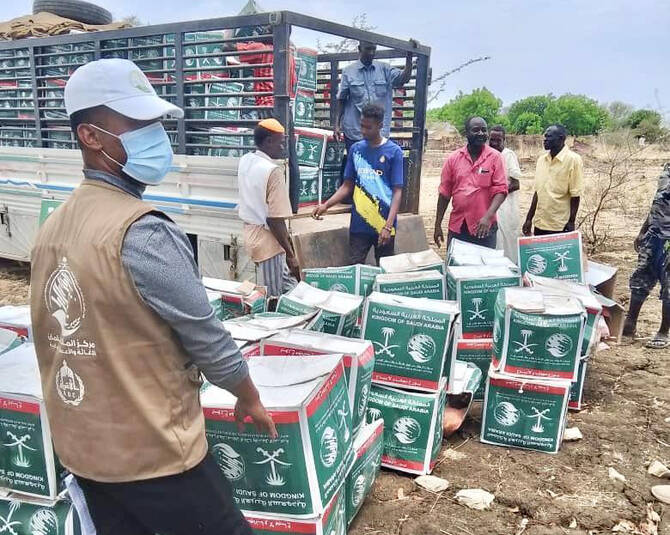
KSrelief distributed 825 food parcels in Blue Nile State in Sudan. (SPA)
5 / 5
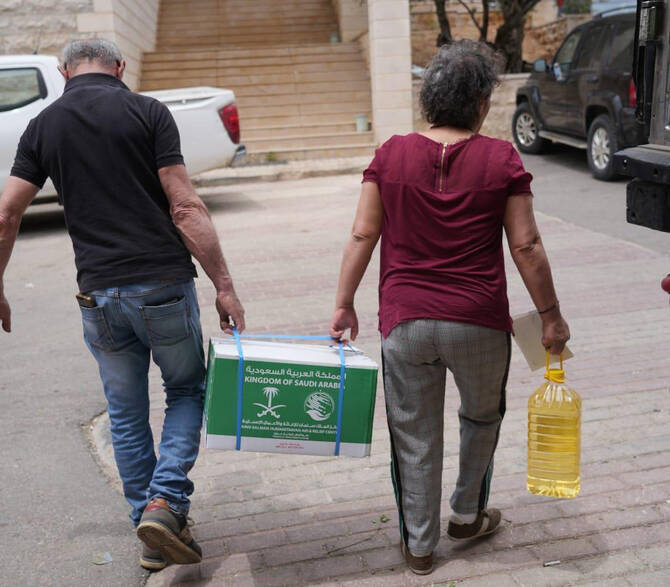
Some 1,020 food parcels were distributed across several governorates in Lebanon. (SPA)
Short Url
Updated 02 June 2025
Follow

KSrelief expands aid efforts across 4 nations

RIYADH: The Saudi aid agency KSrelief continues to make a significant global impact by providing critical assistance to some of the world’s most vulnerable communities.

The organization has concluded several medical projects in Damascus in the Syrian Arab Republic after offering specialized surgeries across various fields to 1,539 individuals.

The 10-day campaign included pediatric and adult cardiac surgery, cardiac catheterization, general surgery, deformity and plastic surgery, and specialized clinics.

The KSrelief-supported Prosthetics and Rehabilitation Center in Hatay province in Turkiye provided medical services to 169 amputee beneficiaries in the course of one month.

This support is part of the Kingdom’s broader humanitarian efforts to strengthen health systems and ease the suffering of those in need.

KSrelief also distributed 825 food baskets in Blue Nile State in Sudan, aiding 3,986 individuals in a single day.

Some 1,020 food baskets were distributed across several governorates in Lebanon, helping 5,100 people.

Since its launch in May 2015, KSrelief has implemented 3,438 projects worth more than $7.9 billion in 107 countries, in partnership with more than 318 organizations.


Tech executive highlights importance of localizing Saudi Arabia’s AI infrastructure

Updated 8 sec ago
Follow

Tech executive highlights importance of localizing Saudi Arabia’s AI infrastructure

  • Lawrence Yu: Our investment in Saudi Arabia is built around concrete commitments, such as $2 billion strategic investment from Alat
  • Lawrence Yu: If your data centers, servers, and equipment are built and operated in Saudi Arabia, your AI remains yours. It’s secure, inspectable, and fully under local control

RIYADH: Artificial intelligence and data sovereignty took center stage at a Riyadh event on Tuesday, highlighting Saudi Arabia’s push toward locally built digital infrastructure.

Lawrence Yu, head of MEA regional headquarters Saudi Arabia, told Arab News at Lenovo Tech World that the company’s expansion in the Kingdom is supported by long‑term commitments focused on localization and capability building.

The headquarters will be located in Al-Majdoul Tower in Riyadh.

“Our investment in Saudi Arabia is built around concrete commitments, such as $2 billion strategic investment from Alat,” Yu said.

He added that this includes the hiring and training of 100 Saudi engineers, and the launch of a first‑of‑its‑kind manufacturing facility scheduled to open in mid‑2026.

“If your data centers, servers, and equipment are built and operated in Saudi Arabia, your AI remains yours. It’s secure, inspectable, and fully under local control.”

Yu said localizing AI infrastructure is increasingly important as governments and enterprises seek greater ownership of sensitive data and national digital systems.

These initiatives underpin the establishment of Lenovo’s regional headquarters in Riyadh, which will oversee operations across the Middle East and Africa.

Yu added that beyond infrastructure, Saudi Arabia is being positioned as a producer rather than a consumer of advanced technology, helping reshape what “Made in Saudi” represents globally.

“Saudi Arabia should be known for designing, creating and producing world‑class technology,” Yu said.

“When people use a product made here, by Saudi nationals, it changes the perception of the country.”

A central theme of Lenovo Tech World was AI readiness, particularly the need for physical infrastructure capable of supporting large‑scale deployment across government and enterprise sectors.

Yu said that while AI is often discussed in terms of software, its success ultimately depends on advanced hardware that can keep pace with rapid technological change.

“AI does not just work on its own. It needs hardware, and that hardware must continuously evolve with the technology,” he said.

Reliance on outdated or externally hosted infrastructure can limit performance, security, and long‑term sustainability, added Yu.

Locally available infrastructure allows organizations to upgrade systems faster, operate at scale, and retain control over critical workloads.

Producing AI-ready PCs and AI-ready servers in the Kingdom supports Saudi Arabia’s ambition to build sovereign AI capabilities and ensures that national AI initiatives are powered by future-ready infrastructure aligned with Vision 2030.

Yu said collaboration with the Ministry of Investment and Alat has been instrumental in enabling localization and alignment with national priorities.

Lenovo’s upcoming factory in the Special Integrated Logistics Zone near King Khalid International Airport is expected to open in mid‑2026 and will support advanced manufacturing and AI‑ready infrastructure development in the Kingdom.

Reflecting on Saudi Arabia’s technology transformation, Yu said long‑term success depends on clear strategy, strong partnerships, and disciplined execution.

“To make Vision 2030 real, you need strategy, trusted partners, and execution,” Yu said.