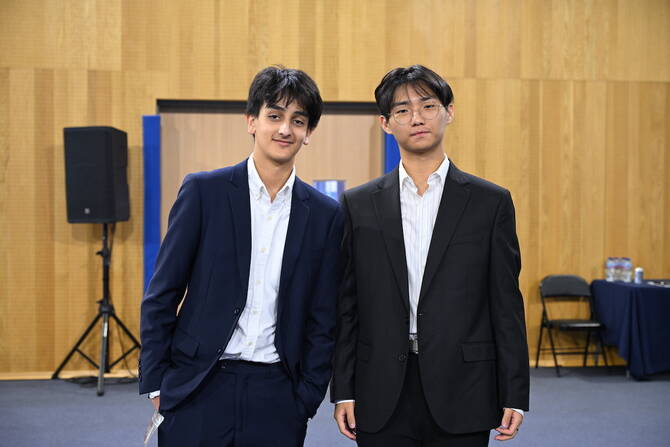



DHAHRAN: Two years ago, when freshmen Jungho Kang and Raahim Lone met during a group math project at the American School Dhahran, they quickly bonded over a shared love of STEM (science, technology, engineering and mathematics) — and the realization that they wanted to be part of a science-centric competitive space.
But as non-Saudis in the Kingdom, no such space existed for them. So, they built one from scratch.
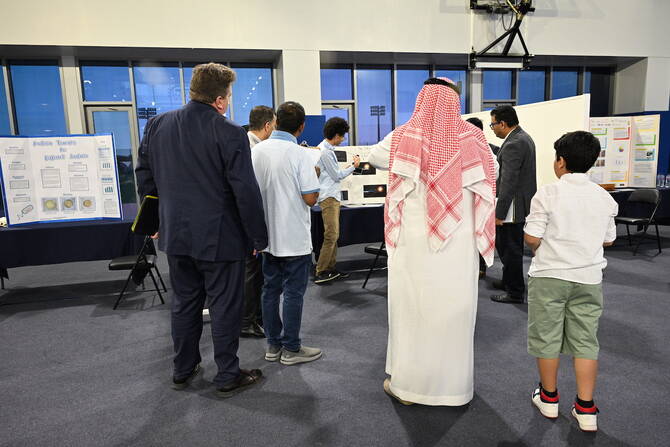
Now in 10th grade, the two co-founded SANES (Saudi Arabian National Engineering Symposium), a new, student-led one-day science fair that took place for the first time on Saturday at their school.
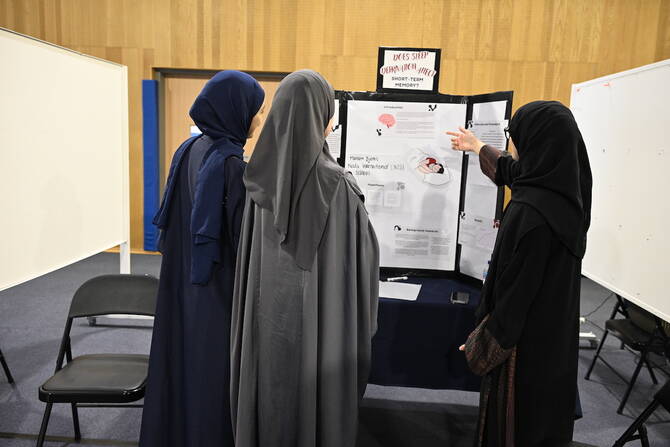
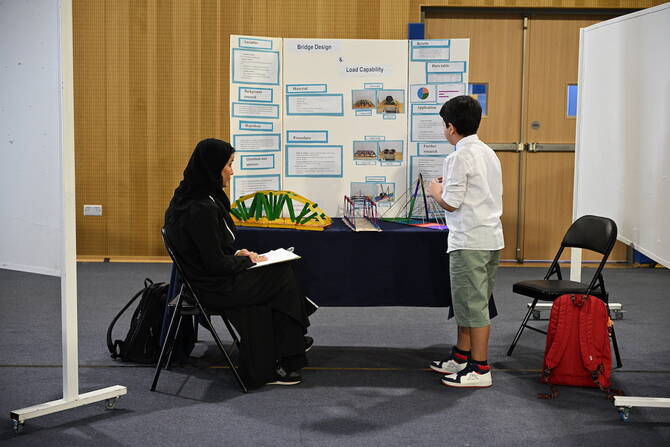
What began as an ambitious idea between classmates has since grown into a dynamic, Eastern Province-wide event that welcomed more than 60 participants from more than seven schools.
Lone, who moved to Saudi Arabia from Canada two years ago, said it took time to adjust to his new home — but building SANES with Kang has helped him find his footing.
Living in the same compound made collaboration easy. They found a sweet spot near their homes where they would regularly meet to brainstorm and plan the fair before heading home. It became their unofficial HQ.
They spent countless evenings after school refining their vision. “We spent freshman year working on it. I think this year it’s been more consistent so I guess you could say we’ve been working on it for two years, but we’ve actually been really working on it for one,” Lone told Arab News with a laugh.
From the start, their goal was clear: give all students living in the Kingdom — Saudi and non-Saudi — a chance to present their ideas, gain feedback, and learn from professionals.
“I really hope that every contestant just takes away something good and I hope they can learn something from these judges because we got really good judges — they’re all really experienced — and just presenting and communicating their ideas because that was our main goal from the very beginning,” Kang told Arab News.
The event featured two rounds of judging, with a panel made up of local and international experts.
Kang and Lone ensured the evaluation process was impartial, with teachers helping them filter initial submissions before handing them over to the judges.
They did not judge the final projects themselves but trusted the panel of experts to do the evaluating.
Behind the scenes, organizing SANES felt a bit like launching a startup, Lone said.
“We started cold emailing all organizations — universities, companies, organizations — we even got so far as having online pitches with some organizations, but that never really came into fruition.
“So then we kind of turned into our ISG school group when our teachers found out that we were doing such things, and our old superintendent brought us in for a meeting.”
With support from the International Schools Group, which runs five schools in the Eastern Province, the students booked their school campus as the venue, secured snacks, and assembled an impressive judging lineup.
First place went to students from British School Dhahran, while ISG Dammam students claimed second and third.
Kang, originally from South Korea, has lived in the Kingdom since he was four. He is especially drawn to mathematical research and is passionate about expanding access to science education. He co-founded SANES “to help students across KSA engage more freely in scientific research.”
When they started high school, they wanted to join a science fair but found they were not eligible for the Saudi competitions nor the international ones. So they made their own.
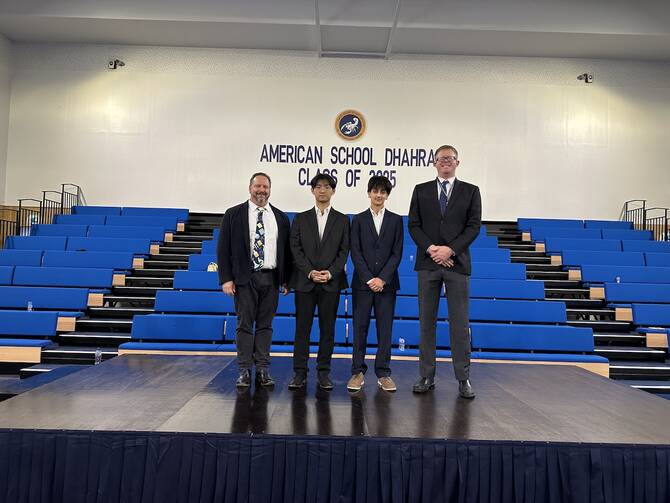
Hans Ott, director of teaching and learning at ISG, praised the initiative. “What’s exciting about today is that it was started by two of our students.”
“When they were 14, 15-year-old students, they said ‘we want a STEM competition in Saudi Arabia.’
“And they created an inclusive environment where international students, Saudi students — anyone in the Kingdom — had a place to showcase their talent and love and passion for STEM.”
Assistant principal Will McConnell, who helped mentor the students through the process, was especially proud. “The journey has been both inspiring and instructive. SANES began as a student-led vision, and watching it come to life has been one of the most rewarding experiences of my career,” McConnell told Arab News.
“If students walk away feeling inspired, seen and empowered to pursue science and engineering further, then we’ve succeeded,” McConnell added.
Superintendent Rhonda Norris echoed his words. “Success from my perspective has already occurred. Our students had a vision based on their passion and interests and through the support of the leadership team and our community, they brought it to fruition.
“We are proud of these young men and what they have accomplished today,” she said.
As for Kang and Lone? They are already thinking about what comes next. They hope to have the chance to go to college in the US, but in the meantime, with two more years of high school ahead, they are not slowing down — creating opportunities not only for themselves, but for their fellow students. They have already promised to “continue after we graduate, too.”