

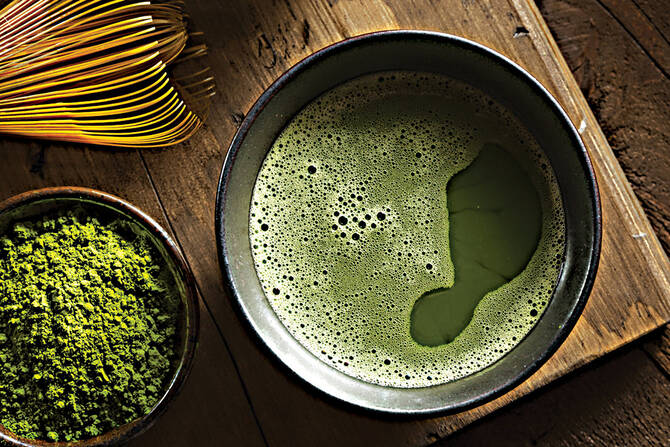

RIYADH: Once reserved for Japan’s sacred tea ceremonies, matcha has become a global sensation, infusing everything from lattes and desserts to skincare routines. Now, it is entering the Middle East, where coffee has long held cultural and culinary dominance.
Matcha’s rise in the MENA region is driven by health-conscious millennials, social media-friendly cafe culture, and a booming fitness scene. With its high antioxidant content, clean caffeine boost, and vibrant green hue, it’s quickly become a favorite among wellness enthusiasts.
But can it compete with the deeply ingrained coffee rituals of the Arab world, where coffee and espresso are daily staples?
The economic landscape: Aligning with Vision 2030
As part of its ambitious Vision 2030 initiative, Saudi Arabia is actively working to diversify its economy and reduce its long-standing reliance on oil revenues. Central to this transformation is the food and beverage sector, which has emerged as a key driver of economic growth.
In 2022, the food and agriculture sector contributed approximately SR100 billion ($26.6 billion) to the Kingdom’s gross domestic product, the highest on record.
The government aims to attract $20 billion in investments into the food industry by 2035, focusing on enhancing food security and broader economic sustainability.
Supporting this momentum is the “Made in Saudi” initiative, launched in 2021 to boost domestic production and services. One of its core goals is to raise the non-oil sector’s contribution to gross domestic product from 16 percent to 50 percent by 2030, making room for innovative products and emerging markets, including health-focused offerings like matcha.
A growing opportunity: the regional matcha market
This strategic shift aligns well with the rising demand for functional foods and beverages across the region. In the Middle East and Africa region, the matcha market is experiencing steady growth, signaling a strong opportunity for Saudi Arabia to enter a promising space.
In 2023, the MEA matcha market generated approximately $86.1 million in revenue, and projections estimate it will grow to $110.7 million by 2030, reflecting a compound annual growth rate of 3.6 percent.
Notably, ceremonial grade matcha, the highest quality used in traditional preparation, is currently the top revenue-generating segment and is expected to see the fastest growth, underscoring the premium positioning of matcha and consumer interest in wellness-driven, culturally rich products.
Matcha vs. coffee: A nutritional and cultural perspective
To better understand matcha’s potential in the Middle East, licensed Lebanese dietitian Reem Harb compared it to coffee in terms of health benefits, energy effects, and cultural fit.
A shade-grown green tea consumed in powdered form, matcha boasts superior levels of phytochemicals like chlorophyll and quercetin, as well as antioxidants such as epigallocatechin gallate, compared to other green teas. However, its caffeine content sits between traditional green tea and coffee.
Unlike coffee, matcha provides a gentler energy boost without a crash. “This is due to the presence of L-theanine, an amino acid that interacts with caffeine to improve cognitive function and energy levels,” Harb said in an interview with Arab News.

Ceremonial matcha is often used for lattes or smoothies due to its perceived health benefits, but this reduces availability for traditional preparations.
Simona Suzuki, president of the Global Japanese Tea Association
The Middle East’s coffee culture is deeply rooted in tradition, from Turkish coffee ceremonies to the social ritual of sharing Arabic coffee. With its earthy and slightly bitter taste, Matcha may initially clash with regional preferences for sweet, aromatic beverages.
However, Harb believed matcha could complement traditional diets if introduced thoughtfully. “Matcha lattes can be a healthier alternative to sugary drinks, especially when prepared without added syrups. Alternating between Arabic coffee and matcha could diversify beverage choices while preserving cultural experiences,” she suggested.
From Kyoto to the MENA: Matcha’s Global Surge
While matcha’s health benefits make it appealing, its journey from Japanese tea fields to Middle Eastern cafes hasn’t been without challenges.
Japan’s matcha industry has seen production nearly triple since 2010, with exports soaring as global demand skyrockets.
This surge in demand, however, has sparked concerns about shortages, prompting renowned Kyoto tea houses like Ippodo and Marukyu Koyamaen to impose purchase limits last year. Social media buzz and the rising demand for functional foods have turned matcha into a must-have trend that Middle Eastern cafes and startups are racing to meet.
Speaking with Arab News, Simona Suzuki, president of the Global Japanese Tea Association, said: “While matcha production in Japan is increasing, it remains relatively limited in scale ... Global demand has surged dramatically, leading to shortages in Japan.”
The rapid growth has strained supply chains, and Suzuki noted it may take time for production to catch up. She also emphasized the importance of using matcha appropriately: “Ceremonial matcha is often used for lattes or smoothies due to its perceived health benefits, but this reduces availability for traditional preparations.”
In Dubai, Abu Dhabi, and Riyadh, specialty cafes now offer matcha lattes alongside traditional karak chai, while local brands experiment with regional twists like matcha-infused dates or cardamom-dusted matcha desserts.
Importing high-grade matcha, however, which relies on specific Japanese tea plant varieties like samidori and yabukita, is costly and logistically complex.
Suzuki encouraged businesses to build direct relationships with producers: “We strongly encourage visiting Japan to connect with tea growers and gain a deeper understanding of cultivation and processing.”
In 2024, THE MATCHA TOKYO, a Japanese organic matcha brand, made its Gulf Cooperation Council debut with a beachside cafe in Dubai. The brand chose Dubai due to the strong presence of Emirati customers at its Tokyo outlets. Beyond Japan and the GCC, THE MATCHA TOKYO has expanded across Asia, with locations in Hong Kong, the Philippines, Bangkok, and Shanghai.
Suzuki remained optimistic about the future of Japanese teas in the region, stating that while matcha is popular, the Global Japanese Tea Association is passionate about introducing the full spectrum of authentic Japanese teas, including sencha, gyokuro, hojicha, and wakocha, to the world.
As Middle Eastern consumers increasingly prioritize wellness while staying rooted in tradition, matcha isn’t replacing coffee, but it’s carving out a lasting niche of its own.


