UNITED NATIONS: The United States told the UN Security Council on Thursday that its proposal for a ceasefire in Ukraine was “Russia’s best possible outcome” and President Vladimir Putin should take the deal.
The United States wants Russia to agree to a comprehensive 30-day land, air, sea and critical infrastructure ceasefire. A first round of direct talks between Russia and Ukraine on May 16 failed to reach an agreement on a ceasefire — which Moscow has said is impossible to achieve before certain conditions are met.
“We want to work with Russia, including on this peace initiative and an economic package. There is no military solution to this conflict,” Acting Deputy US Ambassador John Kelley told the Security Council. “The deal on offer now is Russia’s best possible outcome. President Putin should take the deal.”
US President Donald Trump began his second term in January vowing to swiftly end Russia’s three-year-old war in Ukraine. Kelley said the first US step was to put forward a proposal for an immediate, unconditional and comprehensive ceasefire, which had been accepted by Ukraine, pending Russia’s agreement.
“Since then, we have been urging Russia to accept a ceasefire,” he said.
“If Russia makes the wrong decision to continue this catastrophic war, the United States will have to consider stepping back from our negotiation efforts to end this conflict,” he warned, adding that Washington could also impose further sanctions on Russia.
Kelley said that after Trump and Putin spoke by phone last week, Russia was now expected to provide a term sheet broadly outlining its vision for a ceasefire in the conflict, which began when Moscow invaded its neighbor in February 2022.
“We will judge Russia’s seriousness toward ending the war, not only by the contents of that term sheet, but more importantly, by Russia’s actions,” said Kelley, condemning Russia’s recent attacks on Ukraine as not demonstrating “a desire for peace.”
Russian Foreign Minister Sergei Lavrov said on Wednesday that Moscow had drafted a memorandum outlining a settlement position in the Ukraine war. But Ukraine said Moscow has not yet shared its proposal.
Russia’s UN Ambassador Vassily Nebenzia said Moscow intended to continue serious, direct negotiations with Ukraine. Russia has suggested a second round of direct talks take place on Monday in Istanbul.
“The ball is in Ukraine’s court: either talks, followed by peace, or the unavoidable defeat of Ukraine on the battlefield with different conditions for the conflict’s end,” Nebenzia told the Security Council.
Ukraine’s Deputy UN Ambassador Khrystyna Hayovyshyn said Russia was “not signaling any genuine intention to stop its war” and urged countries to impose stronger sanctions on Moscow.
“Ukraine has consistently demonstrated commitment to diplomacy and remains open to any format that can yield tangible results,” she said, but added that Kyiv would never recognize Russia’s claim to any occupied Ukrainian territory.
“We will not tolerate interference in sovereign decisions, including our defense or alliances. There must be no appeasement of the aggressor. Such attempts only embolden future aggression,” Hayovyshyn told the council.


At UN Security Council, US urges Russia to take Ukraine ceasefire deal
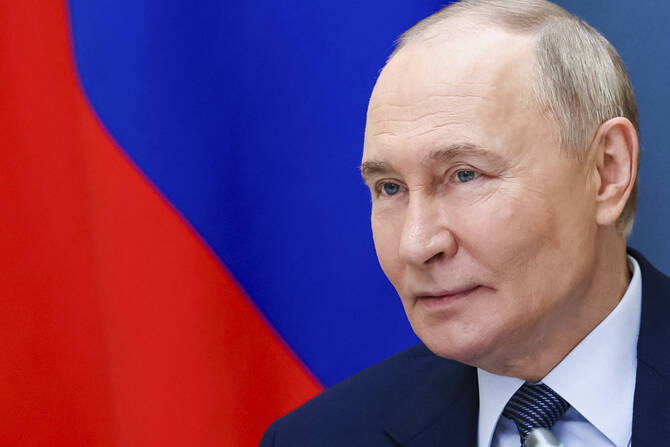
https://arab.news/ghgtn
At UN Security Council, US urges Russia to take Ukraine ceasefire deal

- Threatens to step back as mediator if Russia makes wrong choice
- Moscow responds that the ball is in Kyiv’s court now


Afghanistan says it thwarted Pakistani airstrike on Bagram Air Base as fighting enters fourth day
- The fighting has been the most severe between the neighbors for years
- Pakistan accuses Taliban government of harboring militant groups that stage attacks against it
KABUL: Afghanistan thwarted attempted airstrikes on Bagram Air Base, the former US military base north of Kabul, authorities said Sunday, while cross-border fighting between Pakistan and Afghanistan stretched into a fourth day.
The fighting has been the most severe between the neighbors for years, with Pakistan declaring that it’s in “open war” with Afghanistan.
The conflict has alarmed the international community, particularly as the area is one where other militant organizations, including Al-Qaeda and the Daesh group, still have a presence and have been trying to resurface.
Pakistan accuses Afghanistan’s Taliban government of harboring militant groups that stage attacks against it and also of allying with its archrival India.
Border clashes in October killed dozens of soldiers, civilians and suspected militants until a Qatari-mediated ceasefire ended the intense fighting. But several rounds of peace talks in Turkiye in November failed to produce a lasting agreement, and the two sides have occasionally traded fire since then.
On Sunday, the police headquarters of Parwan province, where Bagram is located, said in a statement that several Pakistani military jets had entered Afghan airspace “and attempted to bomb Bagram Air Base” at around 5 a.m.
The statement said Afghan forces responded with “anti-aircraft and missile defense systems” and had managed to thwart the attack.
There was no immediate response from Pakistan’s military or government regarding Kabul’s claim of attempted airstrikes on Bagram or the ongoing fighting.
Bagram was the United States’ largest military base in Afghanistan. It was taken over by the Taliban as they swept across the country and took control in the wake of the chaotic US withdrawal from the country in 2021. Last year, US President Donald Trump suggested he wanted to reestablish a US presence at the base.
The current fighting began when Afghanistan launched a broad cross-border attack on Thursday night, saying it was in retaliation for Pakistani airstrikes the previous Sunday.
Pakistan had said its airstrike had targeted the outlawed Pakistani Taliban, also known as Tehreek-e-Taliban Pakistan, or TTP. Afghanistan had said only civilians were killed.
The TTP militant group, which is separate but closely allied with Afghanistan’s ruling Taliban, operates inside Pakistan, where it has been blamed for hundreds of deaths in bombings and other attacks over the years.
Pakistan accuses Afghanistan’s Taliban government of providing a safe haven within Afghanistan for the TTP, an accusation that Afghanistan denies.
After Thursday’s Afghan attack, Pakistani Defense Minister Khawaja Mohammad Asif declared that “our patience has now run out. Now it is open war between us.”
In the ongoing fighting, each side claims to have killed hundreds of the other side’s forces — and both governments put their own casualties at drastically lower numbers.
Two Pakistani security officials said that Pakistani ground forces were still in control on Sunday of a key Afghan post and a 32-square-kilometer area in the southern Zhob sector near Kandahar province, after having seized it during fighting Friday. The captured post and surrounding area remain under Pakistani control, they added. The officials spoke on condition of anonymity, because they weren’t authorized to speak publicly.
In Kabul, the Afghan government rejected Pakistan’s claims. Deputy government spokesman Hamdullah Fitrat called the reports “baseless.”
Afghan officials said that fighting had continued overnight and into Sunday in the border areas.
The police command spokesman for Nangarhar province, Said Tayyeb Hammad, said that anti-aircraft missiles were used from the provincial capital, Jalalabad, and surrounding areas on Pakistani fighter jets flying overhead Sunday morning.
Defense Ministry spokesman Enayatulah Khowarazmi said that Afghan forces had launched counterattacks with snipers across the border from Nangarhar, Paktia, Khost and Kandahar provinces overnight. He said that two Pakistani drones had been shot down and dozens of Pakistani soldiers had been killed.
Fitrat said that Pakistani drone attacks hit civilian homes in Nangarhar province late Saturday, killing a woman and a child, while mortar fire killed another civilian when it hit a home in Paktia province.
There was no immediate response to the claims from Pakistani officials.


