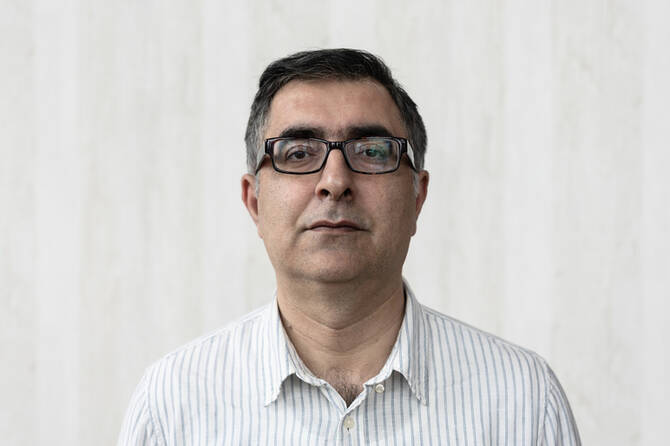
GENEVA: Four UN special rapporteurs on Monday demanded the release of Azerbaijani rights defender and climate advocate Anar Mammadli, who has been in detention for more than a year.
Mammadli was detained on April 29, 2024. His arrest was one of a series which critics said undermined Azerbaijan’s credibility as a host of the United Nations COP29 climate change conference in November last year.
Mammadli chaired the Election Monitoring and Democracy Studies Center, which reported irregularities during the February 2024 presidential elections in the tightly controlled, oil-rich nation.
His arrest also came after he participated in events at the UN Human Rights Council, the special rapporteurs said in a statement.
“Defending human rights should never be considered a crime,” the experts said.
“There are serious concerns that Mammadli’s detention and prosecution may be in retaliation for his human rights work and his engagement with UN mechanisms,” they said.
Mammadli risks up to eight years behind bars on smuggling charges, which rights groups claim are bogus.
“Civic participation, independent election monitoring, and cooperation with international mechanisms are the foundation of democratic societies,” the experts said.
“Criminalizing these activities undermines the rule of law.”
The statement was issued by the special rapporteurs on human rights defenders, on freedom of peaceful assembly, the right to freedom of opinion and on health.
They called on Azerbaijan to respect due process, guarantee Mammadli’s fundamental rights and provide him with appropriate medical care.
They also urged Baku to end all forms of intimidation against rights activists.
UN special rapporteurs are independent experts appointed by the Human Rights Council to report their findings. They do not speak for the United Nations itself.

UN experts urge release of Azerbaijani rights defender
https://arab.news/cj5gp
UN experts urge release of Azerbaijani rights defender
- Mammadli risks up to eight years behind bars on smuggling charges, which rights groups claim are bogus
Venezuela aims to boost oil output but sanctions stand in the way, VP says
- Sanchez called the recent capture of Nicolas Maduro a “dark day” for the country
DUBAI: Venezuela’s Vice President for Economy Calixto Ortega Sanchez said on Wednesday that his country needed vast foreign investment and sanctions relief to tap its huge oil reserves and restart its ailing economy.
“We know that the reference for Venezuela is that (it is) the country with the biggest oil reserves, and we want to stop being known for this, and we want to be known as one of the countries with the highest production levels,” Sanchez said.
Responding to questions by American journalist Tucker Carlson, Sanchez called the recent capture of Nicolas Maduro a “dark day” for the country but said Venezuela was working to reestablish a relationship with the US, which he described as a “natural partner” for the country.
“The Venezuelan people and authorities have shown that they are ready to peacefully move forward and to build opportunities,” he said during a session at the World Government Summit.
Sanchez, who headed Venezuela’s central bank, said the most pertinent issue facing his country is continued US sanctions.
Despite failing to result in regime change, the sanctions had effectively stifled the economy from growing, he added.
He said the Venezuelan government was now working to reform its laws to allow foreign investment and hoped the US would ease sanctions to aid their work.
“The first decisions that interim President Rodriguez took was to go to the National Assembly and ask for reform to the hydrocarbon law … this law will allow international investors to go to Venezuela with favorable conditions, with legal assurance of their investments,” he added.
“The economy is ready for investment. The economy is ready for the private sector; it is ready to build up a better future for the Venezuelan people.”
Sanchez played down inferences by Carlson that his government had been taken over, insisting that the regime still held authority in the country. He said the country had set up two funds to receive money from oil production that would fund better welfare and social conditions for Venezuelans.
“Allow us to have access to our own assets … we don’t have access to our own money,” he added.
“If you allow us to function like a regular country, Venezuela will show extraordinary improvement and growth.”


