

Over 1,245 wild animals resettled so far in Saudi Arabia’s largest natural reserve

1 / 5
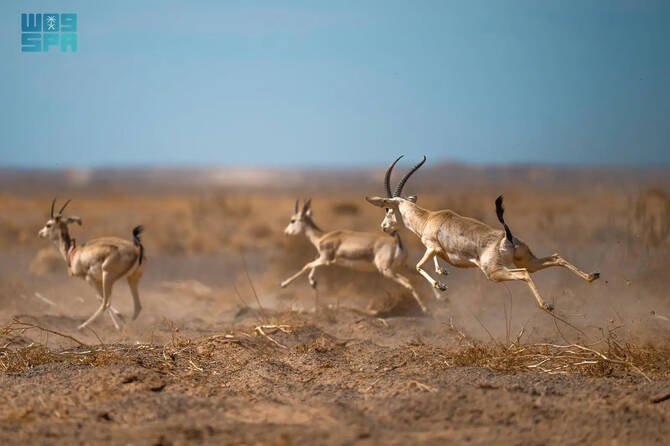
KSRNR is home to over 350 species of various mammals, reptiles, and amphibians. (SPA)
2 / 5
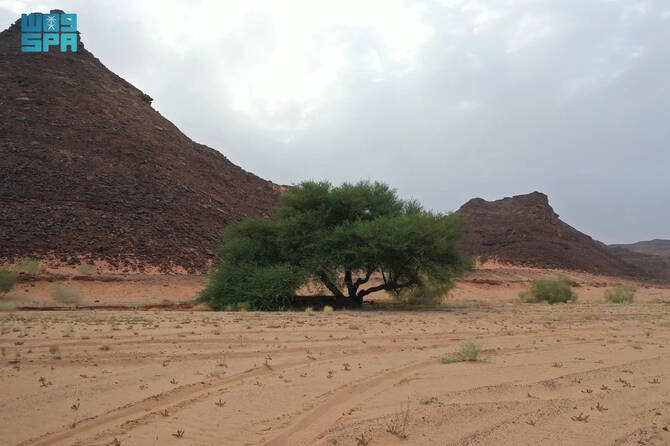
KSRNR boasts more than 550 types of wild and grazing plants. (SPA photo)
3 / 5
KSRNR is home to over 350 species of various mammals, reptiles, and amphibians. (SPA)
4 / 5
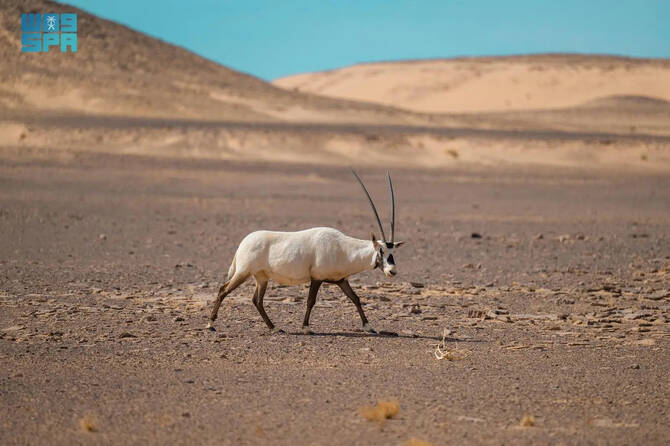
KSRNR is home to over 350 species of various mammals, reptiles, and amphibians. (SPA)
5 / 5
KSRNR is home to over 350 species of various mammals, reptiles, and amphibians. (SPA)
Short Url
Updated 25 May 2025
Follow

Over 1,245 wild animals resettled so far in Saudi Arabia’s largest natural reserve

  • More than 120 wildlife births also recorded at King Salman bin Abdulaziz Royal Natural Reserve

TURAIF: Saudi Arabia’s largest wildlife park, the King Salman bin Abdulaziz Royal Natural Reserve, has so far resettled more than 1,245 wild animals, according to the Saudi Press Agency.

The reserve has also recorded more than 120 births among its wildlife, SPA reported, citing KSRNR Development Authority records as it marked International Day for Biological Diversity on May 22.

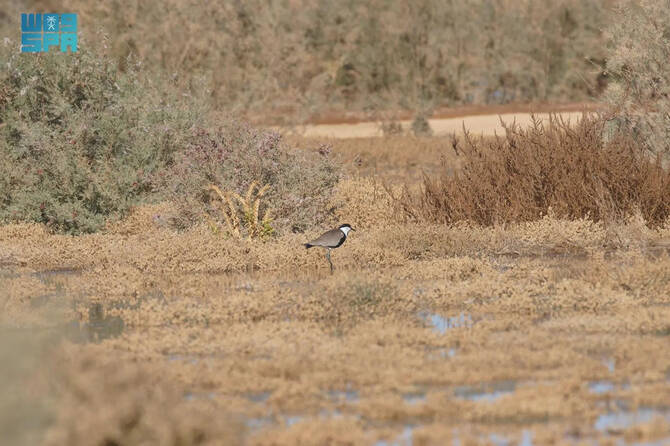
Situated in the Kingdom’s north, the reserve is home to more than 290 species of migratory birds, more than 550 types of wild and grazing plants, and over 350 species of various mammals, reptiles and amphibians.


KSRNR is home to over 290 species of migratory birds. (SPA photo)

Among these animals are the rare Arabian gazelle, the Arabian oryx, and the kestrel, a medium-sized bird of prey.

KSRNR covers an area of 130,000 sq. kilometers, spanning the provinces of Hail, Tabuk, Al-Jouf, and the Northern Borders.


Map of King Salman bin Abdulaziz Royal Natural Reserve. (Courtesy of KSRNR)

The reserve features a range of physical geography, consisting of 14 geographic formations of mountains, plains, and plateaus, and rare monuments dating back to about 8,000 BC.

Also within the reserve are towns such as Al-Qurayyat and Tubarjal in Al-Jouf and Turaif in the Northern Borders.

The authority said the reserve is dedicated to preserving unique natural habitats, forming a haven for wildlife, a crucial stopover for migratory birds each year, and a natural sanctuary with its balanced environment and diverse landscapes.

Since its inception, the authority has focused on raising environmental awareness in the local community to bolster its conservation efforts.


Citizens participate in the KSRNR's vegetation program as part of the national effort make the Kingdom greener and combat desertification. (SPA photo)

Last year, the KSRNR authority reported having planted more than 2,400,000 seedlings, rehabilitated 700,000 hectares, removed 119 tonnes of hazardous waste, and scattered four tonnes of local seeds in the reserve.

The voluntary seed-scattering initiative covered six valleys on reserve territory, including Nayal Valley of Niall Shuaib Abu Talihat, Fager Valley, Shaib Al-Qilayyib, Sarbout Plath, Mot and Masaha valleys.

“The two-month initiative aims to develop vegetation and increase the green area of the reserve, with the participation of several voluntary associations and volunteers, by scattering an estimated four tons of seeds,” the authority posted on its website.


Saudi Arabia welcomes ceasefire agreement between Syrian Democratic Forces and Syria state

Updated 8 sec ago
Follow

Saudi Arabia welcomes ceasefire agreement between Syrian Democratic Forces and Syria state

RIYADH: Saudi Arabia has welcomed an agreement between the Syrian state and Syrian Democratic Forces.
In a foreign ministry statement early on Monday, the Kingdom said it had welcomed an deal between Damascus and Kurdish Syrian Democratic Forces that was announced by the Syrian government on Sunday.
The agreement entails merging all SDF forces into the defense and interior ministries and means that Kurdish forces will redeploy to east of the Euphrates river.
The 14-point deal would also see the immediate administrative and military handover of Deir Ezzor and Raqqa governorates.
The Syrian state would regain control of all border crossings, oil fields, and gas fields in the region, with protection secured by regular forces to ensure the return of resources to the Syrian government, while considering the special case of Kurdish areas, the state news agency SANA reported.
The ceasefire comes after intense fighting between the SDF and government troops in Aleppo. But SDF troops have now pulled back from there and the Syrian army now controls most areas east of Aleppo.
The Saudi foreign ministry statement also thanked the US for the agreement. Washington is believed to have supported brokering the ceasefire between allies SDF and the Syrian government, who they have also backed diplomatically since the fall of long-time dictator Bashar Assad.
The Syrian state announced on Friday a raft of new directives to recognize Syrian Kurds, including making their language official and bolstering other rights for the minority group.