


LONDON: The dust storms that have choked Iranians and Iraqis for weeks and hospitalized thousands, are the canary in the coalmine for a complex environmental disaster unfolding in wetlands straddling the two countries’ border.
The Hoor Al-Hawizeh wetlands, north of the southern Iraqi city of Basra, are drying out and experts warn that continued decline, including in the connected Hoor Al-Azim marshes in Iran, could drive water shortages, migration and even conflict.
“These marshes once acted as natural barriers, trapping fine sediments and maintaining soil moisture,” said Hossein Hashemi, an associate professor of water resource engineering at Lund University in Sweden.
“But their shrinkage, caused by upstream dam construction, wartime destruction, and climate change, has exposed vast stretches of loose, dry sediment,” he said.
“As winds sweep across these barren areas, they lift large quantities of fine dust, leading to more frequent and intense storms.”
The degradation of the wetlands, part of the Mesopotamian Marshes, also threatens unique wildlife, including softshell turtles, birds, fish and water plants.
Hoor Al-Hawizeh is recognized by UNESCO for its biodiversity and cultural heritage, and Iraqi sections are designated wetlands of international importance on the Ramsar List, the world’s largest list of protected areas.
On the Iran side, Hoor Al-Azim is a crucial source of food, water, jobs and tourism to millions of people in the southwestern Khuzestan province. But now it is under threat.
“This brings with it the issue of forced migration, displacement, conflict, poverty, unemployment, hunger and more,” said Kaveh Madani, director of the UN University Institute for Water, Environment and Health and a former deputy head of Iran’s Department of Environment.
Data from Shahid Beheshti University in Tehran shows that since the early 1970s, Hoor Al-Azim has declined from some 124,000 hectares to 60,650 hectares.
That means nearly half of its original area, including water and reed beds, has disappeared, mainly, scientists say, because of oil exploration, farming, dam building and climate change.
“The degradation has contributed to the displacement of local communities, increased poverty, and reduced agricultural productivity,” said Ali Torabi Haghighi, associate professor of water resource management at the University of Oulu in Finland.
“It has led to severe biodiversity loss, particularly among migratory bird species, native fish populations, and other aquatic and semi-aquatic life,” he added.
In July 2021, one of the largest waves of nationwide protests began in Khuzestan over drought and water shortages. Security forces killed dozens and thousands were arrested, according to the human rights group, Amnesty International.
Those same stresses persist today with temperatures exceeding 55 degrees Celsius in the summer months and drought again stalking the land.
In May, around a thousand people were hospitalized in Khuzestan each day with heart and respiratory illnesses from sand and dust storms.
Madani said urgent action was needed, not least to prevent political tensions flaring with countries accusing each other of not releasing enough water into the wetlands.
Wildfires exacerbate the pollution. In early May, thousands of hectares of Hoor Al-Azim caught fire, local media said.
Earlier this year, smoke and pollution from fires on the Iraqi side of the wetlands engulfed villages in Khuzestan, forcing schools and offices to shut for days.
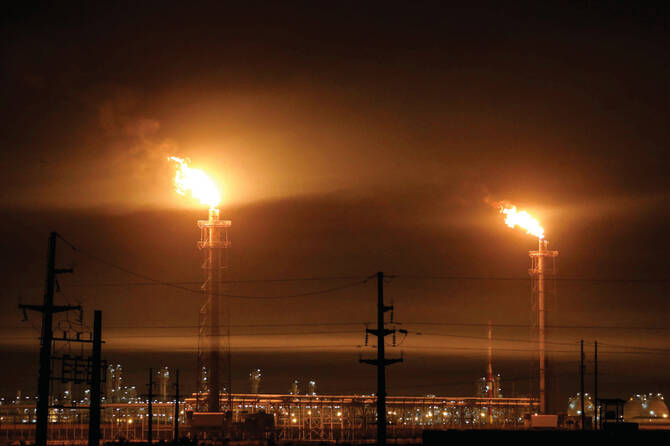
As well as climate effects, human activities are degrading the marshes. Around 80 percent of Iran’s oil production is in Khuzestan and a 2021 study found that since the early 2000s, oil exploration projects have caused “significant damage.”
Hamidreza Khodabakhshi, a water planning expert and environmental activist in Khuzestan, said oil exploration had caused parts of the wetlands to dry up.
“Road construction and pipeline installation have not only damaged the ecosystem, but also blocked the natural flow of water,” he said.
In February, Oil Minister Mohsen Paknejad told a meeting in Ahvaz, the main city in Khuzestan, that the government took responsibility.
“We are the ones who dried up the wetland, and we are the ones who hurt the people of Khuzestan — now we need to prioritize the employment needs of locals,” he said.
The Hoor Al-Hawizeh marshes are fed by water from the Tigris River in Iraq and the Karkheh River in southwest Iran — sources that have sometimes become a point of conflict.
Iran, Iraq and Turkiye have constructed dams upstream that scientists say have significantly harmed Hoor Al-Hawizeh.
Since 2009, the marsh has also been effectively divided by a 65-km dyke built along the border by Iran to keep water inside its territory.
Haghighi said tensions also flared over water allocation.
“In many cases, maintaining ecological water flows is given lower priority compared to agricultural, hydropower and municipal uses, resulting in severe consequences for wetland health,” he said.
Scientists hope to raise the case of Hoor Al-Azim at the next meeting of the Ramsar Convention on Wetlands in Zimbabwe in July.
“Sand and dust storms and wildfires are examples of the complex problems that are going to require complex solutions through diplomacy and cooperation,” Madani said.


