Pakistan approves authority to regulate, accelerate growth of virtual assets economy

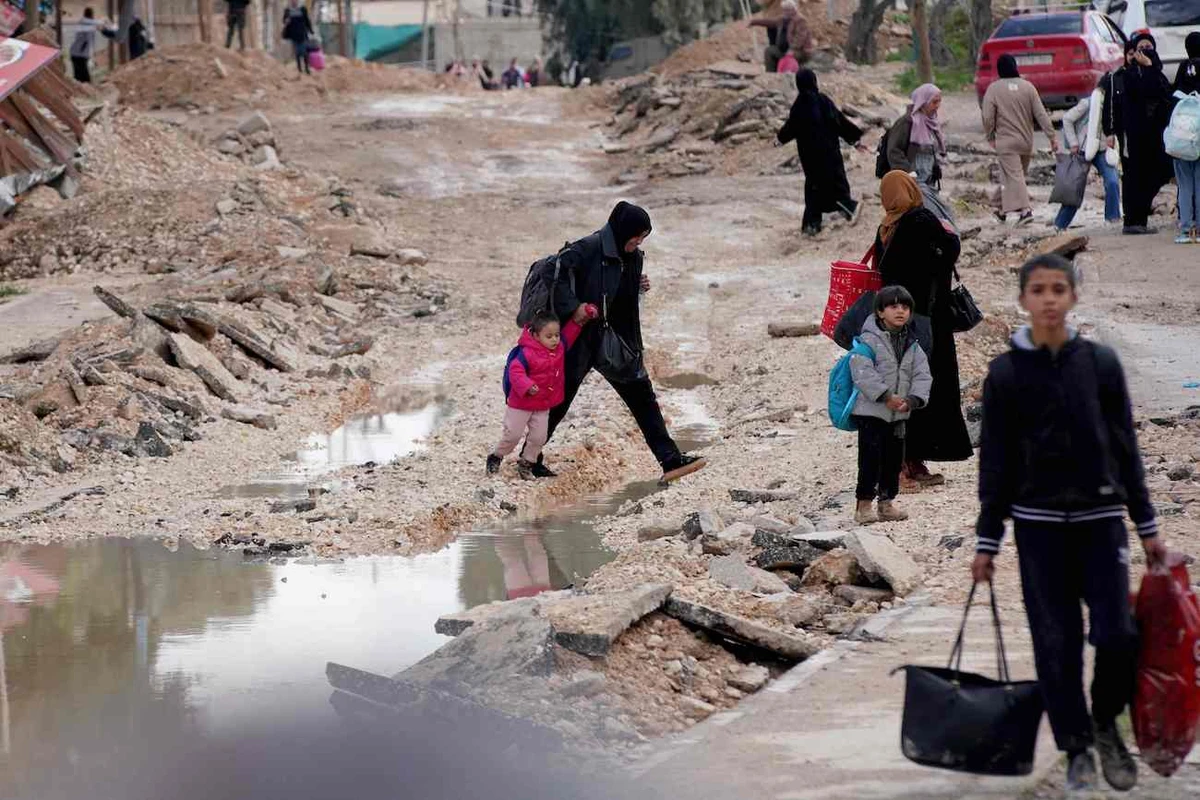
This illustration photograph taken on July 19, 2021, in Istanbul, shows a physical banknote and coin imitations of the Bitcoin cryptocurrency. (AFP/File)
Short Url
Updated 21 May 2025
Follow

Pakistan approves authority to regulate, accelerate growth of virtual assets economy

  • Pakistan set up national crypto council in March to create legal framework for cryptocurrency trading, luring foreign investment 
  • Last month, government introduced first policy framework to set rules for how digital money, service providers should operate in Pakistan

KARACHI: The government has approved setting up the Pakistan Digital Assets Authority (PDAA) to regulate blockchain-based financial infrastructure, the finance ministry said on Wednesday, as the country moves to adopt a strategy to regulate and accelerate the growth of its virtual assets economy.

Pakistan set up a national crypto council (PCC) in March to create a legal framework for cryptocurrency trading in a bid to lure international investment. One of the world’s most powerful people in crypto, co-founder and former CEO of Binance Changpeng Zhao, was subsequently appointed as a strategic adviser to the PCC. 

Cryptocurrencies including bitcoin are not officially regulated in Pakistan but are also not illegal or banned. As of Jan. 16, 2021, the State Bank of Pakistan has not authorized any individuals or organizations to carry out the sale, purchase, exchange, and investment of virtual currencies, coins, and tokens.

Last month, Pakistan introduced its first-ever policy framework, created by a special government group under the Anti-Money Laundering (AML) and Counter Terrorism Financing (CTF) authority, to set rules for how digital money like cryptocurrencies and the companies that deal in it should operate in Pakistan. The policy has been formulated to align with compliance and financial integrity guidelines of the global Financial Action Task Force (FATF).

“The aim is to ensure FATF-compliant innovation, economic inclusion, and responsible adoption of digital assets,” the finance ministry said, announcing the approval of the Pakistan Digital Assets Authority.

Pakistan is experiencing a surge in the adoption of digital assets, driven by a growing tech-savvy population and increasing government support for blockchain technology.

“Pakistan must regulate not just to catch up but to lead. With the PDAA, we are creating a future-ready framework that protects consumers, invites global investment, and puts Pakistan at the forefront of financial innovation,” the finance ministry statement said, quoting finance minister, Muhammad Aurangzeb, who is also the chairman of the Pakistan Crypto Council. 

The PDAA will serve as a specialized regulatory body with a mandate to oversee licensing, compliance, and innovation within the digital asset ecosystem. It will regulate exchanges, custodians, wallets, tokenized platforms, stablecoins, and DeFi applications, all under a single framework.

“This strategic decision aligns Pakistan with other forward-thinking economies such as the UAE, Japan, Singapore, and Hong Kong, all of which have established digital asset regulators to foster innovation while ensuring compliance with global financial norms,” the finance ministry said.

The PDAA is expected to regulate an over $25 billion informal crypto market, enable tokenization of national assets and government debt, provide legal clarity to global and local investors, facilitate monetization of Pakistan’s surplus electricity through regulated bitcoin mining and empower young people and startups to build blockchain-based solutions at scale.

“This is not just about crypto,” Bin Saqib, CEO of Pakistan Crypto Council, said. 

“It’s about rewriting our financial future, expanding access, and creating new export channels through tokenization, digital finance, and Web3 innovation.”

According to Statista, a German online platform that specializes in data gathering and visualization, the projected revenue in the digital assets market in Pakistan is estimated to reach $1.6 billion by 2025 while the number of users is expected to reach 27.10 million users.


Tens of thousands flee northwest Pakistan over fears of military operation

Updated 28 January 2026
Follow

Tens of thousands flee northwest Pakistan over fears of military operation

  • More than 70,000 people, mostly women and children, have fled remote Tirah region bordering Afghanistan 
  • Government says no military operation underway or planned in Tirah, a town in Khyber Pakhtunkhwa province

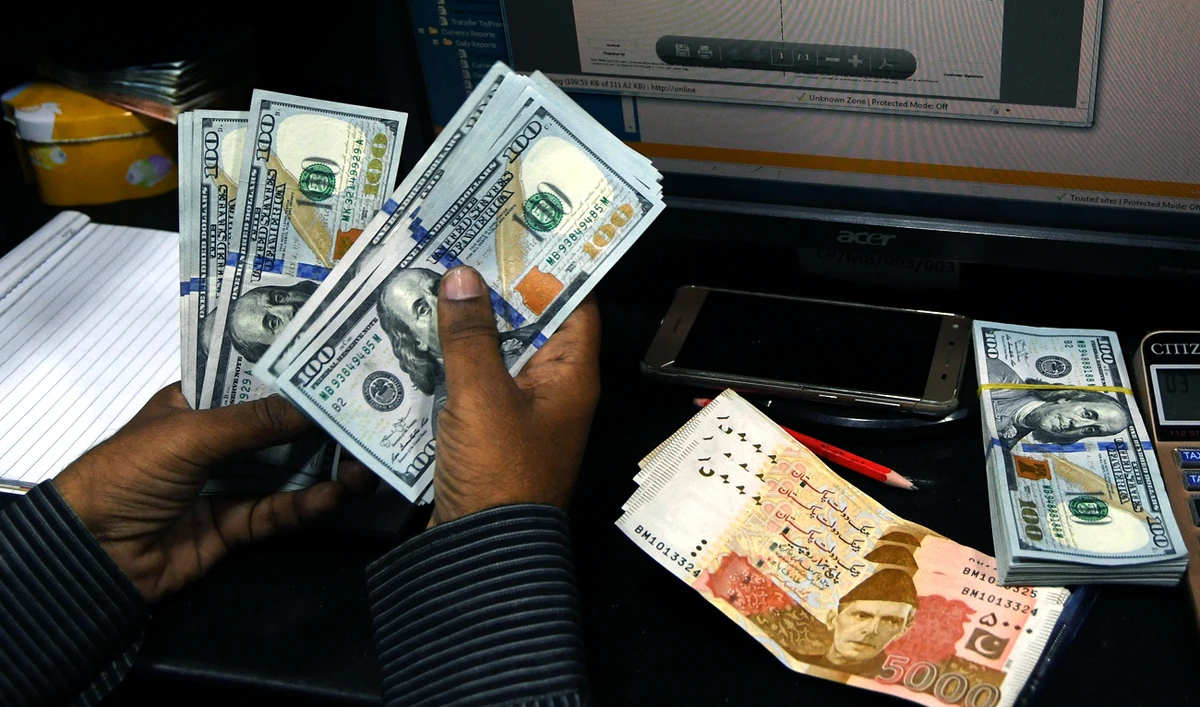
BARA, Pakistan: More than 70,000 people, mostly women and children, have fled a remote region in northwestern Pakistan bordering Afghanistan over uncertainty of a military operation against the Pakistani Taliban, residents and officials said Tuesday.

Pakistan’s Defense Minister Khawaja Mohammad Asif has denied the claim by residents and provincial authorities. He said no military operation was underway or planned in Tirah, a town in Khyber Pakhtunkhwa province.

Speaking at a news conference in Islamabad, he said harsh weather, rather than military action, was driving the migration. His comments came weeks after residents started fleeing Tirah over fears of a possible army operation.

The exodus began a month after mosque loudspeakers urged residents to leave Tirah by Jan. 23 to avoid potential fighting. Last August, Pakistan launched a military operation against Pakistani Taliban in the Bajau r district in the northwest, displacing hundreds of thousands of people.

Shafi Jan, a spokesman for the provincial government in Khyber Pakhtunkhwa, posted on X that he held the federal government responsible for the ordeal of the displaced people, saying authorities in Islamabad were retracting their earlier position about the military operation.

Khyber Pakhtunkhwa Chief Minister Suhail Afridi, whose party is led by imprisoned former Prime Minister Imran Khan, has criticized the military and said his government will not allow troops to launch a full-scale operation in Tirah.

The military says it will continue intelligence-based operations against Pakistani Taliban, who are known as Tehrik-e-Taliban Pakistan, or TTP. Though a separate group, it has been emboldened since the Afghan

Taliban returned to power in 2021. Authorities say many TTP leaders and fighters have found sanctuary in Afghanistan and that hundreds of them have crossed into Tirah, often using residents as human shields when militant hideouts are raided.

Caught in the middle are the residents of Tirah, who continued arriving in Bara.

So far, local authorities have registered roughly 10,000 families — about 70,000 people — from Tirah, which has a population of around 150,000, said Talha Rafiq Alam, a local government administrator overseeing the relief effort. He said the registration deadline, originally set for Jan. 23, has been extended to Feb. 5.

He said the displaced would be able to return once the law-and-order situation improves.

Among those arriving in Bara and nearby towns was 35-year-old Zar Badshah, who said he left with his wife and four children after the authorities ordered an evacuation. He said mortar shells had exploded in villages in recent weeks, killing a woman and wounding four children in his village. “Community elders told us to leave. They instructed us to evacuate to safer places,” he said.

At a government school in Bara, hundreds of displaced lined up outside registration centers, waiting to be enrolled to receive government assistance. Many complained the process was slow.

Narendra Singh, 27, said members of the minority Sikh community also fled Tirah after food shortages worsened, exacerbated by heavy snowfall and uncertain security.

“There was a severe shortage of food items in Tirah, and that forced us to leave,” he said.

Tirah gained national attention in September, after an explosion at a compound allegedly used to store bomb-making materials killed at least 24 people. Authorities said most of the dead were militants linked to the TTP, though local leaders disputed that account, saying civilians, including women and children, were among the dead.