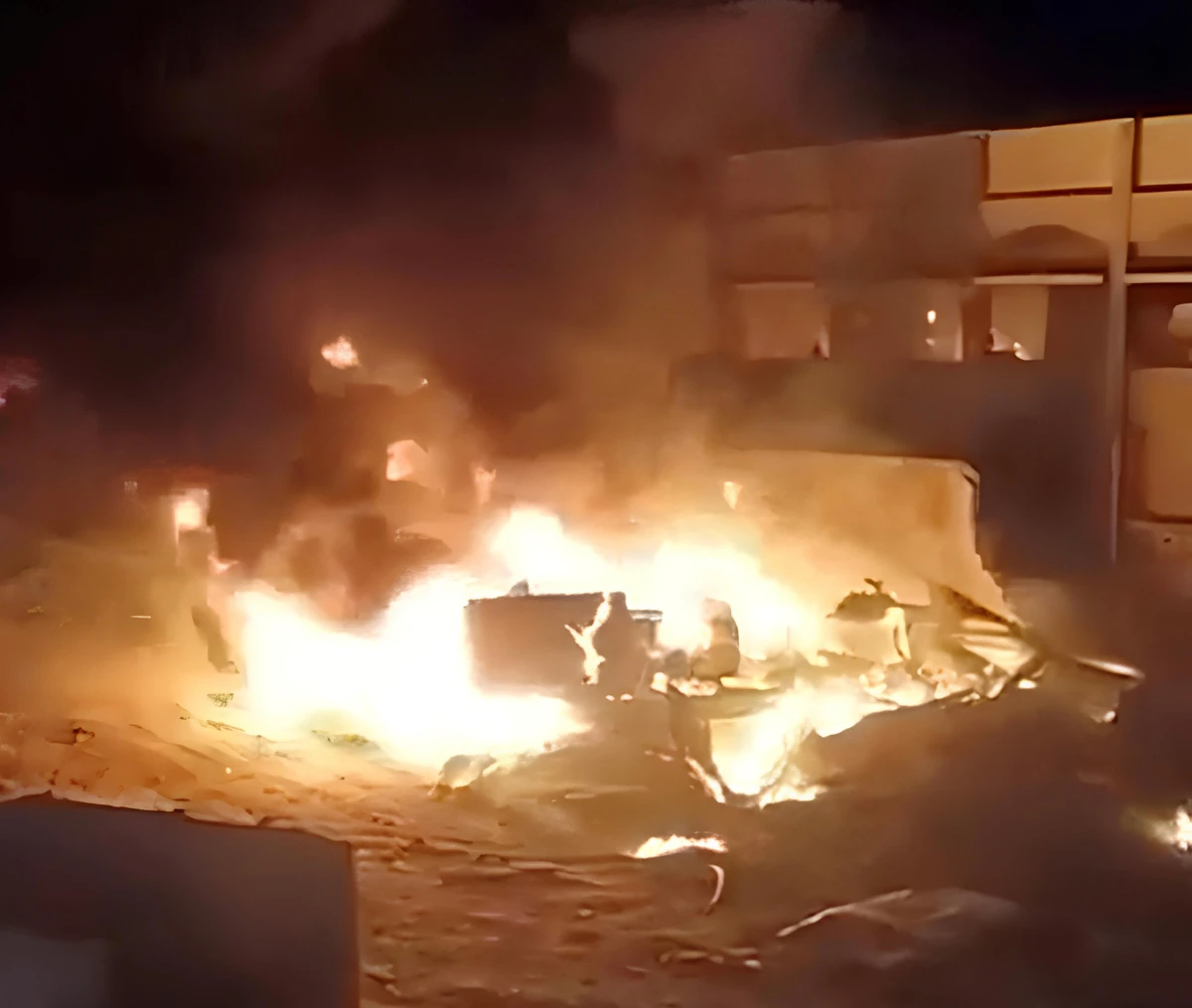
- At least 31 people are trapped inside Indonesia Hospital as of Tuesday morning
Jakarta: The Indonesia Hospital, one of the last partially functional medical centers in northern Gaza, is nearing collapse after days of Israeli strikes on its key infrastructure, the Jakarta-based nongovernmental organization funding the facility said on Tuesday.
The hospital in Beit Lahiya, a four-story building located near the Jabalia refugee camp, was built from donations organized by the Medical Emergency Rescue Committee.
Like other healthcare facilities in Gaza, it has been targeted by Israel’s new military onslaught on the besieged enclave, in which hundreds of people were killed in the past three days.
“A quadcopter targeted the hospital’s generators. Two of them were destroyed in the ensuing fire. Our water supply has been disrupted, and people aren’t able to enter or exit the hospital area because there’s a risk of being shot,” Dr. Hadiki Habib, chairman of MER-C’s executive committee, told Arab News.
At least 31 people were trapped inside the Indonesia Hospital as of Tuesday morning, including eight health workers and bedridden patients.
The Indonesia Hospital and Al-Awda Hospital are the only two hospitals still treating patients in northern Gaza, Habib added, as Israeli attacks have forced most public hospitals in the area out of service.
Israel launched a new ground operation, called Operation Gideon’s Chariots, across the Gaza Strip on Sunday, following over two months of total blockade on the enclave after Tel Aviv unilaterally broke a ceasefire with the Palestinian group Hamas in March.
But Israeli forces have carried out brutal attacks in hundreds of locations across Gaza in the lead-up to the operation, killing hundreds of Palestinians.
The latest offensive comes as Israel continues its onslaught of Gaza that began in October 2023 and has killed more than 53,400 Palestinians and wounded over 121,000 more. The deadly attacks have also pushed 2 million others to starvation after Israeli forces destroyed most of the region’s infrastructure and buildings and blocked humanitarian aid.
It was only on Monday that Israel’s military said it allowed five aid trucks into Gaza, though according to the UN, the enclave needs at least 500 trucks of aid and commercial goods every day.
“It’s very sad and heartbreaking. The Indonesia Hospital is barely functioning. All logistics needs have been blocked by Israel and there are threats against healthcare workers to leave and empty the facility,” Sarbini Abdul Murad, chairman of MER-C’s board of trustees in Jakarta, told Arab News.
The Indonesia Hospital was one of the first targets hit when Israel began its assault on Gaza, in which it regularly targets medical facilities.
Attacks on health centers, medical personnel and patients constitute war crimes under the 1949 Geneva Convention.
“There is no place left that is safe from Israel’s pursuit,” Murad said. “For the sake of humanity, the international community must pressure Israel to agree to a ceasefire so that we can stop this humanitarian tragedy.”