
RIYADH: Saudi banks recorded a 27.1 percent year-on-year increase in net profits in March, reaching SR8.81 billion ($2.35 billion).
According to the Saudi Central Bank, also known as SAMA, this figure reflects earnings before zakat and tax.
The robust performance marks one of the strongest monthly earnings in recent years. It underscores growing confidence in the Kingdom’s banking sector amid steady economic activity and a strong pipeline of Vision 2030-related projects.
According to a January report by S&P Global Ratings, Saudi banks are expected to maintain stable profitability throughout the year. The analysis highlighted a favorable economic environment and declining interest rates as key enablers of continued credit expansion.

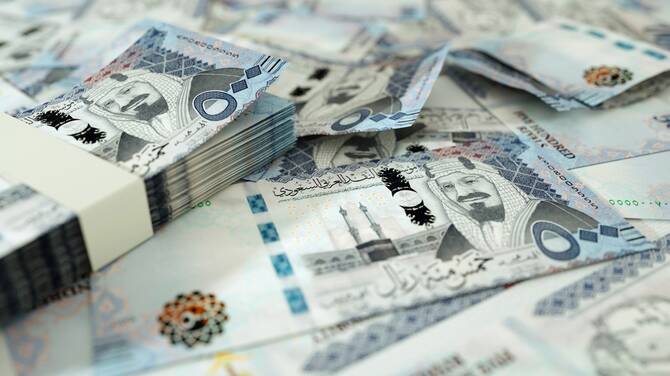
The robust banking performance aligns with the Kingdom’s broader non-oil economic momentum. Shutterstock
In particular, corporate lending is anticipated to remain the primary driver of loan growth in 2025, supported by increased construction activity, infrastructure investment, and government-led initiatives.
S&P expects lending growth to hover around 10 percent for the year, with corporate lending closely tied to Vision 2030 implementation leading the surge. Meanwhile, mortgage lending is projected to recover moderately in response to lower borrowing costs.
Saudi banks are also expected to continue leveraging international capital markets to fund growth. S&P estimated credit losses will stabilize at 50 to 60 basis points, supported by strong provisioning cushions built in recent quarters.
The March performance aligns with broader credit dynamics observed in Saudi Arabia. According to SAMA, total bank credit reached SR3.1 trillion in March, an annual increase of 16.26 percent, the highest growth in over three years.
Corporate loans accounted for 55.19 percent of the total, rising 22.3 percent year-on-year to over SR1.71 trillion.

The King Abdullah Financial District in Riyadh, Saudi Arabia. Shutterstock
This trend reflects a shift in Saudi lending priorities, with businesses now driving the lending landscape. The uptick in business credit signals increased private sector activity, particularly across construction, real estate, and manufacturing.
This robust banking performance aligns with the Kingdom’s broader non-oil economic momentum. According to the Riyad Bank Saudi Arabia Purchasing Managers’ Index compiled by S&P Global, the Kingdom recorded a PMI of 58.1 in March, the highest among its Middle Eastern peers and well above the 50.0 threshold, indicating expansion.
Saudi Arabia’s Ministry of Economy and Planning reported in February that non-oil activities now make up 52 percent of gross domestic product, having grown 20 percent since the launch of Vision 2030.
With the government targeting $100 billion in annual foreign direct investment by 2030, the expansion of the banking and non-oil sectors plays a critical role in attracting global capital and supporting long-term economic sustainability. As corporate activity intensifies and lending strategies evolve, Saudi banks appear well-positioned to balance growth, profitability, and resilience.