HODEIDA Yemen: Israel threatened to target the leadership of Yemen’s Iran-backed Houthis after the air force struck two Yemeni ports on Friday, following repeated Houthi missile attacks in recent days.
The Houthis agreed earlier this month to stop firing on international shipping in the Red Sea after the United States stepped up air strikes on Houthi-held areas with British support.
But the Houthis vowed to keep up their strikes on Israel despite the deal and fired three missiles in as many days this week that triggered air raid warnings in major cities.
The Houthis’ Al-Masirah television reported strikes on the Red Sea port city of Hodeida, a key entry point for aid, as well as the port of Salif further north, without immediately mentioning any casualties.
Israel’s military confirmed striking the two ports, saying it “dismantled terrorist infrastructure sites” belonging to the Iran-backed Houthis.
It noted that prior warnings had been issued to civilians in both areas.
“These ports are used to transfer weapons and are a further example of the Houthi terrorist regime’s systematic and cynical exploitation of civilian infrastructure in order to advance terrorist activities,” a military statement said.
The Houthis, who have controlled large swathes of Yemen for more than a decade, began firing at Israel-linked shipping in November 2023, weeks after the start of the Israel-Hamas war.
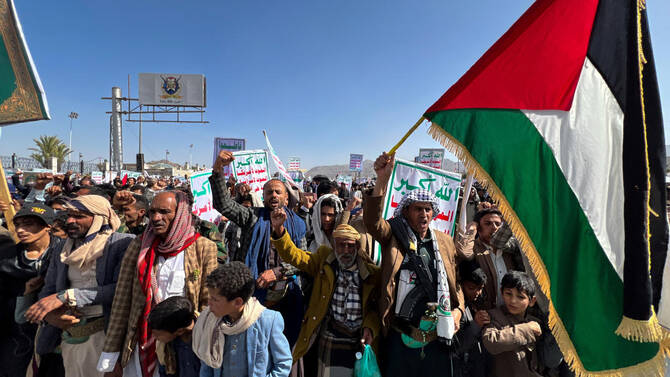
They later broadened their campaign to target Israel, saying it was in solidarity with the Palestinians in Gaza.
Israeli Prime Minister Benjamin Netanyahu warned the Houthi leadership there was “more to come” after Friday’s strikes.
“We are not willing to sit on the sidelines and let the Houthis attack us. We will hit them far more, including their leadership and all the infrastructure that allows them to hit us,” Netanyahu said in a video statement.
Israeli Defense Minister Israel Katz warned Houthi leaders that if the missile attacks continue, they face the same fate as Hamas leaders slain by Israel in Gaza.
“If the Houthis continue to fire, we will also hit the heads of the terror groups, just as we did to (slain Hamas military chief Mohammed) Deif and (the) Sinwars (Hamas Gaza leader Yahya Sinwar and his brother Mohammed Sinwar) in Gaza,” Katz said in a post.
“We will also hunt down and eliminate the Houthi leader, Abd Al-Malek Al-Houthi.”
In early May, a Houthi missile struck an area at Tel Aviv’s Ben Gurion airport, gouging a hole near its main terminal building and wounding several people in a rare penetration of Israeli air defenses.
Israel retaliated by striking the airport in Yemen’s Houthi-controlled capital Sanaa and three nearby power stations.
The UN special envoy for Yemen, Hans Grundberg, said the exchange marked a “dangerous escalation” and was a reminder that the war-torn country is “ensnared in the wider regional tensions.”


![]()

Israel threatens Houthi leaders after striking Yemen ports
Short Url
https://arab.news/jbrx8
Israel threatens Houthi leaders after striking Yemen ports
- Israeli strikes hit Hodeida, a key entry point for aid, and Salif further north
- Netanyahu warns there is “more to come” despite US agreement


Latest updates


© 2026 SAUDI RESEARCH & PUBLISHING COMPANY, All Rights Reserved And subject to Terms of Use Agreement.