

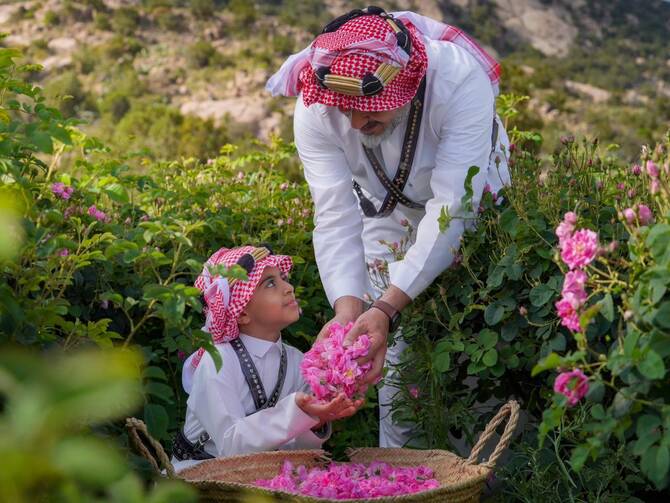

TAIF: As the Taif rose season comes to an end, the region’s farmers are reflecting on the challenges they have faced this year.
The season is one of the area’s most important agricultural and tourism events, marking the arrival of spring as rose farms across the highlands of Al-Hada, Al-Shafa and Taif’s terraced fields are transformed into breathtaking pink landscapes with intoxicating scents.
As it draws to a close, farmers work tirelessly to harvest the final blooms, while distillation plants extract the last precious drops of rose oil — each bottle of which is made from around 12,000 roses and can fetch prices up to SR1,800 ($480).
Despite weather-related challenges affecting yields, the Taif rose has preserved its renowned status.

Nestled among the towering mountains is the Taif Rose Terraces Farm, managed by Abdullah Al-Talhi. Speaking to Arab News, he discussed the current state of rose farming and its economic value, highlighting the impact of rainfall during the “dormant” period which negatively affected both the harvest and prices.
Rose season has a precise cycle which starts with pruning. If it rains during the following 40 days — a natural dormant period — the roses are at risk, as this phase requires dry weather for proper blooming.
Al-Talhi said the unexpected wet weather had provided this year’s biggest challenge, disrupting the plants’ natural rhythm, weakening the buds and causing them to bloom prematurely. This means a shorter flowering window and a faster decline in overall production.
“The rose season is like a gold harvest for farmers,” Al-Talhi said. “But when rain falls at the wrong time, the losses can be twofold.”
The lower yield significantly drove up the price of Taif rose oil, with a bottle reaching SR1,800 — an increase of SR600 on last year’s price.
Al-Talhi said any unplanned climate shift posed a serious threat to such delicate agriculture and stressed the importance of protecting this symbol of regional culture: “The Taif rose is a reflection of who we are,” he told Arab News.
Hamid Al-Sufyani, who owns one of Al-Shafa’s historic rose farms, highlighted the growing global prestige of Taif rose products, which are used in the creation of some of the world’s most luxurious perfumes and exported to markets across Europe and the Gulf.
“Demand for Taif rose oil increases year after year,” he said. “It’s regarded as one of the purest and most valuable essential oils in the world. Just one bottle requires nearly 12,000 roses, each hand-picked with care.”
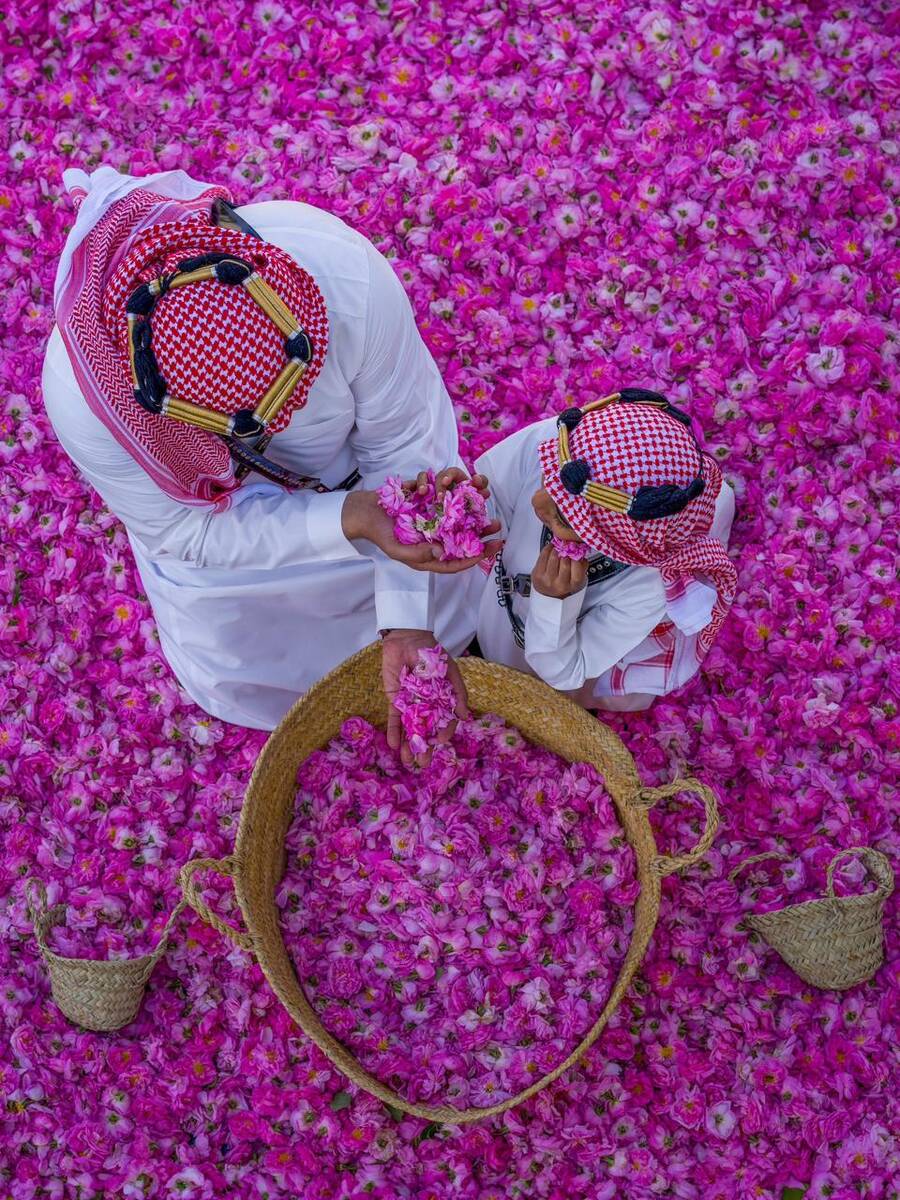
Al-Sufyani said the Taif rose was used to represent the city at international exhibitions and agricultural fairs.
“I’ve personally participated in events abroad and witnessed firsthand how the name ‘Taif’ is immediately associated with roses by enthusiasts around the world,” he explained.
“That reputation wasn’t built overnight; it’s the result of years of dedication by farmers and the continued support of various organizations.”
He emphasized that sustaining this reputation required not only consistent quality but also the need to stay up to date with advancements in distillation, preservation and marketing, and urged government institutions to increase their support for farmers, given the Taif rose’s cultural and economic importance.


