

Pakistanis constituted largest group of UK asylum seekers in 2024

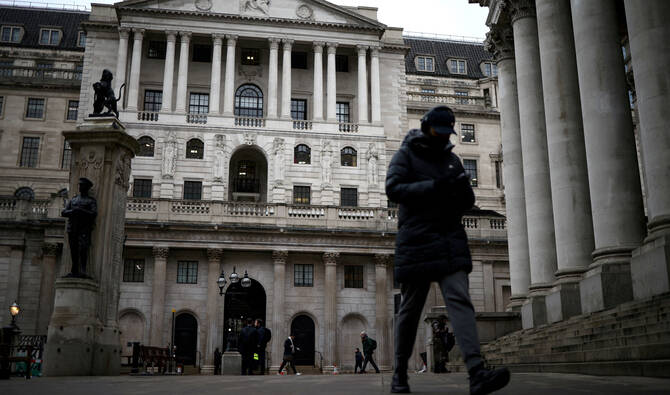
People walk outside the Bank of England in the City of London financial district, in London, Britain on January 26, 2023. (REUTERS/File)
Short Url
Updated 15 May 2025
Follow

Pakistanis constituted largest group of UK asylum seekers in 2024

  • Number of asylum seekers in UK has tripled in recent years, with 84,200 applications in 2024
  • In previous years, asylum seekers came to the UK mainly from Syria and Iran, official data says

LONDON: The number of asylum seekers has risen sharply in recent years in the United Kingdom, with tens of thousands of applications still waiting to be decided, according to official figures.

Labour Prime Minister Keir Starmer announced Thursday that he had begun formal talks with unspecified countries to create “return centers” outside the UK for those who have exhausted all legal avenues to remain in the country.

The number of asylum seekers in the UK has tripled in recent years, with 84,200 applications in 2024, compared with an average of 27,500 between 2011 and 2020, according to official figures.

In 2022, there were approximately 13 asylum applications per 10,000 people in the UK, compared with 25 asylum applications per 10,000 people in the EU at the same time.

Some 11 percent of migrants in the UK were asylum seekers or refugees in 2023 — almost twice as high as the 2019 figure of six percent.

The proportion of initial asylum applications rejected in 2024 was 53 percent, compared with 88 percent in 2004 and 24 percent in 2022.

Between 2004 and 2021, approximately three-quarters of applicants whose initial request was rejected appealed the decision, with a third being succesful.

More than 9,000 failed asylum seekers were deported in 2024 — 36 percent more than in 2023.

Some 224,700 cases were a “work in progress” in 2024, with 87,200 awaiting an initial decision and 137,500 awaiting follow-up after an initial refusal, according to official documents.

This total has been declining since 2022 but remains four times higher than in 2014 due to longer waiting times for an initial decision and a larger number of people facing deportation.

The number of people crossing the Channel in makeshift boats, a route that virtually did not exist before 2018, has increased sharply in recent years.

Between 2018 and December 2024, 148,000 migrants risked their lives and reached UK shores by this route, according to official figures.

Of those, 95 percent applied for asylum, representing 29 percent of all asylum seekers over that period.

Nearly 13,000 migrants have already crossed the Channel in 2025, more than in the same period in 2024.

In 2024, the largest group of asylum seekers hailed from Pakistan, followed by Afghanistan. In previous years, they came mainly from Syria and Iran.


Over 50 feared dead in Karachi shopping plaza fire, officials say

Updated 5 sec ago
Follow

Over 50 feared dead in Karachi shopping plaza fire, officials say

  • Search teams recover 14 bodies as officials warn toll may rise sharply
  • Traders seek urgent compensation after 1,200 shops destroyed in blaze

ISLAMABAD: Pakistani authorities warned on Monday the death toll from a massive fire at a shopping plaza in Karachi could exceed 50, as recovery operations continued a day after the blaze destroyed over 1,200 shops in one of the city’s busiest commercial districts.

The fire broke out late Saturday at Gul Plaza in Karachi’s Saddar business area and spread rapidly through multiple floors. Firefighters battled for more than 24 hours to bring the blaze under control, which was fully extinguished by Monday, officials said, with cooling and debris removal now underway.

Deadly fires in commercial buildings are a recurring problem in Karachi, a city of more than 20 million people, where overcrowding, outdated infrastructure and weak enforcement of fire safety regulations have repeatedly resulted in mass casualties and economic losses.

During a meeting at the Chief Minister’s House on Monday, officials briefed Sindh Chief Minister Murad Ali Shah that 14 bodies had so far been recovered from the site, while the overall death toll could climb significantly as debris is cleared.

“Estimated fatalities could exceed 50,” the Sindh chief minister’s office said in a statement, quoting officials who briefed Shah on the scale of the disaster.

Shah was told that the shopping plaza, built over roughly 8,000 square yards, housed around 1,200 shops, leaving an equal number of traders suddenly without livelihoods. Shah said all affected shopkeepers would be rehabilitated and announced the formation of a committee to recommend compensation amounts and a recovery plan.

“The Gul Plaza building will be rebuilt, and we want to decide how the affected traders can be given shops immediately so their businesses can resume,” Shah said, according to the statement.

Officials said firefighting operations involved 16 fire tenders and water bowzers, with 50 to 60 firefighters taking part. The Karachi Water Board supplied more than 431,000 gallons of water during the operation, while Rescue 1122 ambulances reached the site within minutes of the first alert.

Authorities said access constraints inside the building, along with intense smoke, hampered rescue efforts in the early stages of the fire. A firefighter was among those killed, officials said, noting that his father had also died in the line of duty years earlier.

The provincial government ordered an immediate forensic investigation to determine the cause of the blaze, directing the chief secretary to notify a fact-finding committee. Shah also instructed that debris removal begin without delay so recovery teams could continue searching for victims.

The tragedy has also heightened anxiety within Karachi’s business community. 

The Karachi Chamber of Commerce and Industry (KCCI) has formed a dedicated committee to document losses, coordinate relief and press the government for compensation, saying preliminary assessments indicate more than 1,000 small and medium-sized businesses were completely destroyed.

Ateeq Mir, a traders’ representative, has estimated losses from the fire at over $10 million.

“There is no compensation for life, but we will try our best that the small businessmen who have suffered losses here are compensated in a transparent manner,” Shah told reporters on Sunday night.

Prime Minister Shehbaz Sharif has offered full federal support to provincial authorities, stressing the need for a “coordinated and effective system” to control fires quickly in densely populated urban areas and prevent similar tragedies in the future.

Battling large fires in Karachi’s congested commercial districts remains notoriously difficult. Many markets and plazas are built with narrow access points, encroachments and illegal extensions that block fire tenders, while buildings often lack functioning fire exits, alarms or sprinkler systems. 

Although safety regulations exist, enforcement is sporadic, allowing hazardous wiring and flammable materials to go unchecked — conditions that enable fires to spread rapidly and magnify human and economic losses.