

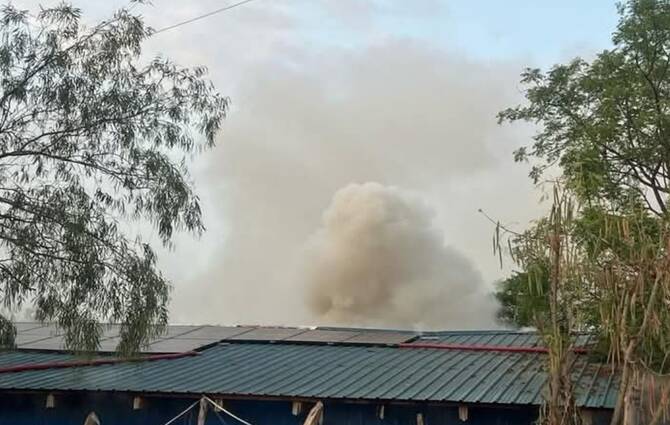

JUBA: Doctors Without Borders said Saturday that its facility in a remote part of South Sudan was targeted in an aerial bombardment that resulted in some casualties.
The hospital is located in a northern town known as Old Fangak, some 475 kilometers (295 miles) outside of Juba, the capital.
The medical charity, known by its French initials, MSF, released a statement on X condemning the attack on its hospital, said to be the only source of medical care for 40,000 residents, including many people displaced by flooding.
It called the attack “a clear violation of international law.”
Fangak County Commissioner, Biel Butros Biel, told The Associated Press that at least four people were killed in the aerial attack, including a 9-month-old child. He added that at least 25 people were wounded, though an assessment of the damage was ongoing.
It was not immediately clear why the facility was targeted, apparently by government troops. A spokesman for South Sudan’s military could not be reached for comment.
A spokesperson for MSF said their hospital in Old Fangak was hit by airstrikes shortly after 4 a.m. on Saturday. They spoke on condition of anonymity as they were not authorized to speak to the press.
The attack caused significant damage to the hospital’s pharmacy, destroying all medical supplies. There was no definitive word on casualties.
Additional strikes occurred hours later near the Old Fangak market, causing widespread panic and displacement of civilians, according to several eyewitnesses.
Old Fangak is one of several major towns in Fangak county, an ethnically Nuer part of the country that has been historically associated with the opposition party loyal to Riek Machar, South Sudan’s first vice president, who is now under house arrest for alleged subversion.
The town has been ravaged since 2019 by flooding that has left few options for people to escape the fighting. One eyewitness, Thomas Mot, said that some left by boat, while others fled on foot into flood waters.
The attack on the hospital is the latest escalation in a government-led assault on opposition groups across the country.
Since March, government troops backed by soldiers from Uganda have conducted dozens of airstrikes targeting areas in neighboring Upper Nile State.


