

Pakistani truck art elevates heavy transport into mobile masterpieces

An artisan paints art on a truck at a yard for workshops in Rawalpindi, Pakistan, on April 19, 2025. (AP)
Short Url
Updated 01 May 2025
Follow

Pakistani truck art elevates heavy transport into mobile masterpieces

  • Roots of Pakistani truck art go back to British colonial rule, when owners began adorning their vehicles
  • Trucks also bear poetry, religious messages and personal slogans, reflecting drivers’ aspirations and humor

RAWALPINDI: Trucks thunder along Pakistan’s dusty highways and through bustling city streets, like rolling canvases ablaze with color and poetry, transforming heavy transport into mobile masterpieces and offering a window into the country’s folk culture.
The roots of Pakistani truck art go back to British colonial rule, when owners began adorning their vehicles with intricate floral patterns, calligraphy, and cultural motifs.
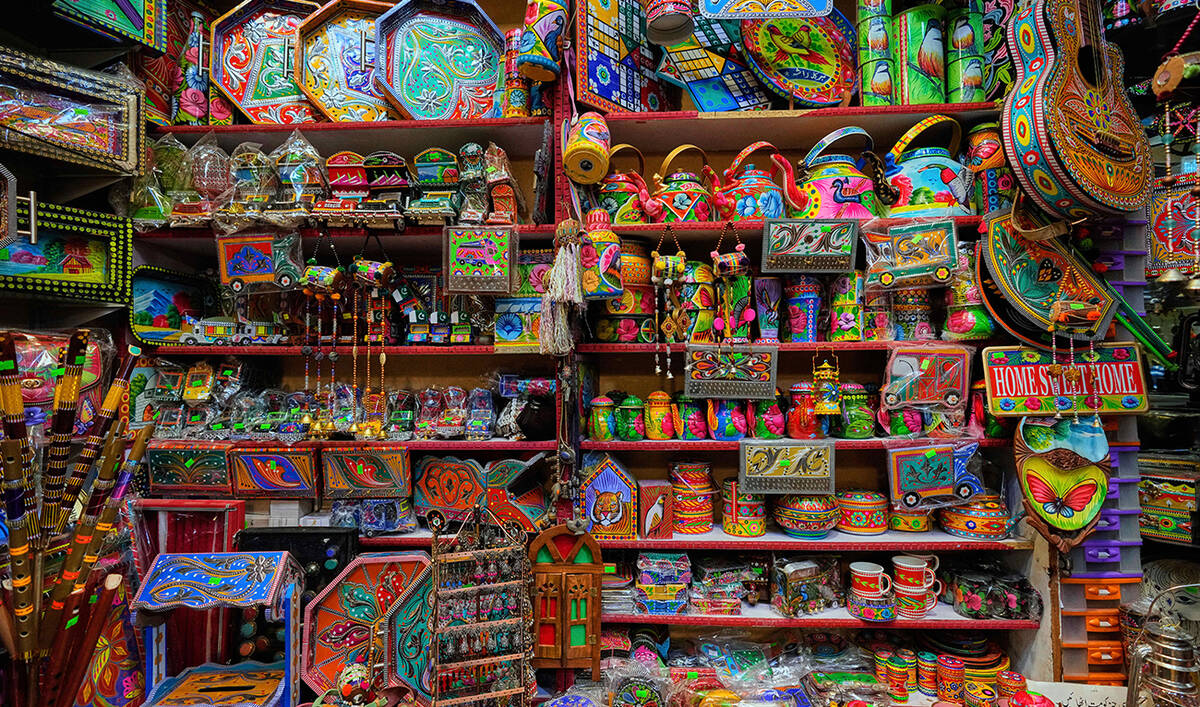


Various household decorative items painted in truck art patterns are displayed for sale at a shop in Islamabad, Pakistan, on April 22, 2025. (AP)

What started as modest embellishments has evolved into artistry. Painters, welders, electricians, and metalworkers collaborate to elevate commercial trucks into personalized symbols of pride and regional identity.
There are camel bone inlays in Balochistan, intricate wood carvings in Peshawar, and disco-inspired detail in Rawalpindi.
Muhammad Ashfaq, a 55-year-old from Rawalpindi, has been painting trucks for over four decades.
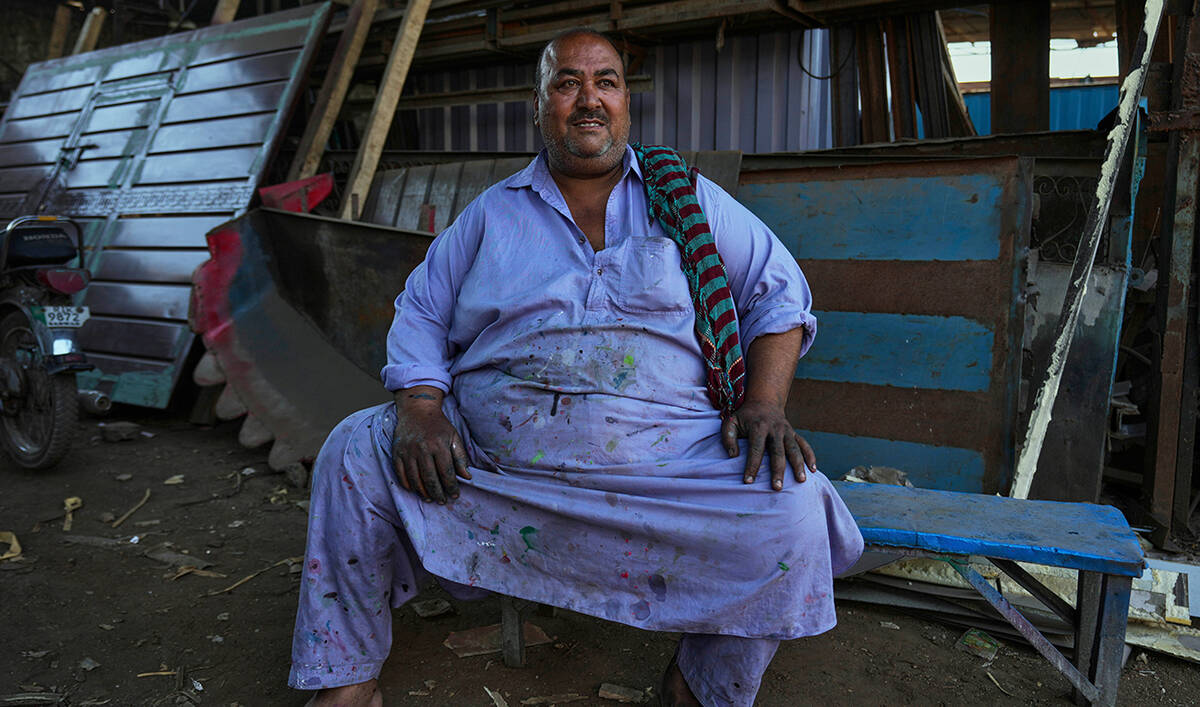


Artisan Muhammad Ashfaq, 55, sits for a portrait at his workshop in Rawalpindi, Pakistan, on April 27, 2025. (AP)

“Each client comes with their own vision and budget,” said Ashfaq. “We ask which style they prefer: Peshawar, Hazara, Swat, Pindi, Mandi Bahauddin, or Karachi.”
Pindi style is considered the most flamboyant, characterized by vivid colors, elaborate stickers, mirror work, and dense layering of design elements.
“Pindi style is like a bride getting ready for her wedding,” says Farrukh Sana, a truck driver who recently upgraded his vehicle with the vibrant design. “We feel happy when people admire our truck. It’s a symbol of hard work and beauty.”
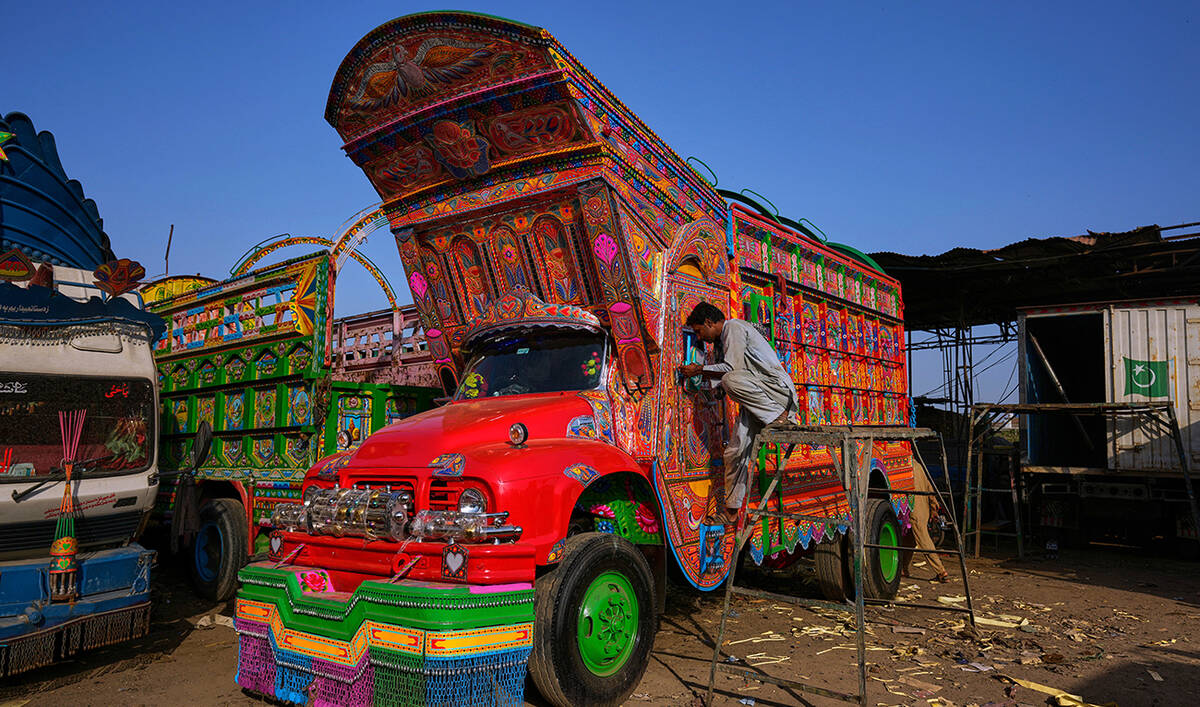


A worker fixes the side mirror of a newly refurbished decorated truck at a yard for workshops in Rawalpindi, Pakistan, on April 21, 2025. (AP)

Styles vary according to cost and components, as well as color and complexity.
A full refurbishment of a truck can cost between 2 to 5 million rupees (about $7,000 to $17,790), depending on the materials used and if major elements like the tires and the chassis are replaced.
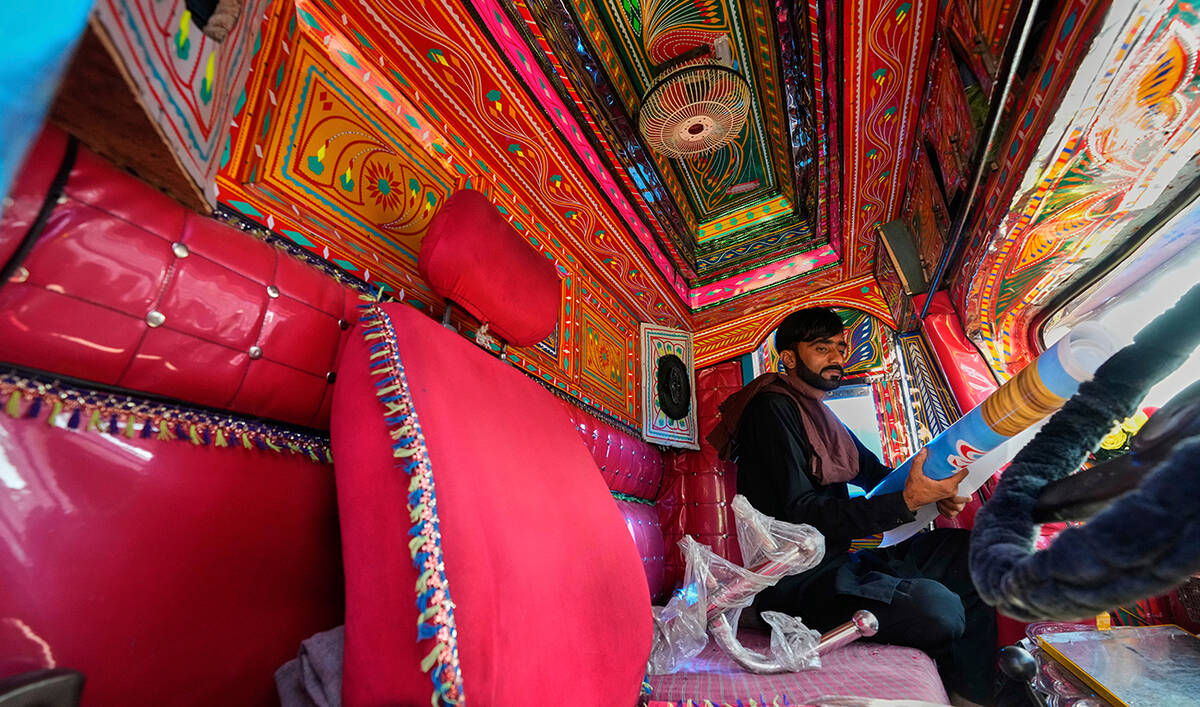


Driver Farrukh Sana checks items inside the cabin of a newly refurbished truck painted with traditional artwork at a yard for workshops in Rawalpindi, Pakistan, on April 21, 2025. (AP)

But, beyond mere decoration, the trucks also bear poetry, religious messages, and personal slogans, reflecting the aspirations, humor, and emotions of their drivers.
Truck art has transcended cargo vehicles, finding its way onto rickshaws, buses, and even household decor.


An artisan makes traditional patterns with colorful stickers used to decorate trucks at a yard for workshops in Rawalpindi, Pakistan, on April 19, 2025. (AP)

It first caught global attention in the 1970s, when foreign tourists started photographing the unusually bright vehicles. Since then, truck art has inspired international exhibitions and influenced contemporary fashion and product design.
The distinctly South Asian tradition endures despite Pakistan’s economic hardships. Artisans like Ashfaq remain devoted to the craft, while drivers like Sana view their trucks as more than a livelihood. They are seen as roving cultural ambassadors.
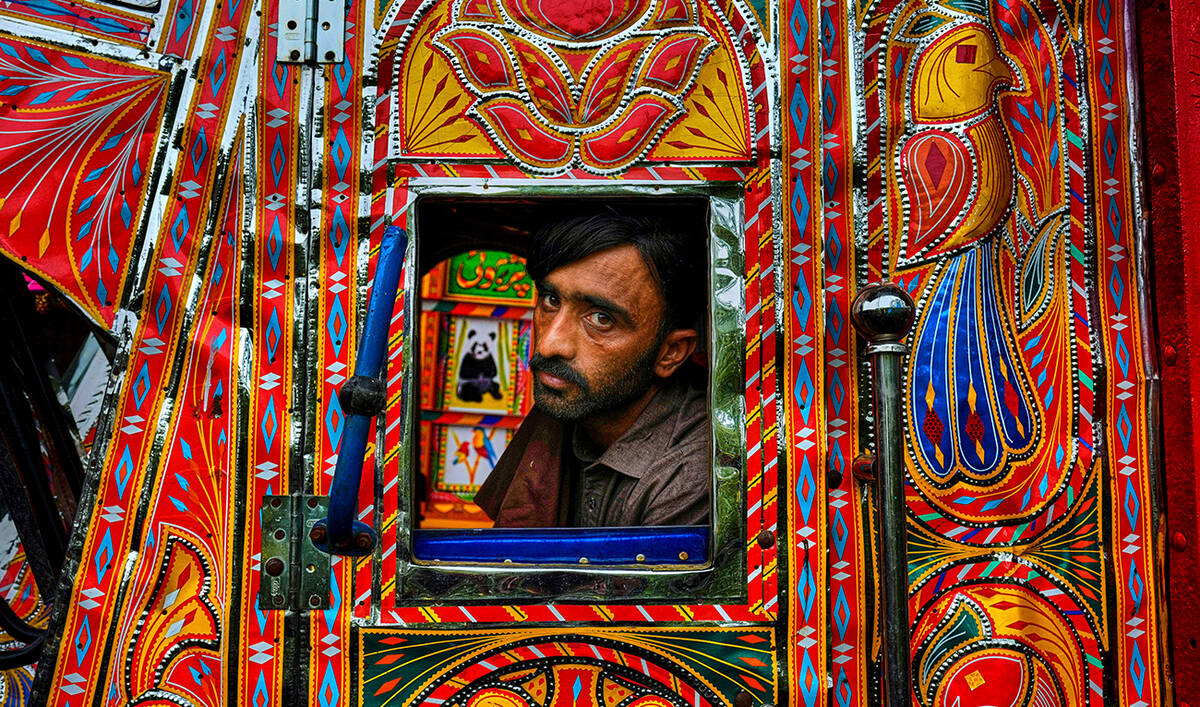


Driver Farrukh Sana looks out from the window of a newly refurbished truck at a yard for workshops in Rawalpindi, Pakistan, on April 19, 2025. (AP)

“Every driver dreams of making his truck look unique,” Sana says with pride. “When we drive it out and people turn their heads, we know we’ve created something special.”


Pakistan to launch AI screening in January to target fake visas, agent networks

Updated 5 sec ago
Follow

Pakistan to launch AI screening in January to target fake visas, agent networks

  • New system to flag forged-document travelers before boarding and pre-verify eligibility
  • Move comes amid increasing concern over fake visas, fraudulent agents, forged papers

ISLAMABAD: Pakistan will roll out an AI-based immigration screening system in Islamabad from January to detect forged documents and prevent illegal overseas travel, the government said on Thursday. 

The move comes amid increasing concern over fake visas, fraudulent agents and forged papers, with officials warning that such activity has contributed to deportations, human smuggling and reputational damage abroad. Pakistan has also faced scrutiny over irregular migration flows and labor-market vulnerability, particularly in the Gulf region, prompting calls for more reliable pre-departure checks and digital verification.

The reforms include plans to make the protector-stamp system — the clearance required for Pakistani citizens seeking overseas employment — “foolproof”, tighten labor-visa documentation, and cancel the passports of deportees to prevent them from securing visas again. The government has sought final recommendations within seven days, signalling a rapid enforcement timeline.

“To stop illegal immigration, an AI-based app pilot project is being launched in Islamabad from January,” Interior Minister Mohsin Naqvi said following a high-level meeting chaired by him and Minister for Overseas Pakistanis Chaudhry Salik Hussain.

Naqvi said the new screening technology is intended to determine travelers’ eligibility in advance, reducing airport off-loads and closing loopholes exploited by traffickers and unregistered agents.

The interior minister added that Pakistan remains in contact with foreign governments to improve the global perception and ranking of the green passport, while a uniform international driving license will be issued through the National Police Bureau.

The meeting also approved zero-tolerance measures against fraudulent visa brokers, while the Overseas Pakistanis Ministry pledged full cooperation to streamline the emigration workflow. Minister Hussain said transparency in the protector process has become a “basic requirement,” particularly for labor-migration cases.

Pakistan’s current immigration system has long struggled with document fraud, with repeated cases of passengers grounded at airports due to forged papers or agent-facilitated travel. The launch of an AI screening layer, if implemented effectively, could shift the burden from manual counters to pre-flight verification, allowing authorities to identify risk profiles before departure rather than after arrival abroad.

The reforms also come at a moment when labor mobility is tightening globally. Gulf states have begun demanding greater documentation assurance for imported labor, while European and Asian destinations have increased scrutiny following trafficking arrests and irregular-entry routes from South Asia. For Pakistan, preventing fraudulent departures is increasingly linked to protecting genuine workers, reducing deportation cycles and stabilizing the country’s overseas employment footprint.