


DUBAI: Viewed from several perspectives, it is a real achievement that the Pakistan Super League has reached its 10th year intact. It has survived COVID-19, regular changes in leadership at both Pakistan Cricket Board and political level, on-going unrest, spot-fixing, the rise of competing leagues, security issues and a seeming indifference to it outside of Pakistan.
The original contract between the PCB/PSL and the franchises contained a clause to review their value after 10 years. This now a bone of contention. It was revealed as such during an interview conducted by Arab News with Sameen Rana, co-owner and chief operating officer of the Lahore Qalandars. In a wide-ranging discussion, the motivation for the initial purchase was highlighted, followed by the challenges of building a team and an identity, concluding with a consideration of future prospects.
Rana was clear that the original motivation was “love of the country because the business model did not make sense. It was not something that was going to make money. At time of set up, the Indian Premier League was excluding Pakistani players — for us it was very much a national cause, and we wanted to do it for the country.”
It is apparent from comments made by owners of the other four original franchises that this was a common motivation. Together, the original five paid $93 million for 10 years, in a range of $5 million to $25 million.
Having made their investments, the owners were faced with building a squad of players, coaches and support staff. Rana admitted that this was a challenge. The first year was played in the UAE and, from a personal view he did not like it “as it was not the Pakistani tournament, playing in empty stadiums with small crowds who were brought in via the networks of the franchises.” However, there were “logistical benefits for the overseas players and it also meant that it allowed domestic players to play at a time when international cricket was not being played in Pakistan.”
In 2017, the PSL was played again in the UAE, but the final was played in Lahore. This was a highlight for Rana, seeing the stadium in Lahore jam-packed. The owners “had invested for the country, for the cause, and that that only became live when played in Pakistan.” Yet, that euphoria was tempered by the realities of running a cricket franchise. Rana openly emphasized that he, his brothers and others involved were businesspeople, new to cricket.
“We had no background in cricket at all. This meant we had to learn on the job. Looking back at the first year of the draft, we were unlucky in terms of the emerging category, because we had the last pick. This meant that we could not pick the players whom we wanted and the squad was not up to scratch.”
Lahore Qalandars struggled in the early years, being eliminated in the group stages. Rana revealed that they “felt disadvantaged in building a competitive squad because the more successful franchises were able to retain up to 16 players.” This meant that the top players were unavailable to the Qalandars. A different strategy was needed to build a core squad.
Rana said: “All we were hearing from various players and cricket stakeholders was that there is no talent. So, we decided to challenge that by going into the streets of Pakistan, initiating a player development program, supported by a lot of personal resources, providing player salaries, facilities for development and sending them abroad to play and learn. In this way, we have found new talent and provided the youth of Pakistan with an opportunity to make their career and to achieve their dreams through a fast-track program.”
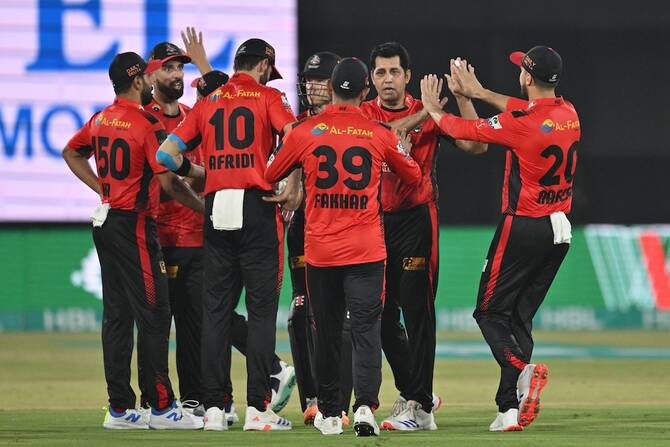
The strategy worked to such good effect that the Qalandars finished runners-up in 2020 and champions in both 2022 and 2023. Now, there are new challenges to face, as the PSL prepares for its second decade. Disquiet has been expressed publicly by Ali Tareen of the Multan Sultans, suggesting that “the PSL’s marketing has declined, and the excitement around the tournament has also diminished compared to previous years.”
Rana disagrees with any suggestion that the PSL has lost its momentum. He takes the view that, whilst there are challenges to be faced and overcome, the PSL has been a force for good. “Ten years ago, there was no Lahore Qalandars, there was no PSL, there were no opportunities for the younger players to earn financially or to showcase their talent. There were no foreign players coming, there was no competitiveness. We were only dependent on the domestic T20 tournament, which few people watch. So, we have come a long way.”
However, he highlights a key challenge which is being faced. This is the new contract with the PSL. It seems that what the PSL has put on the table is renewal at either the current price, plus 25 percent, or the current price plus a new valuation of each team. At present, the new valuation is not available. Rana’s concern is that this potential hike in fee fails to recognize the part which franchises have played in building the brands.
He argues that “if you have worked hard to do this for the betterment of the PSL, then you are ending up paying more money as a fee, rather than getting credit for the work done. If Lahore Qalandars had not undertaken a player development program, then our valuation would be lower. This contradiction is a fundamental problem in the contract and against the objective of any contract, because it is encouraging the investor to do nothing.”
Franchises have revealed that it has taken years to overcome losses and not all of them have yet done so. A public statement from the owner of the Karachi Kings, Salman Iqbal, suggested that “if teams are still not generating profits in the current environment, the problem likely lies with their own operational models rather than the league itself.”
What must be galling for the franchise owners is that during 10 years of building loyal fanbases, enhancing commercial strategies and honing marketing strategies, the body which has consistently made money is the PSL and, by extension, the PCB.
A detailed financial analysis is beyond the scope of this column but such an analysis would reveal that the PSL has bankrolled the PCB for years. Only the return of international cricket to Pakistan, which has generated ICC and ACC revenues, has changed the balance. It is understandable that the franchise owners might feel under appreciated. The PSL was born in exile, nurtured amid political chaos, and sustained by franchise owners who have lost money. They invested for Pakistan. The PSL survived and gave creditability to Pakistan’s cricketing reputation.
Rana requests that “everybody remains positive and not create a culture of negativity, which can only damage Pakistan. The PSL has the future of players attached to it, plus a range of economic activity, so that should not be destroyed.”
In that context, it might be assumed that now is the time for the PCB to recognize the debt they owe to franchise owners, rather than run the risk of alienating them.
It is fair to say that the PCB/PSL stands at a crossroads. The return of international cricket provides an opportunity for the PCB to see the contribution which the franchises have made to that outcome. The love which they have displayed for the country through their PSL investment amounts to an act of faith. Whether that faith will be reciprocated in the negotiations to come or whether the PCB will seek, or be forced, to lever increased value for the rights to franchise is a matter now being played out. Once again, the PSL’s future is under pressure and Rana has pinpointed the central issue.


