SEOUL: An estimated 4,700 North Korean soldiers have been killed or wounded while fighting alongside Russia against Ukrainian forces, South Korea’s spy agency told lawmakers Wednesday.
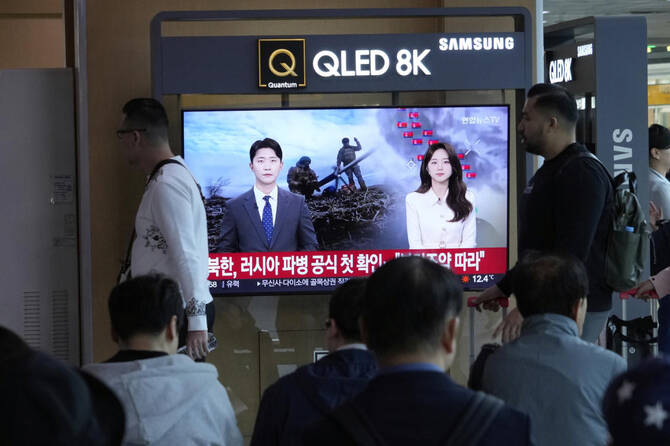
The assessment came two days after North Korea confirmed for the first time that it had sent combat troops to help Russia recapture parts of the Kursk region, which it lost control of to a surprise Ukrainian incursion last year.
In a closed-door parliamentary committee briefing, South Korea’s National Intelligence Service said North Korea had suffered 4,700 casualties, including 600 deaths, on the Russia-Ukraine battlefronts, according to Lee Seong Kweun, one of the lawmakers who attended the meeting.
Lee told reporters the NIS said that 2,000 injured North Korean soldiers were repatriated to North Korea by air or train between January and March. He cited the NIS as saying the dead North Korean soldiers were cremated in Russia before their remains were sent back home.
In January, the NIS said about 300 North Korean soldiers had died and another 2,700 had been injured, and the South Korean military increased the estimated casualties to 4,000 last month.
On Monday, North Korea announced that leader Kim Jong Un had decided to dispatch troops to “annihilate and wipe out the Ukrainian neo-Nazi occupiers and liberate the Kursk area in cooperation with the Russian armed forces.” Russian President Vladimir Putin later issued a statement thanking North Korea and promising not to forget the sacrifices of North Korean soldiers.
Both Kim and Putin said the North Korean deployment was made under their countries’ landmark 2024 defense treaty, which requires each side to provide aid if the other is attacked. The US, South Korea and their partners say North Korea has been supplying vast amounts of conventional weapons to replenish Russia’s depleted stocks as well. They suspect Russia is providing North Korea with military and economic assistance in return.
US, South Korean and Ukraine officials have said North Korea dispatched 10,000-12,000 troops to Russia last fall. South Korea’s military said in March that North Korea sent about 3,000 additional troops to Russia earlier this year.
During its Wednesday briefing, the NIS said it assessed that Russia has given North Korea air defense missiles, electronic warfare equipment, drones and technology for spy satellite launches, according to Kim Byung-kee, another lawmaker who attended the NIS briefing.
Kim quoted the NIS as saying that 15,000 North Korean laborers have also been sent to Russia under bilateral industrial cooperation programs. The lawmaker said the amount of North Korean missiles and artillery sent to Russia was worth billions of dollars but the NIS hasn’t detected signs that Russia has sent North Korea cash remittances for them.


![]()

About 4,700 North Korean soldiers have been killed or wounded fighting for Russia, South Korea says
Short Url
https://arab.news/ns4zw
About 4,700 North Korean soldiers have been killed or wounded fighting for Russia, South Korea says
- Seoul says North Korea has suffered some 4,700 casualties so far, including injuries and deaths
- North Korean labor overseas is known as a source of the regime’s hard currency income


Latest updates


© 2026 SAUDI RESEARCH & PUBLISHING COMPANY, All Rights Reserved And subject to Terms of Use Agreement.