

Pakistan invites Turkmenistan’s energy companies to set up operations amid investment push

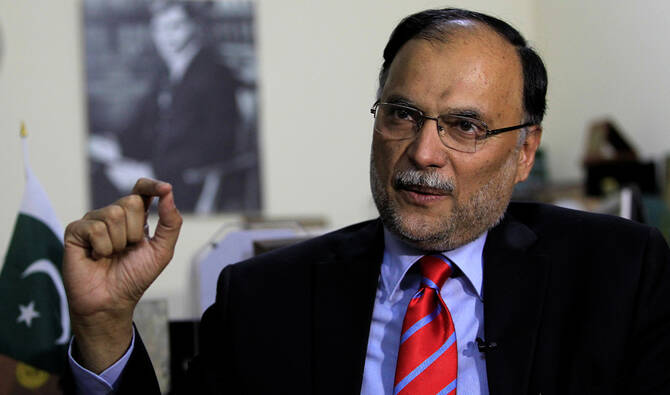
Ahsan Iqbal Pakistan's Minister of Planning and Development speaks with a Reuters correspondent during an interview in Islamabad, Pakistan on June 12, 2017 (Reuters/File)
Short Url
Updated 28 April 2025
Follow

Pakistan invites Turkmenistan’s energy companies to set up operations amid investment push

  • Islamabad is actively seeking energy cooperation with Turkmenistan through TAPI gas pipeline project
  • Pakistan faces energy problems due to rising demand, depleting resources and poor management

ISLAMABAD: Planning Minister Ahsan Iqbal has invited Turkmenistan’s energy companies to set up operations in Pakistan, state media reported on Monday, as Islamabad seeks foreign investment to boost the country’s economy and resolve its energy issues. 

Energy-starved Pakistan is actively pursuing energy cooperation with Turkmenistan, particularly through the TAPI (Turkmenistan-Afghanistan-Pakistan-India) gas pipeline project. This initiative aims to transport natural gas from Turkmenistan’s Galkynysh field to Pakistan, passing through Afghanistan and extending to India as well. 

Pakistan has attempted to strengthen cooperation in energy, tourism, mines and minerals as well as other priority sectors in recent months in its bid to attract international investment. It seeks to establish itself as a trade and transit hub that connects landlocked Central Asian states to the global economy.

“Minister for Planning and Development Ahsan Iqbal has invited energy companies of Turkmenistan to establish operations in Pakistan,” Radio Pakistan said in a report, adding that the minister was speaking at an event in Ashgabat. 

Iqbal said the TAPI gas pipeline project would contribute to regional energy security and support Pakistan’s green energy transition, deeming it essential to cope with climate change impacts.

The TAPI project was envisaged in the early 1990s and officially agreed upon in December 2010. It has primarily been delayed due to security concerns, geopolitical tensions, funding challenges and bureaucratic hurdles.

Pakistan faces significant gas and energy problems that have deepened over the years due to a combination of rising demand, depleting domestic resources and poor management.

The country’s natural gas reserves are rapidly declining, while efforts to discover new fields have lagged behind.

Pakistan has increasingly relied on imported liquefied natural gas which strains its foreign exchange reserves and exposes it to global price fluctuations.

Frequent power shortages known as load-shedding disrupt daily life and hurt economic productivity. Outdated infrastructure, inefficiencies in the energy sector, circular debt and policy inconsistencies have made it difficult to develop long-term sustainable solutions. 


PM Sharif calls on Pakistan, UAE to enhance cooperation in trade and investment

Updated 4 sec ago
Follow

PM Sharif calls on Pakistan, UAE to enhance cooperation in trade and investment

  • Prime Minister Shehbaz Sharif meets UAE Ambassador Salem Mohammed Salem Al Bawab Al Zaabi
  • Sharif invites collaboration with UAE in energy, minerals, IT, railways and aviation sectors, says PMO

ISLAMABAD: Prime Minister Shehbaz Sharif on Tuesday called on Pakistan and the UAE to enhance their trade, economic and investment relations, inviting investment from the Gulf country in Pakistan’s priority sectors. 

The UAE is Pakistan’s third-largest trading partner and a major source of foreign investment for the South Asian country. In May 2024, the UAE committed to investing $10 billion in Pakistan’s economic sectors in the coming years.

Sharif met UAE Ambassador Salem Mohammed Salem Al Bawab Al Zaabi at the Prime Minister House on Tuesday where the two sides discussed bilateral relations and economic ties, the Prime Minister’s Office (PMO) said. 

“Expressing his satisfaction at the volume of bilateral trade between the two sides, the Prime Minister further highlighted the need for both sides to focus on enhancing economic ties, trade, investment opportunities, and collaboration in areas such as energy, minerals, IT, railways and aviation,” the statement said. 

Sharif also invited increased UAE investments in key sectors to support Pakistan’s economic growth and stability, the PMO said.

The Pakistani prime minister acknowledged the UAE’s consistent support for Pakistan “in times of need,” acknowledging the country’s humanitarian assistance and developmental projects.

Al Zaabi thanked the Pakistani premier for extending him a warm welcome, the PMO said. 

“He reaffirmed the UAE’s firm resolve and keen interest to deepen its partnership with Pakistan across all spheres and assured the Prime Minister that he would work hard to explore new avenues for cooperation that would benefit both nations,” the statement concluded.