WASHINGTON:The Trump administration appeared to have deported a 2-year-old US citizen “with no meaningful process,” a federal judge said on Friday, as the child’s father sought to have her returned to the United States.
US District Judge Terry A. Doughty said the girl, who was referred to as “V.M.L.” in court documents, was deported with her mother.
“It is illegal and unconstitutional to deport, detain for deportation, or recommend deportation of a US citizen,” Doughty said.
He scheduled a hearing for May 19 “in the interest of dispelling our strong suspicion that the Government just deported a US citizen with no meaningful process.”
V.M.L. was apprehended by US Immigration and Customs Enforcement on Tuesday with her mother, Jenny Carolina Lopez Villela, and older sister when Villela attended a routine appointment at its New Orleans office, according to a filing by Trish Mack, who said the infant’s father asked her to act as the child’s custodian.
According to Mack, when V.M.L.’s father briefly spoke to Villela, he could hear her and the children crying. During that time, according to a court document, he reminded her that their daughter was a US citizen “and could not be deported.”
However, prosecutors said Villela, who has legal custody, told ICE that she wanted to retain custody of the girl and have her go with her to Honduras. They said the man claiming to be V.M.L.’s father had not presented himself to ICE despite requests to do so.
“It is therefore in V.M.L.’s best interest that she remain in the lawful custody of her mother,” Trump administration officials said in a filing on Friday. “Further, V.M.L. is not at risk of irreparable harm because she is a US citizen.”
V.M.L. is not prohibited from entering the US, prosecutors added.
The Department of Homeland Security and the Justice Department did not immediately respond to requests for comment.
The American Civil Liberties Union described V.M.L,’s case -and another similar — as a “shocking ... abuse of power.”
“These actions stand in direct violation of ICE’s own written and informal directives, which mandate coordination for the care of minor children with willing caretakers – regardless of immigration status – when deportations are being carried out,” it said.
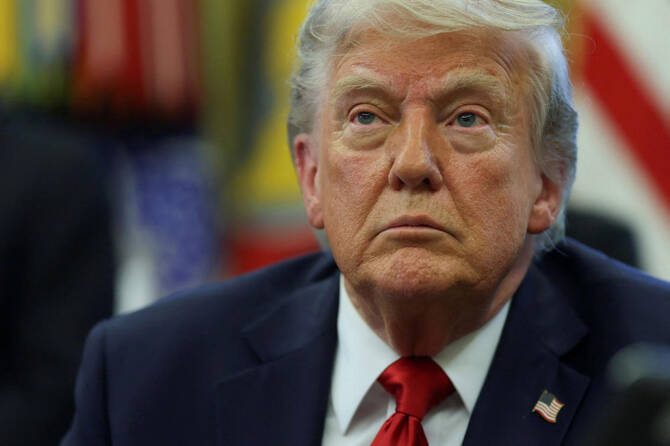
US President Donald Trump, whose presidential campaigns have focused heavily on immigration, said earlier this month he wanted to deport some violent criminals who are US citizens to El Salvadoran prisons.
The comments raised concern about a proposal that has alarmed civil rights advocates and is viewed by many legal scholars as unconstitutional.
The Supreme Court has ordered the Trump administration, which has already deported hundreds of people to El Salvador, to “facilitate and effectuate” the return of Maryland resident Kilmar Abrego Garcia, who was sent to the country on March 15 despite an order protecting him from deportation.

Two-year-old US citizen deported ‘with no meaningful process’
Short Url
https://arab.news/4qs6a
Two-year-old US citizen deported ‘with no meaningful process’
- “It is illegal and unconstitutional to deport, detain for deportation, or recommend deportation of a US citizen,” Doughty said
Iran war unsettles India’s packaged water makers as bottles, caps get pricey
- Higher polymer prices hurt bottled water industry
- Industry worth $5 billion has big multinational players like Pepsi, Coca-Cola
NEW DELHI: The Iran war is rattling India’s $5 billion packaged water market just ahead of the sweltering summer season.
One of the world’s fastest growing bottled water markets is seeing some manufacturers hike prices for distributors, as supply disruptions linked to the war fuel higher costs in everything from plastic bottles to caps, labels and cardboard boxes.
Though retail prices are yet to feel the heat and bigger companies are absorbing the pain, about 2,000 smaller bottled water makers have increased rates for their resellers by around 1 rupee per bottle, a 5 percent hike, which will rise by a further 10 percent in coming days, according to the Federation of All India Packaged Drinking Water Manufacturers’ Association.
Consumers usually pay less than 20 rupees, or around 20 US cents, for a one-liter bottle.
“There is chaos and within the next 4-5 days, this will start impacting customer prices,” said Apurva Doshi, the federation’s secretary general.
Rising oil prices have increased the cost of polymer, which is made from crude oil and is a key material for the industry’s plastic bottles. The cost of material used in making plastic bottles has risen by 50 percent to 170 rupees per kilogram, while the price of the caps has more than doubled to 0.45 rupees apiece. Even corrugated boxes, labels and adhesive tape are costing much more, industry letters showed.
Clean water is a privilege in the country of 1.4 billion people where researchers say 70 percent of the groundwater is contaminated, leaving people reliant on bottled water. Companies including Bisleri, Coca-Cola’s Kinley, Pepsi’s Aquafina, billionaire Mukesh Ambani’s Reliance and Tata all compete for a share of the $5 billion market. The companies did not respond to Reuters request for comment.
PREMIUM WATER FACES HEAT TOO
Within the broad bottled water market, natural mineral water is a $400 million business in India and a new, fast-growing wellness product for India’s wealthy.
The premium water segment accounted for 8 percent of the bottled water market last year in India, compared to just 1 percent in 2021, Euromonitor says.
Aava, which sells mineral water sourced from the foothills of the Aravalli mountains, has increased prices of its water bottles by 18 percent for resellers, Shiroy Mehta, CEO of the company, told Reuters.
“Most manufacturers are absorbing 40-50 percent of the cost to ensure that they don’t lose clients. It’s a poor situation for the beverage industry ahead of the summer season,” he said.
The mass market, however, is dominated by companies that produce “drinking water” to be sold in 1-liter bottles to customers. Clear Premium Water, a brand of India’s Energy Beverages, said in a notice to its distributors there had been an “unprecedented and continuous surge” in prices of key raw materials used in packaging and production.
“It is no longer possible for us to absorb the escalating costs while maintaining existing product prices,” the notice said.
One of the world’s fastest growing bottled water markets is seeing some manufacturers hike prices for distributors, as supply disruptions linked to the war fuel higher costs in everything from plastic bottles to caps, labels and cardboard boxes.
Though retail prices are yet to feel the heat and bigger companies are absorbing the pain, about 2,000 smaller bottled water makers have increased rates for their resellers by around 1 rupee per bottle, a 5 percent hike, which will rise by a further 10 percent in coming days, according to the Federation of All India Packaged Drinking Water Manufacturers’ Association.
Consumers usually pay less than 20 rupees, or around 20 US cents, for a one-liter bottle.
“There is chaos and within the next 4-5 days, this will start impacting customer prices,” said Apurva Doshi, the federation’s secretary general.
Rising oil prices have increased the cost of polymer, which is made from crude oil and is a key material for the industry’s plastic bottles. The cost of material used in making plastic bottles has risen by 50 percent to 170 rupees per kilogram, while the price of the caps has more than doubled to 0.45 rupees apiece. Even corrugated boxes, labels and adhesive tape are costing much more, industry letters showed.
Clean water is a privilege in the country of 1.4 billion people where researchers say 70 percent of the groundwater is contaminated, leaving people reliant on bottled water. Companies including Bisleri, Coca-Cola’s Kinley, Pepsi’s Aquafina, billionaire Mukesh Ambani’s Reliance and Tata all compete for a share of the $5 billion market. The companies did not respond to Reuters request for comment.
PREMIUM WATER FACES HEAT TOO
Within the broad bottled water market, natural mineral water is a $400 million business in India and a new, fast-growing wellness product for India’s wealthy.
The premium water segment accounted for 8 percent of the bottled water market last year in India, compared to just 1 percent in 2021, Euromonitor says.
Aava, which sells mineral water sourced from the foothills of the Aravalli mountains, has increased prices of its water bottles by 18 percent for resellers, Shiroy Mehta, CEO of the company, told Reuters.
“Most manufacturers are absorbing 40-50 percent of the cost to ensure that they don’t lose clients. It’s a poor situation for the beverage industry ahead of the summer season,” he said.
The mass market, however, is dominated by companies that produce “drinking water” to be sold in 1-liter bottles to customers. Clear Premium Water, a brand of India’s Energy Beverages, said in a notice to its distributors there had been an “unprecedented and continuous surge” in prices of key raw materials used in packaging and production.
“It is no longer possible for us to absorb the escalating costs while maintaining existing product prices,” the notice said.
© 2026 SAUDI RESEARCH & PUBLISHING COMPANY, All Rights Reserved And subject to Terms of Use Agreement.


