

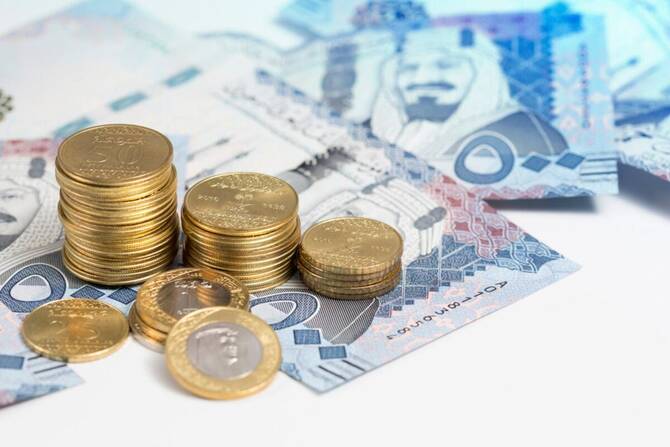
Saudi Arabia raises $990m in sukuk in April

Sukuk are Shariah-compliant financial instruments similar to bonds, offering investors partial ownership in an issuer’s assets.
Short Url
Updated 23 April 2025
Follow

Saudi Arabia raises $990m in sukuk in April

RIYADH: Saudi Arabia’s National Debt Management Center raised SR3.71 billion ($990 million) through its riyal-denominated sukuk issuance for April, reflecting a 40.5 percent increase compared to the previous month, according to an official statement.

The amount marks a significant rise from March, when the Kingdom secured SR2.64 billion through sukuk. In previous months, Saudi Arabia issued SR3.07 billion in February and SR3.72 billion in January, continuing a trend of strong activity in the domestic debt market.

Sukuk are Shariah-compliant financial instruments similar to bonds, offering investors partial ownership in an issuer’s assets. They are structured to adhere to Islamic finance principles, which prohibit interest payments.

According to the NDMC, the April issuance was divided into four tranches. The first tranche was valued at SR1.31 billion and is set to mature in 2029. The second amounted to SR80 million, maturing in 2032, while the third tranche, worth SR765 million, will expire in 2036. The largest portion, valued at SR1.55 billion, is due in 2039.

The Kingdom’s debt market has seen rapid growth in recent years, drawing increased interest from investors seeking fixed-income instruments amid a global environment of rising interest rates.

Earlier this month, a report by Kuwait Financial Center, known as Markaz, revealed that Saudi Arabia led the Gulf Cooperation Council region in primary debt issuances in the first quarter of the year. The Kingdom raised $31.01 billion from 41 offerings, accounting for 60.2 percent of all issuances across the GCC during that period.

In a separate development, global credit rating agency S&P Global said Saudi Arabia’s expanding non-oil sector and healthy sukuk issuance levels could contribute significantly to the growth of the global Islamic finance industry.

The agency projected global sukuk issuance could reach between $190 billion and $200 billion in 2025, with foreign currency-denominated issuances contributing up to $80 billion, provided market volatility remains contained.

A report published in December by Kamco Invest further projected that Saudi Arabia would account for the largest share of bond maturities in the GCC from 2025 to 2029, with a total of $168 billion expected to mature during that period.


Saudi minister at Davos urges collaboration on minerals

Global collaboration on minerals essential to ease geopolitical tensions and secure supply, WEF hears. (Supplied)
Updated 20 January 2026
Follow

Saudi minister at Davos urges collaboration on minerals

  • The reason of the tension of geopolitics is actually the criticality of the minerals

LONDON: Countries need to collaborate on mining and resources to help avoid geopolitical tensions, Saudi Arabia’s minister of industry and mineral resources told the World Economic Forum on Tuesday.

“The reason of the tension of geopolitics is actually the criticality of the minerals, the concentration in different areas of the world,” Bandar Alkhorayef told a panel discussion on the geopolitics of materials.

“The rational thing to do is to collaborate, and that’s what we are doing,” he added. “We are creating a platform of collaboration in Saudi Arabia.”

Bandar Alkhorayef, Saudi Minister of Industry and Mineral Resources 

The Kingdom last week hosted the Future Minerals Forum in Riyadh. Alkhorayef said the platform was launched by the government in 2022 as a contribution to the global community. “It’s very important to have a global movement, and that’s why we launched the Future Minerals Forum,” he said. “It is the most important platform of global mining leaders.”

The Kingdom has made mining one of the key pillars of its economy, rapidly expanding the sector under the Vision 2030 reform program with an eye on diversification. Saudi Arabia has an estimated $2.5 trillion in mineral wealth and the ramping up of extraction comes at a time of intense global competition for resources to drive technological development in areas like AI and renewables.

“We realized that unlocking the value that we have in our natural resources, of the different minerals that we have, will definitely help our economy to grow to diversify,” Alkhorayef said. The Kingdom has worked to reduce the timelines required to set up mines while also protecting local communities, he added. Obtaining mining permits in Saudi Arabia has been reduced to just 30 to 90 days compared to the many years required in other countries, Alkhorayef said.

“We learned very, very early that permitting is a bottleneck in the system,” he added. “We all know, and we have to be very, very frank about this, that mining doesn’t have a good reputation globally.

“We are trying to change this and cutting down the licensing process doesn’t only solve it. You need also to show the communities the impact of the mining on their lives.”

Saudi Arabia’s new mining investment laws have placed great emphasis on the development of society and local communities, along with protecting the environment and incorporating new technologies, Alkhorayef said. “We want to build the future mines; we don’t want to build old mines.”