






RIYADH: Saudi Arabia’s streets are increasingly seeing women dressed in vibrant and daring colors, patterns and fabrics as abaya designers make more creative choices.
Once considered a garment to hide behind, abayas have become a form of artistic beauty that Saudi girls and women use to express themselves, while retaining modesty and tradition.
Today there is an influx of brands specializing in quirkier designs whose aim is to make women feel both comfortable and unique in their clothing choices.
Reem Al-Bayyat, founder of Mad Since 1982 (Instagram: madsince1982), told Arab News that “every piece tells a story; no two look the same.”
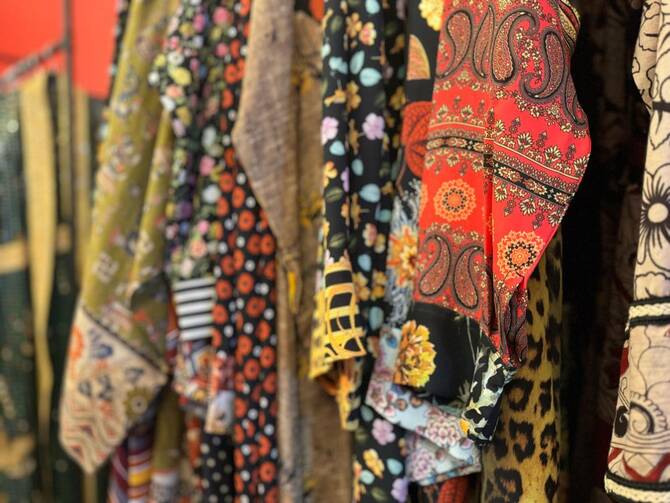
Mad Since 1982 weaves together different pieces of fabric printed with Al-Bayyat’s illustrations. As a collage artist, she never combines the same fabrics in the same way twice.
“It is a story, but also a risk and an adventure, whether things will work out or not … all my friends ask me how I dare to put the fabrics together in this way,” she said.
With a passion for ready-to-wear, Al-Bayyat’s goal is to make wearable, everyday pieces more beautiful and elegant.
“I want it to be close to the hearts of the people wearing it, I want them to feel special.
“That is how I was inspired to created Hadaweh.”
Hadaweh, Mad Since 1982’s recent modest wear creation, is an original clothing concept that can be worn in multiple ways for different occasions.
Al-Bayyat has been working for years with handmade block printing companies in India that use natural colors and fabrics, and occasionally imports fabrics with patterns she creates herself.
“My next step is having my own printing lab in my atelier,” she said.
Al-Bayyat, a former professional photographer who focused on fashion, draws inspiration from both local and international cultures.
“I have a lot of freedom when I’m working without any fear,” she said.
Another Saudi abaya brand exhibiting similar principles of individuality is Lamya’s Abayas (Instagram: lamya.abayas), founded by Lamya Al-Sarra.
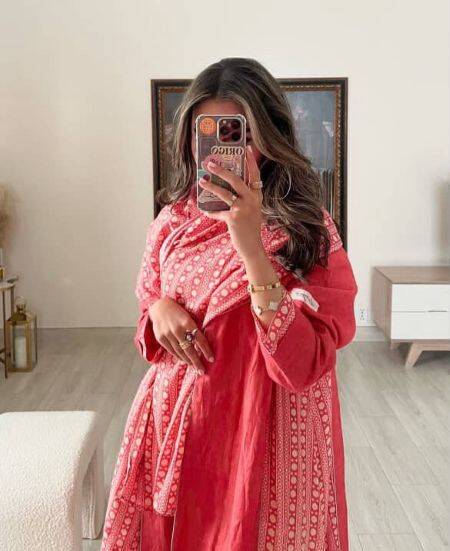
Al-Sarra’s abayas are colorful and full of life, designed to reflect the personality and confidence of the women wearing them.
“I would describe Lamya’s Abayas as timeless, elegant, and effortlessly stylish. Each piece is designed to make a statement, while still feeling versatile and wearable,” she said.
“I love playing with bold colors, interesting cuts, and unexpected details that set each design apart.”
As a child, Al-Sarra spent her time sketching dresses and different looks in a notebook, and although that dream did not follow her through university, she found herself returning to her roots when the idea of starting her own abaya brand came to fruition.
Unimpressed with the designs available in stores, Al-Sarra decided to create her own.
“I kept designing pieces that felt true to me, and soon enough, people started stopping me to ask where my abayas were from. I’d tell them, ‘It’s mine. I designed it.’”
The hobby that she practiced for friends and family quickly became a full-fledged business.
Al-Sarra favors self-expression when choosing colors and designs, especially through vibrant summer tones.
The garments are meant to spark joy and represent individuality, helping people feel confident in their clothing.
“I believe your surroundings shouldn’t limit how you express yourself. Whether you’re wearing something bold, trendy, or completely unique, it should always reflect you,” she said.
Al-Sarra uses a variety of different fabrics for different looks and occasions — linen, for example, for light and breathable wear in summer, richer textures like velvet or tweed in winter, and taffeta and katan for more formal or structured looks.
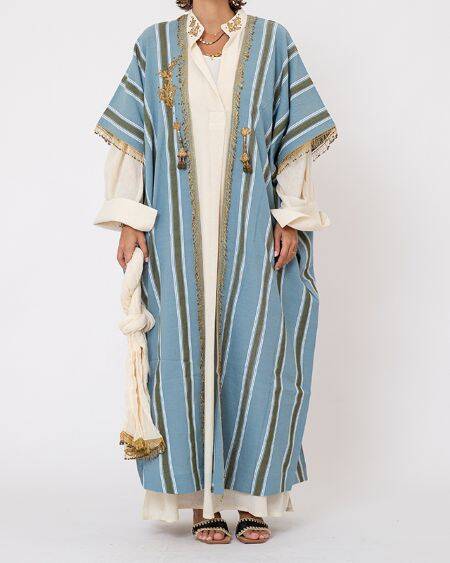
Celebrating both family and sustainability, Moja Majka (Instagram: mojamajka) is a slow fashion abaya brand founded by a mother and daughter that is built on values of authenticity, as well as cultural and natural connection.
Sarah Basaad and her mother Sureyya Barli launched Moja Majka in 2012 to answer their need for more colorful garments that use organic and airy fabrics.
“It is an extension of our characters,” Basaad said.
Going for timeless rather than trendy, Moja Majka takes inspiration from both Turkish and Saudi cultures, since Barli is of Turkish descent.
The brand’s textiles are completely organic linens, cottons, and silks, some woven in Turkiye.
“We support local artisans and artisanal work,” Basaad said.
The brand is focused on bringing back long-forgotten artisanal work. “We collect antique handcrafted pieces and fabrics that are no longer able to be reproduced in our time, she said.
“Our kaftans are not a victim of trends, but a classic to pass onto your loved ones.”


