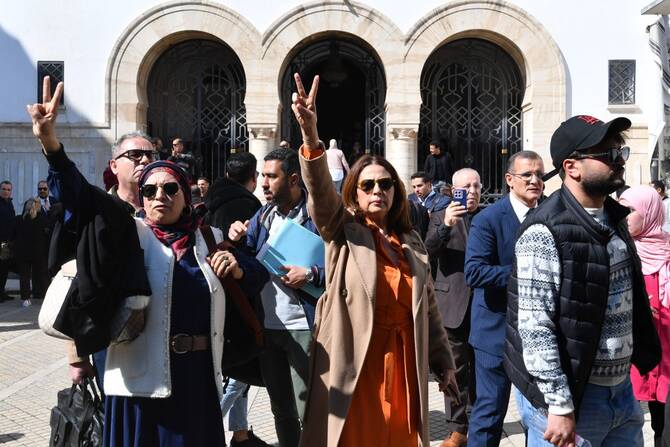
TUNIS: A Tunisian court handed jail terms of 13 to 66 years to opposition leaders, businessmen and lawyers on charges of conspiring against state security, the state news agency TAP reported on Saturday, citing a judicial official.
The opposition says the charges were fabricated and the trial a symbol of President Kais Saied’s authoritarian rule.
Rights groups say Saied has had full control over the judiciary since he dissolved parliament in 2021 and began ruling by decree. He dissolved the independent Supreme Judicial Council in 2022.
The state news agency did not provide further details about the sentences.
Forty people, including high-profile politicians, businessmen and journalists, were being prosecuted in the case. More than 20 have fled abroad since being charged.
Some of the opposition defendants — including Ghazi Chaouachi, Issam Chebbi, Jawahar Ben Mbrak, Abdelhamid Jlassi, Ridha BelHajj and Khyam Turki — have been in custody since being detained in 2023.
“In my entire life, I have never witnessed a trial like this. It’s a farce, the rulings are ready, and what is happening is scandalous and shameful,” said lawyer Ahmed Souab, who represents the defendants, on Friday before the ruling was handed down.
Authorities say the defendants, who include former officials and former head of intelligence, Kamel Guizani, tried to destabilize the country and overthrow Saied.
“This authoritarian regime has nothing to offer Tunisians except more repression,” the leader of the opposition Workers’ Party, Hamma Hammami, said.
Saied rejects accusations that he is a dictator and says he is fighting chaos and corruption that is rampant among the political elite.


![]()

Tunisian court sentences opposition leaders to jail terms of 13 to 66 years
Short Url
https://arab.news/mxsu9
Tunisian court sentences opposition leaders to jail terms of 13 to 66 years
- The opposition says the charges were fabricated and the trial a symbol of President Kais Saied’s authoritarian rule
- The state news agency did not provide further details about the sentences.
Latest updates


© 2026 SAUDI RESEARCH & PUBLISHING COMPANY, All Rights Reserved And subject to Terms of Use Agreement.