KARACHI: China’s Overseas Ports Holding Company (COPHC) on Wednesday presented a detailed plan to develop a high-tech aquaculture industry in Pakistan’s coastal city of Gwadar, the maritime affairs ministry said, describing the plan as a “transformative opportunity” for the country’s coastal development.
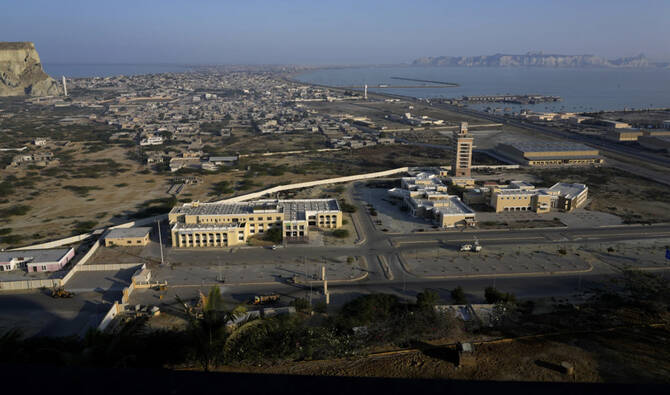
Gwadar is in Pakistan’s impoverished southwestern province of Balochistan, a sparsely populated, mountainous, desert region where China is involved in the development of a deep-sea port on the Arabian Sea as part of a $60 billion China-Pakistan Economic Corridor.
The aquaculture industry involves the farming of aquatic organisms such as fish, shrimps, crabs, oysters, seaweed, and other marine or freshwater species. In a meeting with Pakistan’s Maritime Affairs Minister Junaid Anwar Chaudhry, COPHC Chairman Yu Bo outlined his organization’s vision to develop a sustainable, technologically advanced aquaculture sector in the port city.
“This project will harness Gwadar’s rich marine resources and transform the city into a key hub for seafood production, processing, and export,” Chaudhry was quoted as saying by the ministry. He highlighted the project’s potential to generate employment, attract investment and strengthen the local economy.
The Pakistani minister assured full government support for all investors and companies aiming to establish operations in the country toward unlocking Pakistan’s blue economy.
“We strongly support initiatives that bring investment, technology, and jobs to our coastal regions,” he said.
Chaudhry noted that Gwadar’s coastline offers immense potential for aquaculture ventures due to its favorable sea conditions and proximity to international markets. He emphasized the importance of developing hatcheries, seafood processing facilities and sustainable aquaculture farms to meet global quality standards and boost exports. The minister said developing aquaculture was key to enhancing exports and ensuring food security in Pakistan.
Both sides agreed to continue coordination through relevant government departments and technical experts to develop viable models and policy frameworks for smooth project implementation.


![]()

Pakistan, China to develop aquaculture industry in Gwadar to boost seafood production, export
Short Url
https://arab.news/b5r6z
Pakistan, China to develop aquaculture industry in Gwadar to boost seafood production, export
- Chinese port company presents plan to develop high-tech aquaculture industry in Pakistan’s coast city of Gwadar
- Developing aquaculture key to enhancing exports, ensuring food security, says Pakistan’s maritime affairs minister
Latest updates


© 2026 SAUDI RESEARCH & PUBLISHING COMPANY, All Rights Reserved And subject to Terms of Use Agreement.