


RIYADH: Saudi Arabia is on track to become a dominant force in the $8 billion feeder shipping market across the Middle East, Eastern Africa, Turkiye, and South Asia by 2030, according to new research.
The global feeder shipping industry is expected to reach a staggering $451 billion by the end of the decade, with the Kingdom emerging as a key regional and international player in maritime trade.
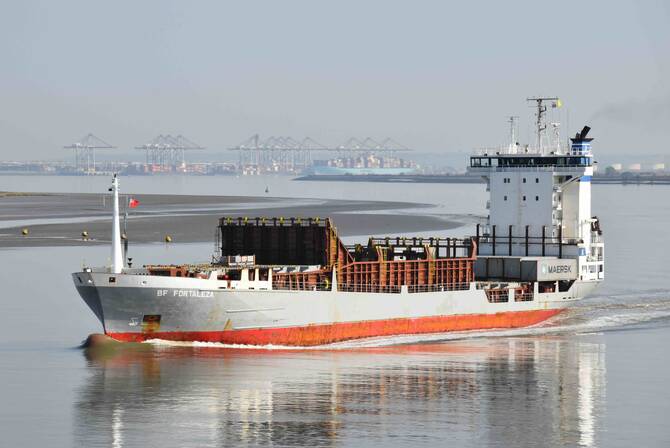
Feeder vessels—smaller ships that transfer cargo between regional ports and large mainline vessels—play a critical role in streamlining supply chains.
These ships are adept at navigating smaller or less accessible ports, where they consolidate cargo before transferring it to larger vessels for long-distance transport.
This method reduces the number of port calls required by mainline ships, easing congestion and enhancing overall logistics efficiency at major terminals.
A new report by global consulting firm Arthur D. Little, titled “Unlocking Opportunities in the Feeder Shipping Sector,” reveals that Saudi Arabia could capture up to 45 percent of feeder shipping trade in the Red Sea and 35 percent in the Gulf.
This expected growth is fueled by the Kingdom’s ongoing investments in port infrastructure, its strategic geographic location, and its ambitious logistics agenda under Vision 2030.
Recent initiatives, such as the launch of the “JRS” shipping service by Global Feeder Shipping in collaboration with the Saudi Ports Authority, support this outlook.
Announced in December, the JRS service connects Jeddah Islamic Port with key terminals in Egypt, Oman, and India—bolstering Saudi Arabia’s role in enhancing international maritime connectivity and operational efficiency.
Paolo Carlomagno, partner at Arthur D. Little, highlighted the findings, noting Saudi Arabia’s increasingly vital role in shaping the future of global trade.
“Saudi Arabia sits at the intersection of macroeconomic shifts in global trade, regional port infrastructure growth, and heightened investor appetite for logistics assets that deliver strong, stable returns,” he said.
“Its ability to combine geographic proximity to high-growth corridors with government-backed investment strategies creates a uniquely scalable feeder shipping environment that few markets globally can match,” he added.
Feeder shipping—the transport of containers between smaller ports and major global hubs—is becoming an increasingly attractive segment due to asset returns of 17 to 23 percent—outpacing other freight sectors like rail, trucking, and traditional maritime transport, ADL stated.
While historically underutilized, the feeder shipping sector is rapidly emerging as a vital link in the global logistics chain.
According to projections, container throughput in the Red Sea is set to nearly double — from 12 million twenty-foot equivalent units in 2021 to 23 million by 2030. This surge further solidifies Saudi Arabia’s position as a regional logistics hub, enhancing intra-regional connectivity and strengthening its role along critical East-West trade routes.
The Arthur D. Little report emphasizes that as consolidation and investment continue to reshape the global maritime landscape, Saudi Arabia’s strategic significance will only grow.
To capitalize on this momentum, the report outlines a phased market entry strategy for feeder shipping operators.
ADL recommends an asset-light approach in the initial stages, focusing on vessel chartering and flexible operations.
This model allows new entrants to quickly establish a foothold, mitigate upfront capital risks, and respond nimbly to market demand.
Over time, operators can scale into asset ownership and pursue deeper integration with major shipping lines, freight forwarders, and exporters—cementing long-term growth and resilience within the sector.
“Saudi Arabia offers a rare combination of volume potential, policy alignment, and port readiness that makes it a natural launchpad for feeder shipping operations,” said Alexandre Sawaya, principal at ADL, Middle East.
“The Kingdom is no longer a peripheral player in maritime trade. It is fast becoming a focal point for regional connectivity and a strategic base for operators seeking scale and resilience,” he added.
The analysis also highlights that feeder shipping is well-aligned with Saudi Arabia’s environmental and sustainability goals.
Due to their smaller size and adaptable design, feeder vessels are particularly suitable for retrofitting with cleaner fuel alternatives — such as methanol, biodiesel hybrids, and hybrid-electric propulsion systems. This technological flexibility complements the Kingdom’s broader climate agenda, which includes a 25 percent reduction in carbon emissions by 2030 and a commitment to achieving net-zero emissions by 2060.
With rising container volumes, expanding port infrastructure, and growing investor interest, Arthur D. Little concludes that Saudi Arabia is uniquely positioned to lead the next wave of growth in the feeder shipping sector—both regionally and on the global stage.


