

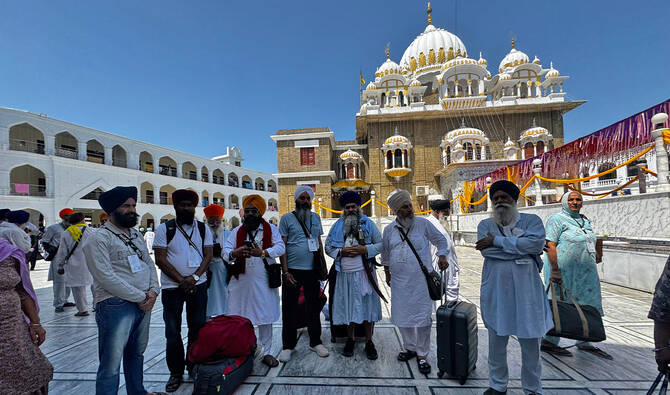

HASAN ABDAL, Pakistan: For much of the year, Hasan Abdal, a small town about 45 kilometers northwest of Islamabad, remains quiet and uneventful. But this week, its narrow streets have come to life with color and devotion as Sikh pilgrims from India and other countries gather at Gurdwara Panja Sahib in their vibrant turbans and flowing beards to mark Baisakhi, one of the holiest days in the Sikh calendar.
The festival, held every April 14, commemorates the founding of the Khalsa, the Sikh order established by Guru Gobind Singh in 1699, and coincides with the spring harvest.
For many pilgrims, the journey to Pakistan, which is home to some of Sikhism’s most sacred sites, is a once-in-a-lifetime spiritual experience.
“What Makkah and Madinah are for Muslims, Pakistan is for Sikhs,” Sardar Sartook Singh, president of the temple in Hasan Abdal, told Arab News.
“Every year, around 3,000 pilgrims come from India, along with many more from other parts of the world, to Gurdwara Panja Sahib for the Baisakhi celebrations,” he continued. “This year, the Government of Pakistan issued over 6,000 visas to Indian pilgrims. Out of these, around 5,800 have arrived.”
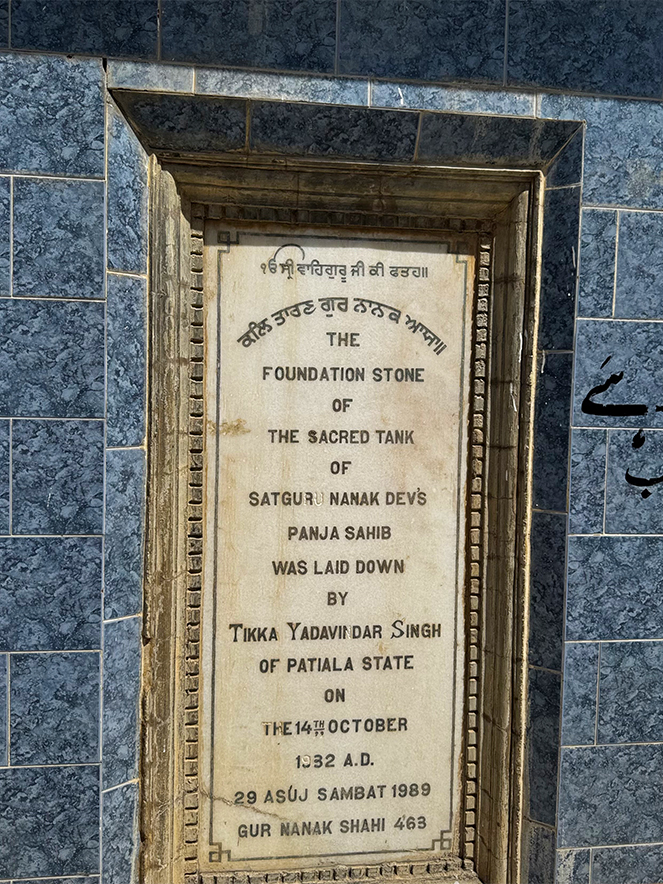
The picture, taken on April 12, 2025, shows the foundation stone of the sacred tank laid by the ninth and last ruling Maharaja of Patiala, Tikka Yadavindra Singh, in 1989 at the Panja Sahib shrine in Hasan Abdal, Pakistan. (AN photo)
In recent years, Pakistan has stepped up efforts to promote religious tourism by providing easy access to historic sites linked to Hinduism, Sikhism and Buddhism.
A key initiative is the Kartarpur Corridor, launched in November 2019, which allows Sikhs from India to visit Gurdwara Darbar Sahib in Kartarpur without a visa. The site holds deep significance as the place where Guru Nanak, the founder of Sikhism, spent his final years.
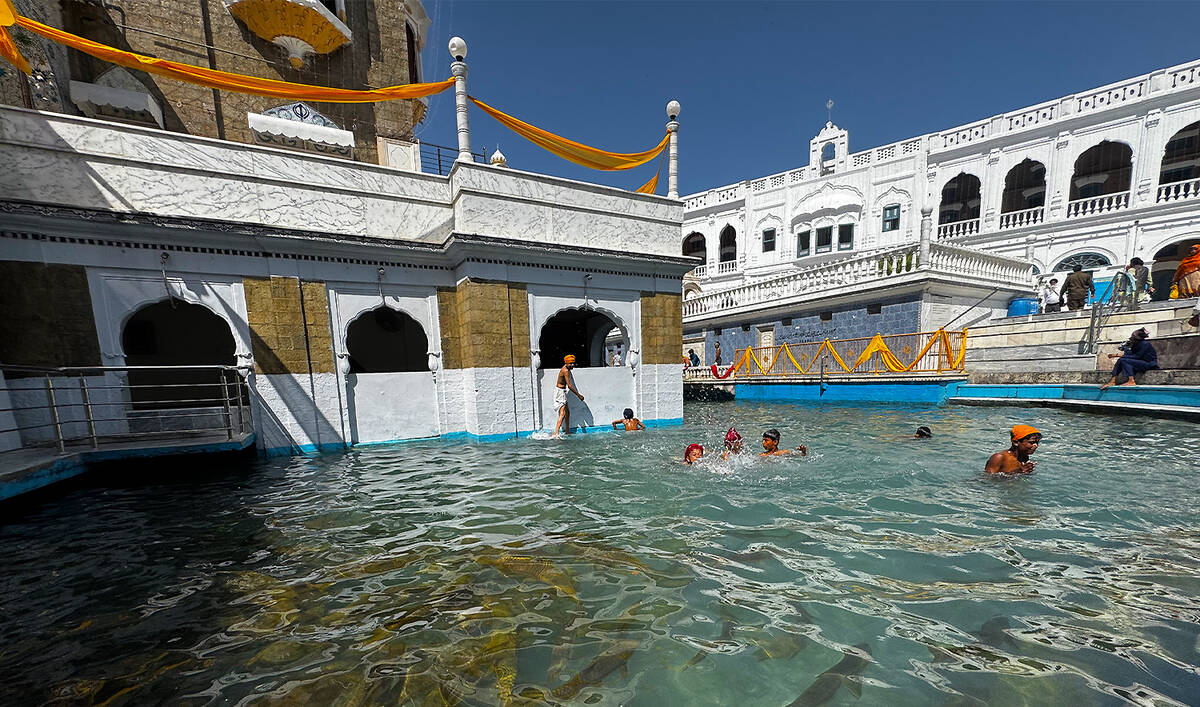
Sikh devotees take a dip in the holy sarovar at the Gurdwara Panja Sahib during the Baisakhi festival, the annual spring harvest festival, in Hasan Abdal on April 12, 2025. (AN photo)
The temple in Hasan Abdal also holds immense importance. According to legend, Guru Nanak once stopped a boulder, thrown at him by a local saint, with his hand, leaving behind the imprint, or panja, that gives the shrine its name.
Today, the site draws pilgrims from India, the United Kingdom, Canada and beyond, many of whom also visit two other important Gurdwaras of Kartarpur Sahib and Nankana Sahib.
“I had always dreamt of visiting Guru [Nanak] Ji’s shrine,” said 60-year-old Jaranjeet Kaur, who traveled from Patiala in India with her niece. “Seeing it made me happier than the birth of my first child.”
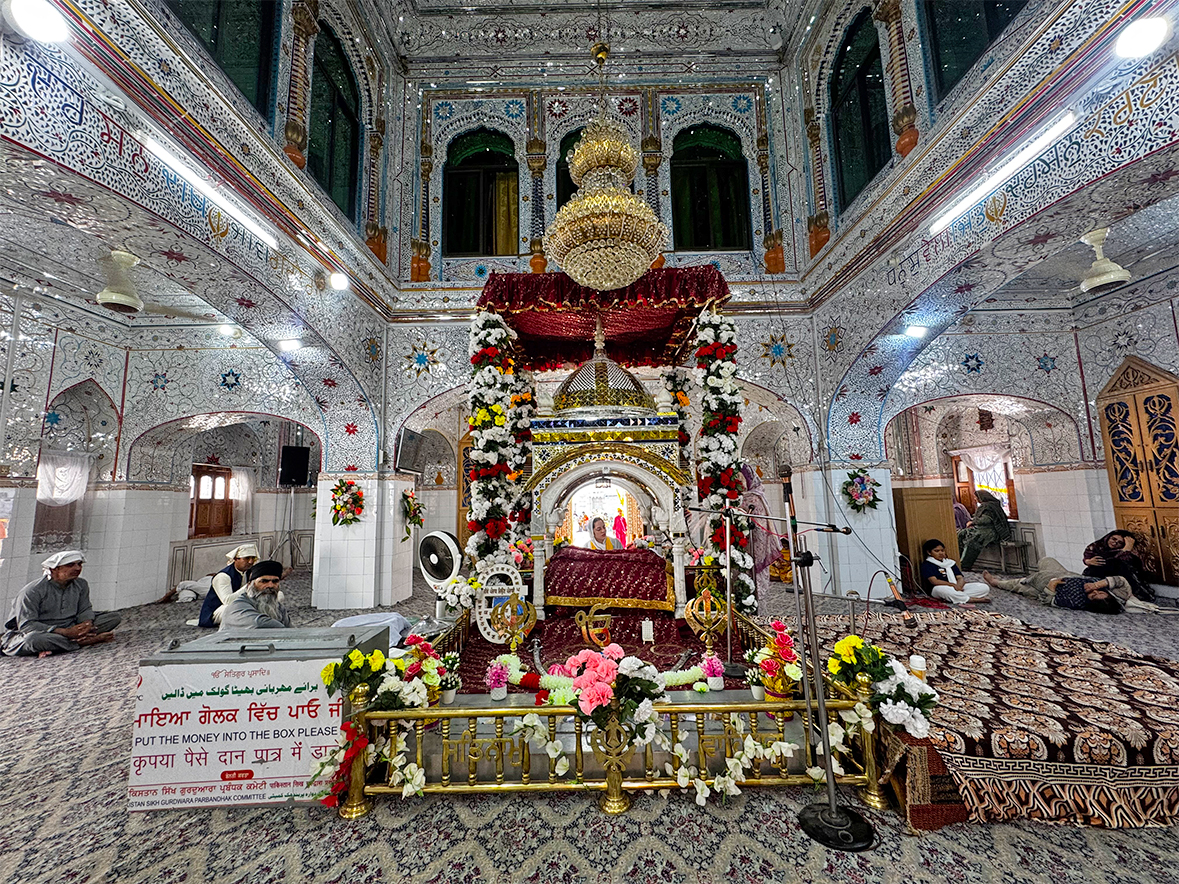
A Sikh devotee worships during the Baisakhi festival at the Panja Sahib shrine in Hasan Abdal, Pakistan, on April 12, 2025. (AN photo)
Her niece Sugdeep Kaur also expressed her emotions about their ongoing journey.
“Since childhood, we heard of the imprint of Guru Nanak’s hand on a boulder with flowing water,” she said. “But witnessing it in person brings immense peace. I’ll return next year with my children from Canada.”
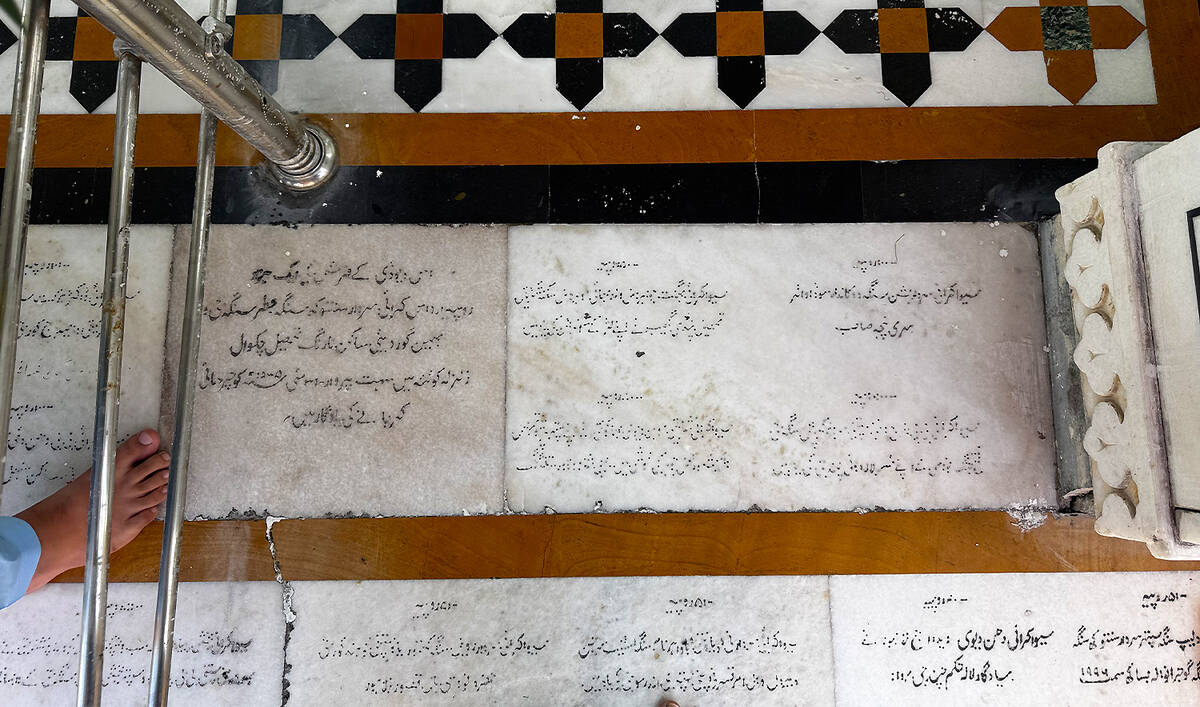
The picture taken on April 12, 2025, shows the carved marble floor of the Panja Sahib shrine in Hasan Abdal, Pakistan. (AN photo)
One of Sikhism’s features is selfless service, or sewa, which is also central to this spiritual gathering. Pilgrims from India and other places can be seen working in the kitchen or helping others. One of them, Sukhpal Kaur, washes dishes with a smile.
“Without sewa, there is no mewa [reward],” she said. “No one has asked us to help, but it’s a blessing to serve.”
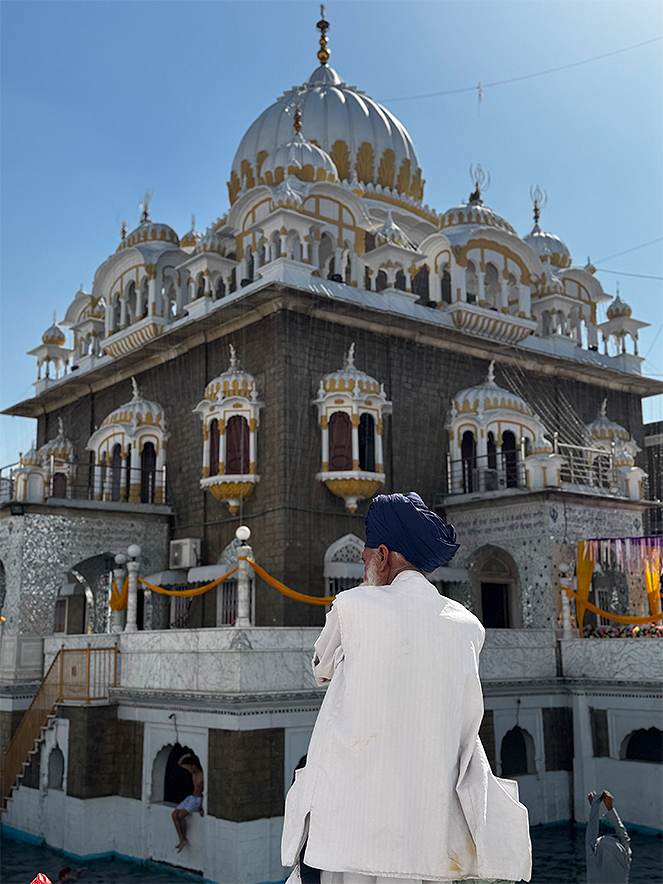
A Sikh devotee worships during the Baisakhi festival at the Panja Sahib shrine in Hasan Abdal, Pakistan, on April 12, 2025. (AN photo)
Amarjeet Kaur, another Indian pilgrim from Barnala, said her trip to Pakistan was like a dream come true.
“I used to pray daily to see Baba Guru Nanak’s shrine,” she said. “This year, he has listened. The care shown by Pakistani pilgrims also compelled us to join in sewa.”
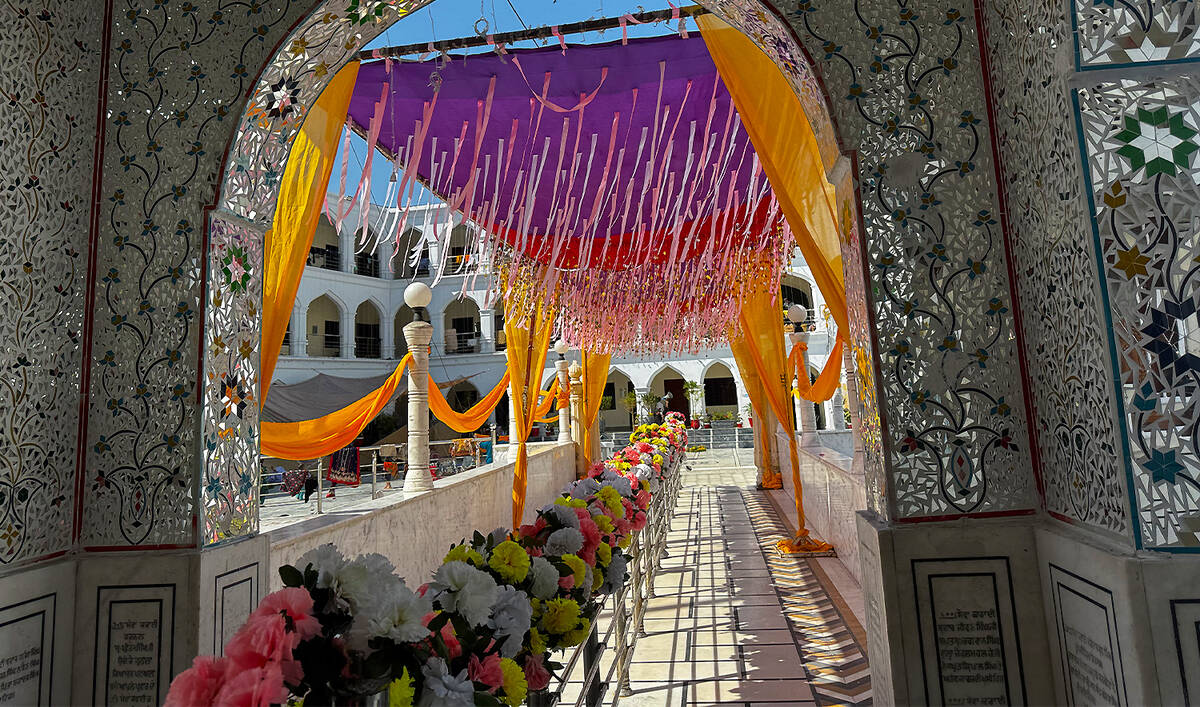
The picture taken on April 12, 2025, shows a decorated hallway of the Panja Sahib shrine in Hasan Abdal, Pakistan. (AN photo)
Speaking to Arab News, Saifullah Khokhar, additional secretary of shrines at the Evacuee Trust Property Board, said there was a marked increase in the number of Sikh pilgrims every year.
“Religious tourism has grown 72 percent in the past seven months,” he said. “Visitors leave with a changed view of Pakistan, one of hospitality and peace.”
As Sikh pilgrims at the temple chanted hymns, shared meals and bathed in the sacred water at Panja Sahib, their presence transformed the quiet town into a vibrant expression of faith, community and cross-border connection.
“Pakistan is more sacred to Sikhs [living abroad] than to Pakistanis themselves,” Singh, the Gurdwara’s president, said. “Our faith began here. It is our spiritual home.”




