DEIR AL-BALAH: Israel struck a hospital in northern Gaza early Sunday, forcing patients to evacuate as attacks intensified.
The pre-dawn strike hit Al-Ahli Hospital in Gaza City, after Israel issued an evacuation warning, according to Gaza’s ministry of health. One patient, a girl, died during the evacuation because medical staff were unable to provide urgent care, it said.
Strikes on Palm Sunday
The hospital is run by the Diocese of Jerusalem, which condemned the attack in a statement, saying it happened on “Palm Sunday, the start of the Holy Week, the most sacred week of the Christian year.” Palm Sunday commemorates Jesus’ entry into Jerusalem.
Israel said it struck a command and control center used by Hamas at the hospital to plan and execute attacks against Israeli civilians and soldiers, without providing evidence. It said prior to the strike, steps were taken to mitigate harm, including issuing warnings, and using precise munitions and aerial surveillance.
In a statement Sunday, Hamas denied the allegations that the hospital was used by militants and called for an independent international investigation.
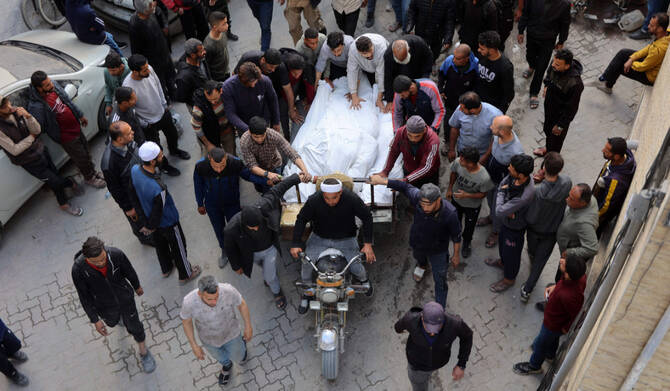
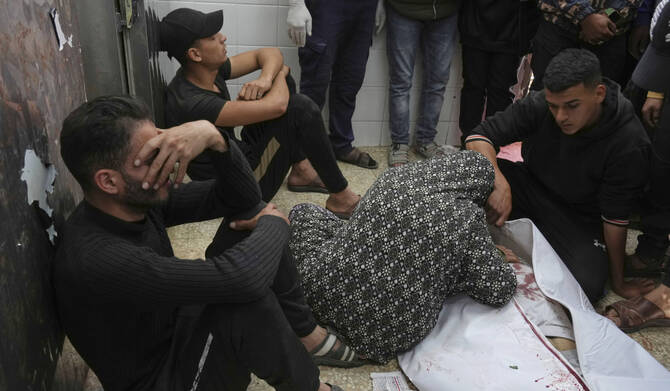
Hours later, a separate strike on a car in Deir Al-Balah in central Gaza, killed at least seven people — six brothers and their friend — according to staff at the morgue of the Al-Aqsa Martyrs Hospital, which received the bodies. The brothers, of whom the youngest was 10, were buried in Deir Al-Balah.
Their father, Ibrahim Abu Mahadi, said his sons worked for a charity that distributes food to Palestinians in Gaza. “For what sin were they killed?” he said.
Associated Press reporters saw the mangled, bloodied car after the attack as relatives wept over the bodies.
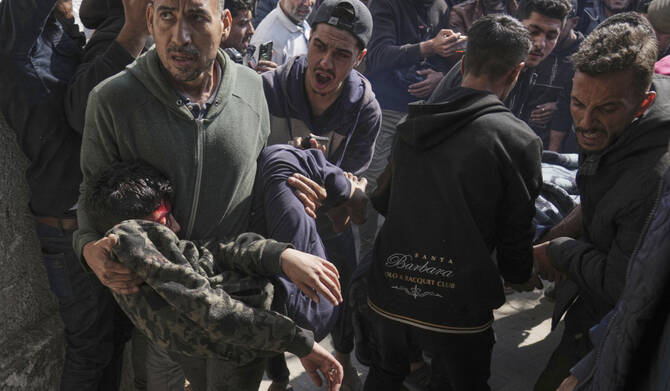
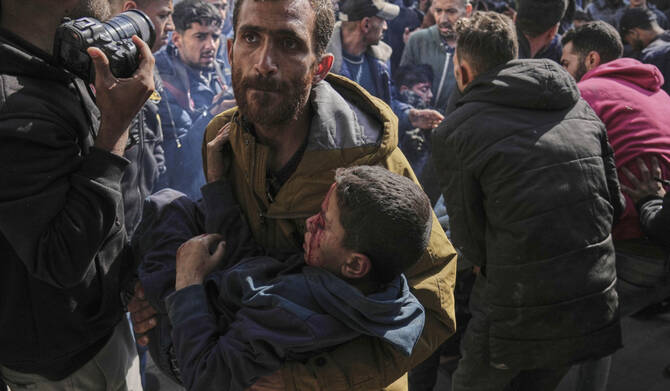
Other strikes in the southern city of Khan Younis killed at least three people, according to staff at Nasser Hospital, which received the bodies.
The Israeli military also said they targeted another command and control center in the area of Deir Al-Balah when many Hamas militants were present and planning to carry out an attack against Israeli soldiers. This was not connected to the strike on the car in the same area, which the army said it was looking into.
In the last 24 hours, Gaza’s health ministry said that 11 people were killed and more than 100 wounded.
The war started after Hamas killed 1,200 people during its Oct. 7, 2023, attack, mostly civilians, and took 250 people captive, many of whom were eventually freed in ceasefire deals.
More than 50,000 Palestinians in Gaza have so far been killed in Israel’s retaliatory offensive, according to the health ministry there, which does not differentiate between combatants and civilians in its count but says more than half of the dead are women and children.
Israel expands across Gaza
The strikes came hours after Israel’s defense minister said that military activity would rapidly expand across Gaza and that people would have to evacuate from “fighting zones.” Israel also announced Saturday the completion of the Morag corridor, cutting off the southern city of Rafah from the rest of Gaza, with the military saying it would soon expand “vigorously” in most of the small coastal territory.
Israeli authorities have vowed to pressure Hamas to release the remaining 59 hostages, 24 believed to be alive, and accept proposed new ceasefire terms.
The director of Al-Ahli Hospital, Dr. Fadel Naim, said they were warned of the attack before it was struck. In a post on X, he wrote that the emergency room, pharmacy and surrounding buildings were severely damaged, impacting more than 100 patients and dozens of medical staff.
The health ministry said the strike destroyed the ward for outpatients and laboratories and damaged the emergency ward.
Images of the aftermath showed the hospital’s caved-in cement roof, surrounded by debris. Dr. Munir Al-Boursh, the health ministry’s director general called the evacuation frightening, with people carried out into the streets in hospital beds.
“It was very scary for the patients ... we did not know what happened,” he said. The health ministry said patients have since been transferred to three other hospitals in Gaza City, including Shifa, Al-Quds and the Red Crescent Field Hospital.
The aid group Medical Aid for Palestinians said this was the fifth attack on the hospital since the war began.
Medical facilities often come under fire in wars, but combatants usually depict such incidents as accidental or exceptional, since hospitals enjoy special protection under international law. In its 18-month campaign in Gaza, Israel has stood out by carrying out an open campaign on hospitals, besieging and raiding them, some several times, as well as hitting multiple others in strikes while accusing Hamas of using them as cover for its fighters.
Last month Israel struck Nasser Hospital in Khan Younis city, the largest in southern Gaza, killing two people and wounding others and causing a large fire, the territory’s health ministry said. The facility was overwhelmed with dead and wounded when Israel ended the ceasefire with a surprise wave of airstrikes.


![]()
![]()
![]()
![]()
![]()

Israel intensifies strikes across Gaza on Palm Sunday, targets hospital in territory’s north

Short Url
https://arab.news/c726k
Israel intensifies strikes across Gaza on Palm Sunday, targets hospital in territory’s north
- Separate strike on a car in Deir Al-Balah in central Gaza killed at least seven people — six brothers and their friend
- Their father, Ibrahim Abu Mahadi, said his sons worked for a charity that distributes food to Palestinians in Gaza


Latest updates


© 2026 SAUDI RESEARCH & PUBLISHING COMPANY, All Rights Reserved And subject to Terms of Use Agreement.