

Cybertrucks in the desert: Tesla launches in Saudi Arabia

Visitors look at the Tesla Model Y, displayed during the inauguration ceremony of first Tesla showroom, in Riyadh. REUTERS/Mohammed Benmansour
Short Url
Updated 11 April 2025
Follow

Cybertrucks in the desert: Tesla launches in Saudi Arabia

  • Tesla launches operations in Saudi Arabia amid improved relations
  • Saudi aims for 30 percent EV adoption in five years
  • Tesla plans online orders, pop-up stores, and charging stations

RIYADH: Tesla launched operations in Saudi Arabia on Thursday, a sign that CEO Elon Musk has patched up relations with the Kingdom and that the oil capital was moving forward with an ambitious electric-vehicle policy.

A Tesla Cybertruck and a redesigned Model Y sedan dominated a plaza dotted with palm trees, as the EV maker officially opened for business.

A small crowd tried out the vehicles as a massive outdoor video screen showed a Cybertruck plowing through a dusky desert, leaving behind plumes of sand.
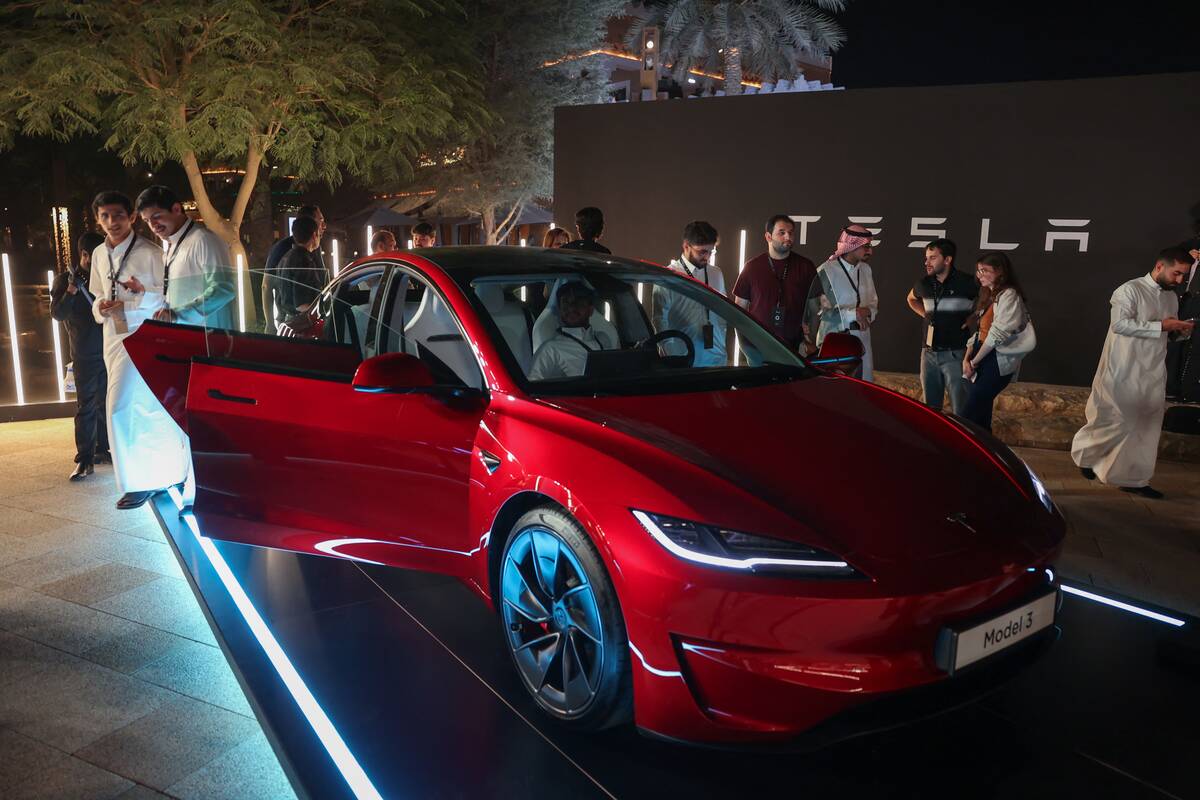


The Tesla electric vehicle company owned by billionaire Elon Musk opened its first showrooms Saudi Arabia on April 10. AFP/Fayez Nureldine

Tesla needs new customers: globally, it posted a 13 percent drop in first-quarter sales, its weakest performance in nearly three years, driven by a backlash against Musk’s role in the Trump administration, rising competition and an aging product lineup, beyond the refreshed Model Y.

The Kingdom, a major investor in Tesla rival Lucid, aims for 30 percent EV adoption five years from now, up from about 1 percent last year.

Musk engaged in a high-profile feud with the Kingdom’s sovereign wealth fund over a potential investment nearly a decade ago, but relations between Riyadh and Musk have improved since he took a high-profile role in US President Donald Trump’s election campaign and administration.

Trump is set to visit Saudi Arabia in the coming weeks in his first foreign trip. Local Tesla executives at the launch described plans to allow online ordering of vehicles, open pop-up stores in malls and to build Supercharger stations and service centers, but Musk did not show up in person or by video.

“I’m honestly very disappointed I cannot see him,” said fan Mohammed Usama, who said he was “in love” with the Cybertruck. “I was very close to the stage, but unfortunately he didn’t come.”
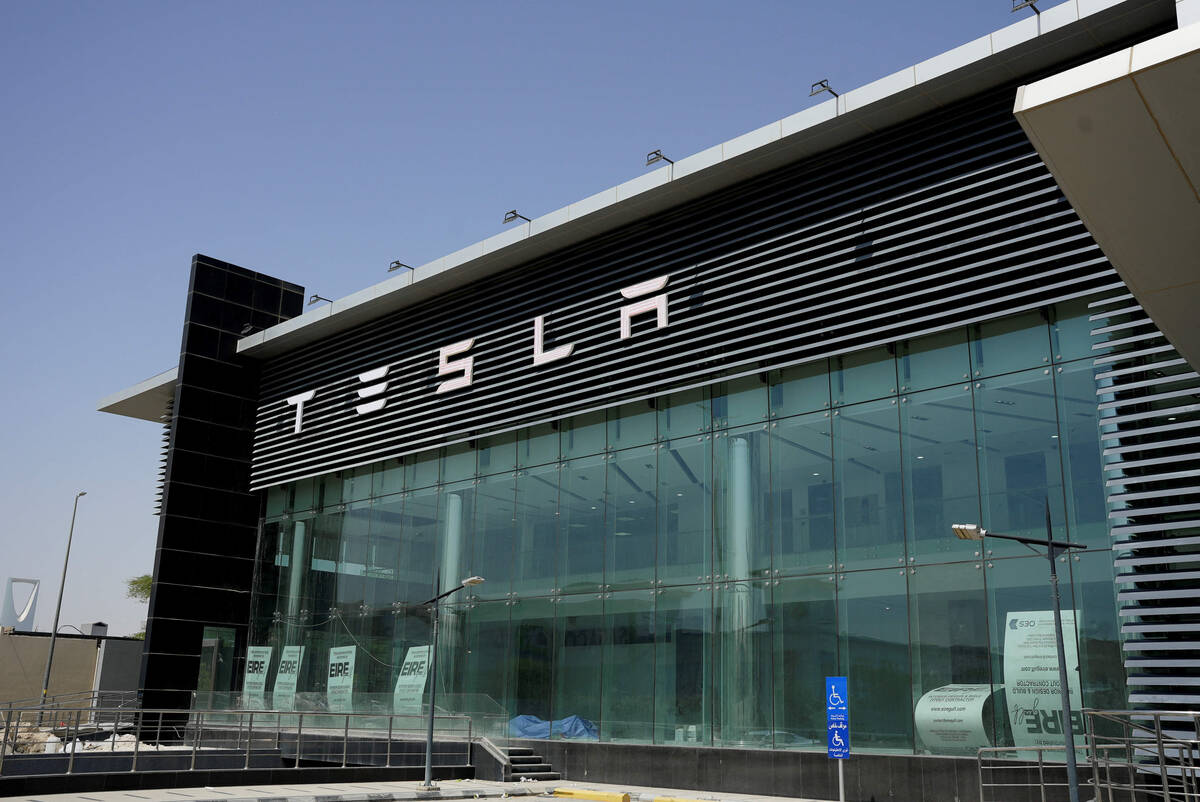


The Tesla car showroom in Riyadh. Reuters/Mohammed Benmansour

Saudi has a long way to go to hit its EV goals. The country’s main east-west highway does not have a single charging station in the 900-kilometer (559 mile) stretch linking the financial and religious cities of Riyadh and Makkah.

Saudi Arabia in 2024 had just 101 EV charging stations, compared with 261 in neighboring UAE, a country with a third the population, data from Statista based on Electromaps showed. Tesla plans to put its first charging stations in three cities.

Rival EV brands like China’s BYD and Zeekr, along with the Saudi Public Investment Fund-backed Lucid, already have Saudi beachheads.

The feud between Musk and the governor of the Kingdom’s sovereign wealth fund began when Musk tweeted in 2018 that he had “funding secured” to take Tesla private after a meeting with the fund.

That led to a lawsuit from investors when a bid failed to materialize. “You are throwing me under the bus,” Musk wrote in a text to fund chief Yasir Al-Rumayyan, according to court documents.

Shortly after the US presidential election, Trump, Rumayyan, and Musk were all pictured together sitting in ringside seats at an Ultimate Fighting Championship event in an early signal that relations had healed.


GLOBAL MARKETS-Shares skid as oil blasts past $100 after Iran strikes Gulf shipping

Updated 7 sec ago
Follow

GLOBAL MARKETS-Shares skid as oil blasts past $100 after Iran strikes Gulf shipping

SYDNEY: Shares in Asia fell broadly on Thursday as oil prices roared 9 percent past $100 a barrel on reports of more ships struck in Gulf waters and terminal shutdowns — a jump that could rapidly stoke inflation and push global borrowing costs higher.

Investors took little comfort from the International Energy Agency’s plan to release 400 million barrels of oil from its reserves, the largest such move in its history. As part of that, the US said it would release 172 million barrels of oil from next week.

Brent crude futures jumped 9.2 percent to $100.37 a barrel, extending a rise of more than 4 percent overnight. US crude futures surged 8.1 percent to $94.26 a barrel.

Shares slid, with MSCI’s broadest index of Asia-Pacific shares outside Japan falling 1.5 percent, while the Nikkei dropped 1.4 percent.

Chinese blue-chips lost 0.6 percent and Hong Kong’s Hang Seng index skidded 1.2 percent.

Both S&P 500 futures and Nasdaq futures fell 0.9 percent. EUROSTOXX 50 futures were down 0.8 percent and DAX futures lost 1 percent.

Two fuel tankers in Iraqi waters had been struck by explosive-laden Iranian boats, Iraqi security officials said early on Thursday, while an Iraqi official told state media that its oil ports “have completely stopped operations.”

Bloomberg reported that Oman has evacuated all vessels from its key oil export terminal at Mina Al Fahal as a precautionary measure.

“The market remains very concerned in terms of what’s going on in the Strait of Hormuz, and basically, information that we are getting over the last 24 hours is not a good reading,” said Rodrigo Catril, a senior FX strategist at NAB.

“It sort of reemphasizes the view that we should be worried about this and the risk is oil prices are going to get higher from here rather than coming down.”

Iran had earlier stepped up attacks on merchant ships in the Strait of Hormuz, raising the number of ships struck in the region since fighting began to at least 16. Tehran has warned the world to get ready for oil at $200 a barrel.

Throwing more uncertainty into the air, US President Donald Trump on Wednesday declared the war on Iran has been won but he will stay in the fight to finish the job.

INFLATION RISKS

US data showed the consumer price index rose 0.3 percent in February, in line with forecasts and above January’s 0.2 percent increase. The report, however, was not regarded as particularly relevant given that the Iran war has started to fuel inflation.

In bond markets, the risk of rising inflation outweighed safe-haven considerations to shove yields higher globally. Yields on 10-year Treasury notes rose 3 basis points to 4.2374 percent on Thursday, having jumped 7 bps overnight.

Fed funds futures extended their slide as investors feared higher inflation would make it harder for the Federal Reserve to ease policy. Markets are just wagering one more rate cut from the Fed this year. 

The danger of energy-driven inflation has led markets to wager the next move in rates from the European Central Bank could be up, possibly as early as June. 

Nervous investors sought the liquidity of dollars while shunning currencies from countries that are net energy importers, including Japan and much of Europe.

The euro slipped 0.2 percent to $1.1539, after closing at the weakest level since November last year. The dollar inched up 0.1 percent to 159.12 yen, the strongest level since January when reported rate checks from the US Fed spooked yen bears.

The risk-sensitive Australian dollar lost 0.4 percent to $0.7122, having hit a more than three-year high of $0.7188 on Wednesday as bets for an imminent rate hike from its central bank grew.