DAMASCUS: Pro-Turkiye Syrian groups have scaled down their military presence in a historically Kurdish-majority area of the country’s north which they have controlled since 2018, a Syrian defense ministry official said on Tuesday.
The move follows an agreement signed last month between Syria’s new authorities and Kurdish officials that provides for the return of displaced Kurds, including tens of thousands who fled the Afrin region in 2018.
The pro-Ankara groups have “reduced their military presence and checkpoints” in Afrin, in Aleppo province, the official told AFP, requesting anonymity as they were not authorized to speak to the media.
Their presence has been “maintained in the region for now,” said the official, adding that authorities wanted to station them in army posts but these had been a regular target of Israeli strikes.
After Islamist-led forces ousted longtime ruler Bashar Assad in December, the new authorities announced the disbanding of all armed groups and their integration into the new army, a move that should include pro-Turkiye groups who control swathes of northern Syria.
Turkish forces and their Syrian proxies carried out an offensive from January to March 2018 targeting Kurdish fighters in the Afrin area.
The United Nations has estimated that half of the enclave’s 320,000 inhabitants fled during the offensive.
The Kurds and rights groups have accused the pro-Turkiye forces of human rights violations in the area.
Last month, the Kurdish semi-autonomous administration that controls swathes of northern and northeastern Syria struck a deal to integrate its civil and military institutions into those of the central government.
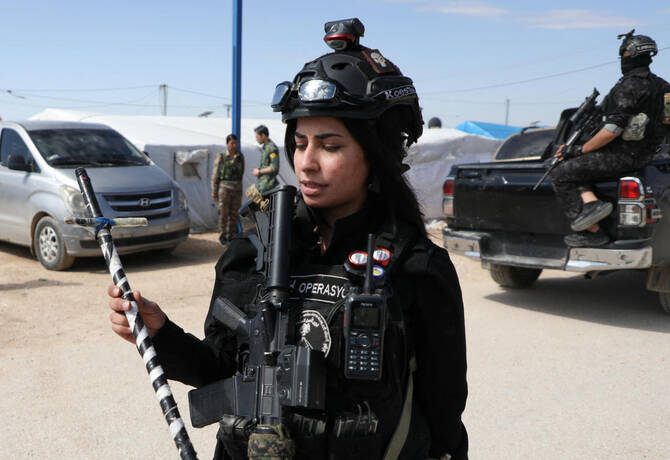
The administration’s de facto army, the Kurdish-led Syrian Democratic Forces (SDF), played a key role in the recapture of the last territory held by the Daesh group in Syria in 2019, with backing from a US-led international coalition.
A Kurdish source close to the matter said the people of Afrin were “waiting for all the checkpoints to be removed and for the exit of pro-Turkiye factions.”
Requesting anonymity as the issue is sensitive, the source told AFP that in talks with Damascus, the SDF was pushing for security personnel deployed in Afrin to be from the area.
The SDF is also calling for “international organizations or friendly countries from the international coalition” to supervise collective returns, the source added.
Syria’s new leadership has been seeking to unify the country since the December overthrow of longtime president Bashar Assad after more than 13 years of civil war.
This month, Kurdish fighters withdrew from two neighborhoods of Aleppo as part of the deal.
Syrian Kurdish official Bedran Kurd said on X that the Aleppo city agreement “represents the first phase of a broader plan aimed at ensuring the safe return of the people of Afrin.”


![]()

Pro-Turkiye Syria groups reduce presence in Kurdish area
Short Url
https://arab.news/pgbdf
Pro-Turkiye Syria groups reduce presence in Kurdish area
- Turkish forces and their Syrian proxies carried out an offensive from January to March 2018 targeting Kurdish fighters in the Afrin area
- Kurdish-led Syrian Democratic Forces (SDF) played a key role in the recapture of the last territory held by the Daesh group in Syria in 2019


Latest updates


Recommended


© 2026 SAUDI RESEARCH & PUBLISHING COMPANY, All Rights Reserved And subject to Terms of Use Agreement.