

Fragrant tradition: Taif rose oil production season begins

1 / 4
The production season for Tola, the renowned Taif rose oil, has begun in Saudi Arabia. (SPA)
2 / 4
The production season for Tola, the renowned Taif rose oil, has begun in Saudi Arabia. (SPA)
3 / 4
The production season for Tola, the renowned Taif rose oil, has begun in Saudi Arabia. (SPA)
4 / 4
The production season for Tola, the renowned Taif rose oil, has begun in Saudi Arabia. (SPA)
Short Url
Updated 07 April 2025
Follow

Fragrant tradition: Taif rose oil production season begins

  • Local farmer gives insights on production involving up to 550m roses annually
  • Meticulous process yields fragrant rose oil and rose water, both of which are widely used for perfuming, culinary applications and other purposes

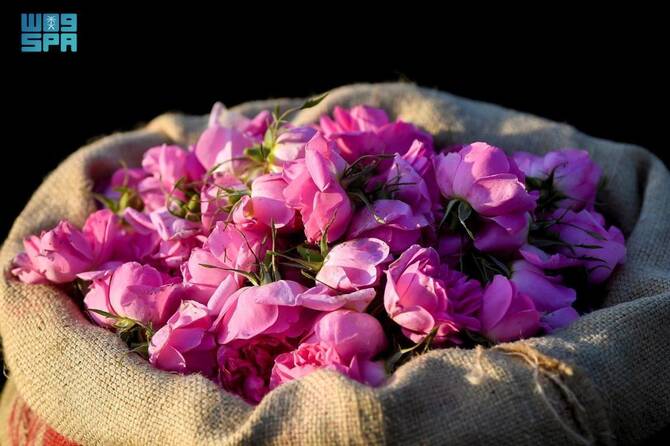
JEDDAH: The production season for Tola, the renowned Taif rose oil, has begun in Saudi Arabia.

Almost 70 factories and workshops are now operating across the high peaks of Taif’s mountains, the Saudi Press Agency reported.

The traditional distillation process is followed to extract and produce more than 80 derivatives of the Taif rose, which enjoy widespread popularity in local and international markets.

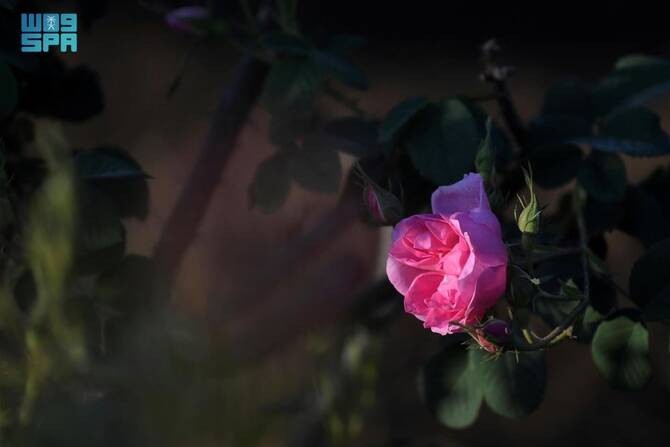
The region’s farms produce more than 550 million roses annually, making Tola a distinctive cultural and economic symbol.

According to local farmer Khalaf Al-Tuwairqi, families in the past began rose picking at dawn.

He learned the art of distillation from his father, who had established a traditional workshop on their farm.

In an interview with the SPA, Al-Tuwairqi said that Tola is extracted immediately after harvesting, with 80,000 to 100,000 roses placed each day into special copper pots. The quantity depends on the pot’s capacity and is measured using a scale.

The process begins by lighting a fire beneath the pot to produce steam, which passes through a pipe in the pot’s lid and into a container of water.

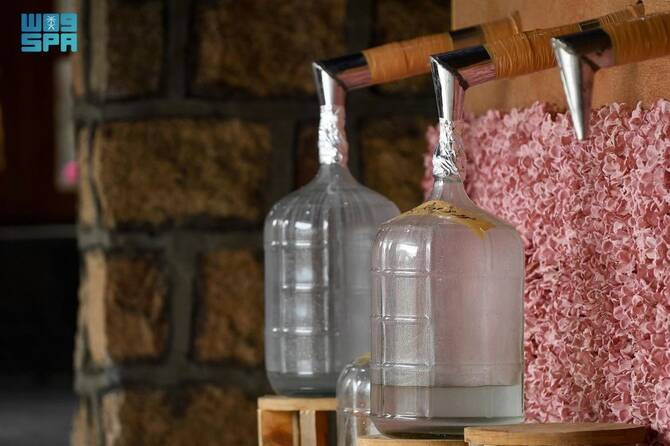
This cools and condenses the vapor into droplets, which then flow into a narrow-necked bottle known as “talqiyah,” capable of holding 20 to 35 liters.

The pure rose oil floats at the top of this container.

Al-Tuwairqi added that his ancestors mastered the techniques of rose oil extraction, with one Tola requiring about 70,000 roses.

Traditionally, this was done using fire pits built inside mud-brick structures ranging from one to three meters in length and about one meter in height.

The vapor from rose petals was condensed into liquid form, which dripped into a glass container. The resulting oil was then bottled in small glass vials.

The meticulous process yields fragrant rose oil and rose water, both of which are widely used for perfuming, culinary applications and other purposes.


Berlinale responds to backlash over Gaza-related comments

Updated 16 February 2026
Follow

Berlinale responds to backlash over Gaza-related comments

The Berlin International Film Festival has issued a statement after what organisers described as a growing “media storm” linked to comments about the war in Gaza and the broader role of politics in cinema.

Festival director Tricia Tuttle released a lengthy note late Saturday following criticism directed at several high-profile guests. The controversy began during the opening day press conference when jury president Wim Wenders was asked about the conflict in Gaza. He responded: “We have to stay out of politics because if we make movies that are dedicatedly political, we enter the field of politics,” a remark that sparked swift backlash online.

Indian author Arundhati Roy later withdrew from the festival, reportedly angered by the remarks.

Other prominent figures, including Michelle Yeoh and Neil Patrick Harris, also faced online criticism after responding cautiously to questions about politics. Harris stated that he was interested in “doing things that were ‘apolitical,’” a comment that further fuelled debate.

In her statement, Tuttle defended the festival and its participants, stressing the importance of artistic freedom. “People have called for free speech at the Berlinale. Free speech is happening at the Berlinale. But increasingly, filmmakers are expected to answer any question put to them. They are criticised if they do not answer. They are criticised if they answer and we do not like what they say. They are criticised if they cannot compress complex thoughts into a brief sound bite when a microphone is placed in front of them when they thought they were speaking about something else,” she said.

She added: “It is hard to see the Berlinale and so many hundreds of filmmakers and people who work on this festival distilled into something we do not always recognise in the online and media discourse… It is a large, complex festival.”

“Artists are free to exercise their right of free speech in whatever way they choose… nor should they be expected to speak on every political issue raised to them unless they want to,” Tuttle said.