
LONDON: It was a message that was both unequivocal and uncompromising. Iraq must rein in the sprawling network of militia groups that take their orders from Iran, and if they threaten American interests in the country, the US will respond.
The comments were delivered last week by Tammy Bruce, the US State Department spokesperson, in response to a question on a new law being wrangled over in Iraq about the future of the Popular Mobilization Forces.
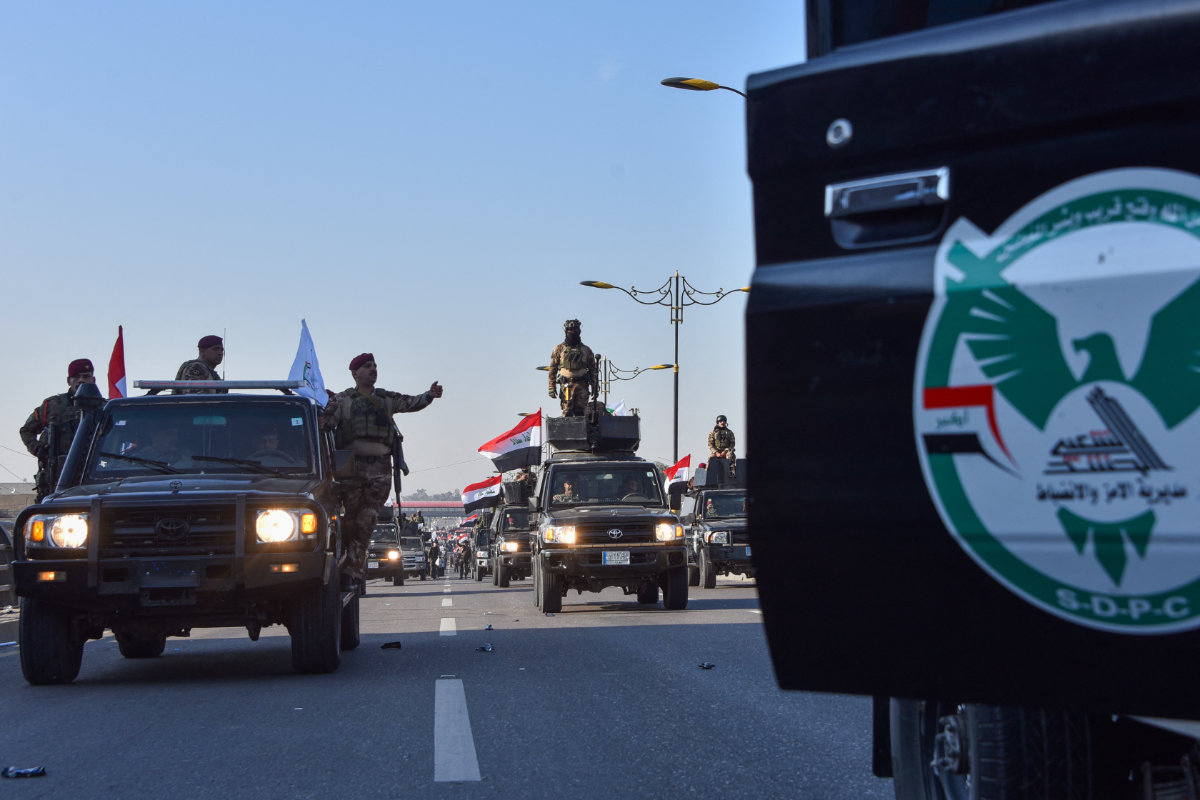
A military parade held by Iraq's army, Hashed al-Shaabi (Popular Mobilisation Forces), and the Police force, drives down a highway during a ceremony marking the anniversary of the defeat of the Daesh group, in the northern Iraqi city of Mosul on December 10, 2024. (AFP)/File)
The PMF, an umbrella group for dozens of militias in Iraq, includes many that take their money and orders from Iran’s Islamic Revolutionary Guard Corps, despite belonging to Iraq’s formal state security apparatus.
Along with Hezbollah in Lebanon, the Houthis in Yemen, and Hamas in Gaza, they are considered part of Iran’s so-called “Axis of Resistance” — a network of proxy militias throughout the Middle East loyal to the IRGC.
America’s renewed military campaign against the Houthis, along with the degradation of Hamas and Hezbollah by Israel and the fall of Iranian ally Bashar Assad in Syria, has placed increased focus on Iraq’s Iran-backed militias.

They remain the only major Iranian proxy in the region to avoid significant Israeli or US military action since the Gaza conflict began in October 2023.
Doubts have been cast over whether the long-proposed Iraqi law to assert greater central government control over the militias would have much of an effect — or sufficiently appease US concerns.
But domestic events in Iraq, along with US President Donald Trump’s renewal of the “maximum pressure” campaign against Iran to suspend its nuclear program, place the PMF increasingly in the firing line.
There is a lot of pressure from the Trump administration on the government of Prime Minister Mohammed Shia Al-Sudani to rein in the Iran-backed militias, Renad Mansour, a senior Iraq research fellow at Chatham House, told Arab News. “Especially to stop any kind of attacks on American citizens or interests in Iraq.”
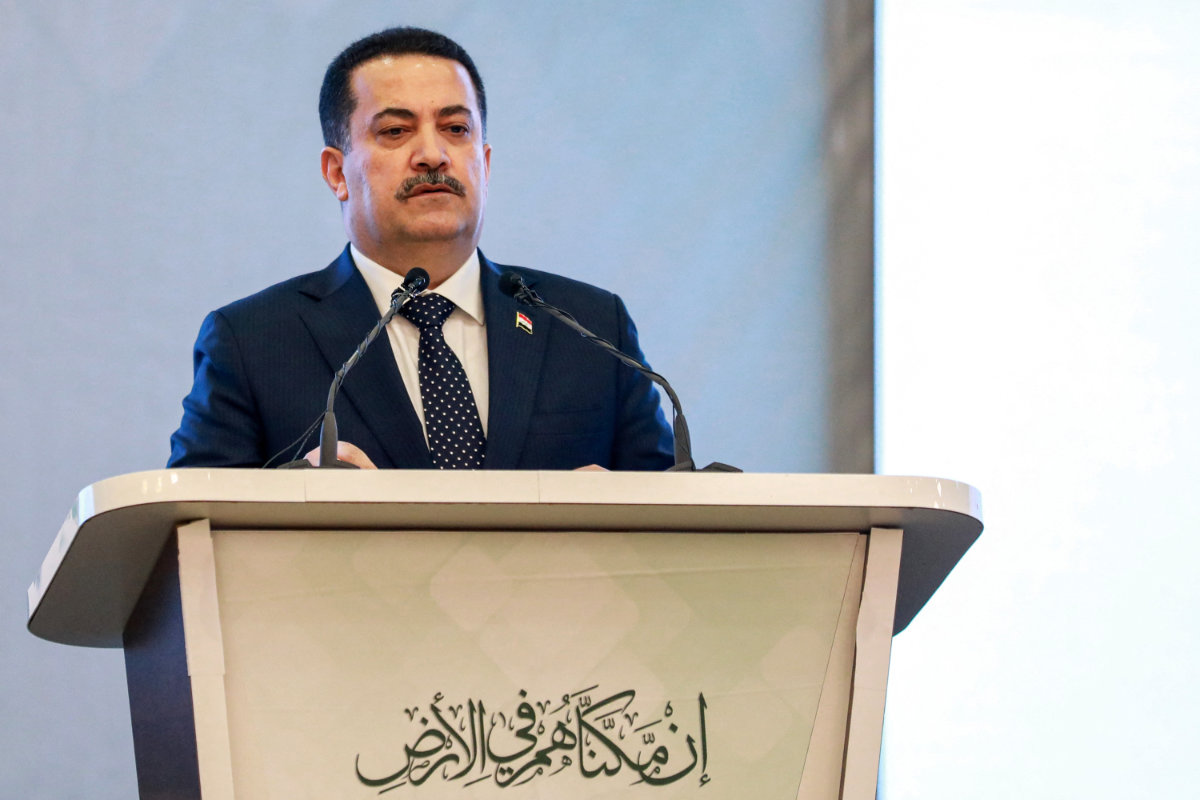
Iraq's Prime Minister Mohammed Shia al-Sudani speaks during an event commemorating the 21st anniversary of the creation of "Asaib Ahl al-Haq", one of the member factions of the Hashed al-Shaabi paramilitaries, in Baghdad on May 3, 2024. (AFP)
Mansour said the policy stemmed from renewed US efforts to combat Iranian influence in the region. “It’s very clear that the Trump administration is looking at Iraq as an important vehicle where Iran maintains economic and other types of authority,” he said.
The PMF, known in Arabic as Al-Hashd Al-Shaabi, was created in 2014 in response to a fatwa issued by the country’s top Shiite religious authority, Grand Ayatollah Ali Al-Sistani, after the extremist group Daesh seized swathes of territory.
The sprawling network of armed groups included many armed and funded by Iran. Many came from existing militias mobilized by the IRGC’s extraterritorial Quds Force.
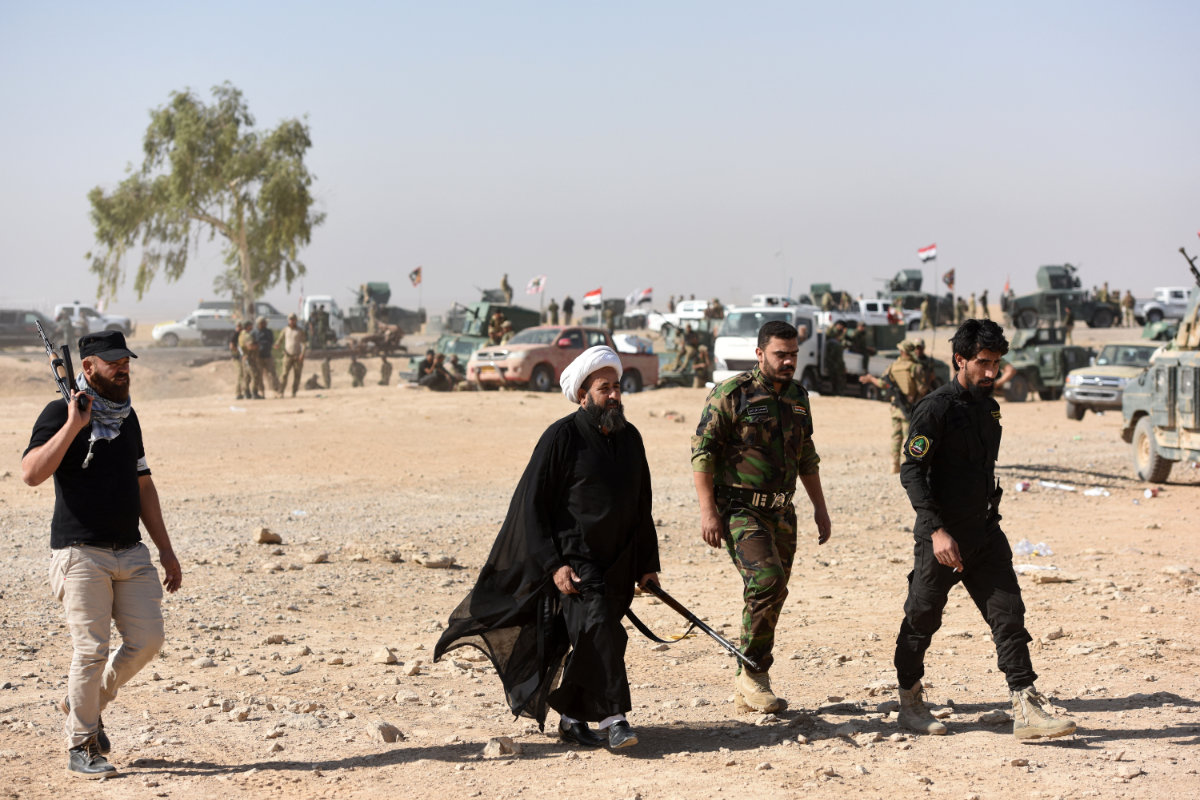
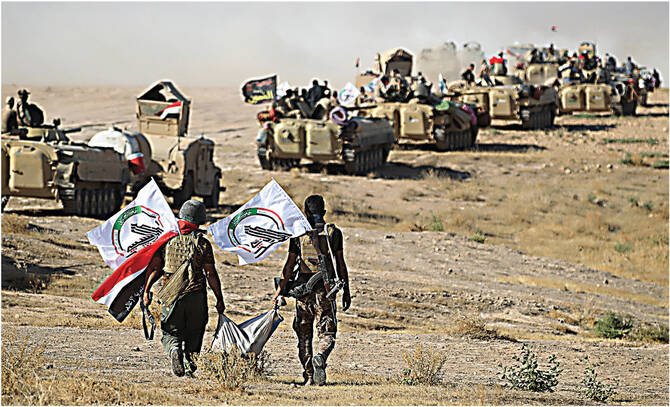
Members of Al-Hashd al-Shaabi faction walk near the frontline on October 21, 2016, near the village of Tall al-Tibah, some 30 kilometrers south of Mosul, during an operation to retake the main hub city from the Daesh group jihadists. (AFP)
The PMF comprised approximately 70 predominantly Shiite armed groups made up of around 250,000 fighters. They played a major role in the defeat of Daesh in Iraq alongside the Iraqi Security Forces, Kurdish Peshmerga, and the US-led coalition.
After the extremist group was territorially defeated in Iraq in 2017 and attention turned to its holdouts in Syria, questions began to be raised over the purpose of the PMF.
A flimsy Iraqi law in 2016 attempted to exert more state control over the militias and included some basic details about their structure and employment terms.
IN NUMBERS
• 250k Fighters the PMF claims to have under arms.
• $3.3 billion Iraqi state funding at the PMF’s disposal.
Meanwhile, the PMF developed political wings that contested elections. These party blocs were accused by political rivals and Western governments of causing instability and acting in Iran’s interest.
The militias suffered a major blow in January 2020 when the first Trump administration killed PMF chief Abu Mahdi Al-Muhandis alongside Quds Force commander Qassem Soleimani in a drone strike near Baghdad airport.
Later that year, Al-Sistani, who had given the PMF its religious legitimacy when it was originally formed, withdrew his own factions as concerns over Iranian influence grew.
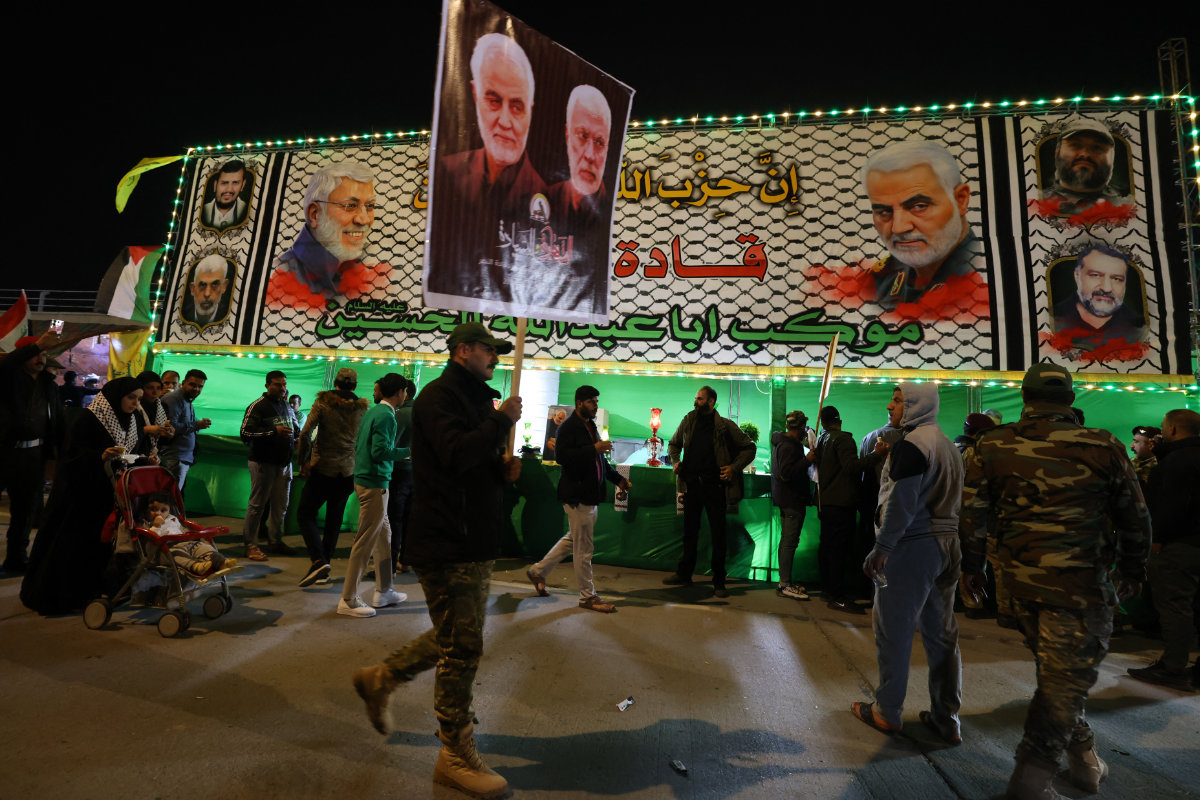
Iraqis participate in a candle light vigil marking the fourth anniversary of the killing of top Iranian commander Qasem Soleimani and Iraqi militia commander Abu Mahdi al-Muhandis, near Baghdad's International Airport on January 2, 2024. (AFP/File)
Yet the PMF managed to rebound from these setbacks, increasing both its funding and armory, including Iranian drones and missiles.
It has also been at the center of domestic turmoil, with its factions accused of an assassination attempt on then-Prime Minister Mustafa Al-Kadhimi in November 2021 and militias clashing with supporters of cleric Muqtada Al-Sadr in 2022.
After the Gaza war began in October 2023, the militias launched drones and missiles at Israel and carried out dozens of attacks on US bases in Iraq, where some 2,500 troops remain as part of the coalition mission against Daesh.
In February last year, the Biden administration bombed 85 militia targets in Iraq and Syria after three US soldiers were killed in a drone attack on a Jordanian outpost known as Tower 22.
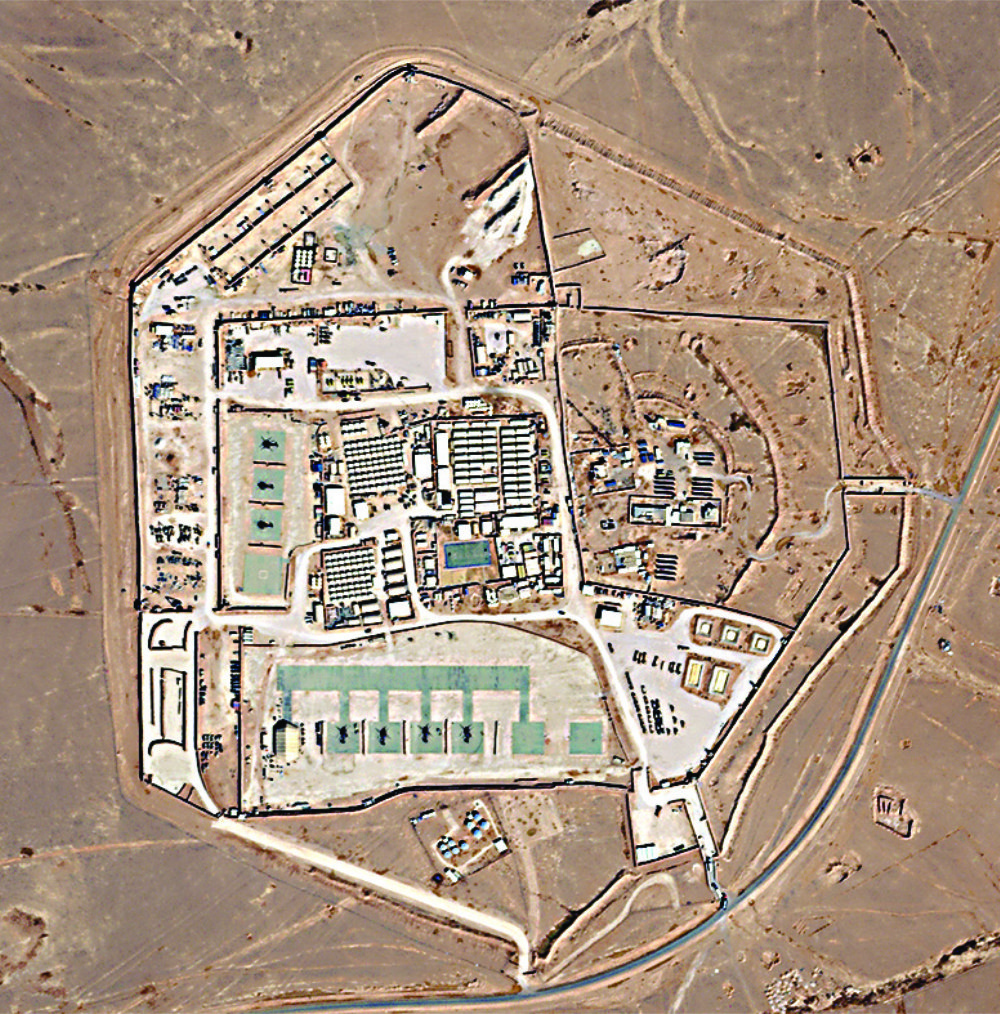
Maxar satellite imagery of Tower 22 which houses a small number of US.Troops in northern Jordan. (Satellite image (c) 2024 Maxar Technologies/via AFP)
The US said senior commanders from the Kataib Hezbollah militia were among those killed. Since then, Iran has urged its militias in Iraq to refrain from attacking US interests.
“The Iraqi militias’ harassment of US targets in Iraq ended when the Biden administration took out three top commanders from the Kataib Hezbollah,” Hussain Abdul-Hussain, a research fellow at the Washington-based Foundation for Defense of Democracies, told Arab News.
“This signaled to militia leaders that their safety became at risk and their attacks stopped.”
The second Trump administration made clear in February when it issued the National Security Presidential Memorandum that Iraq’s militias would be central to renewed pressure on Iraq to reduce economic ties to Iran.
The other front is for Iraq to reduce dollar transactions with Tehran, particularly through cutting purchases of energy.
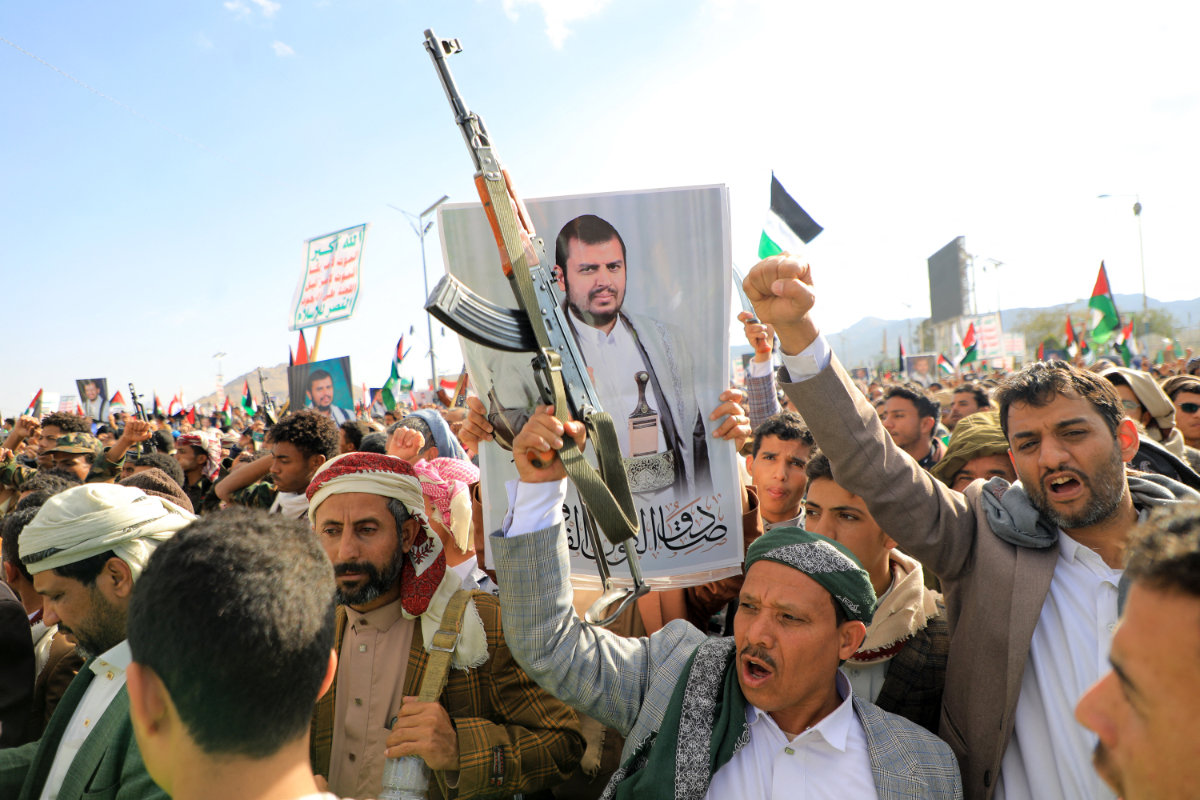
Demonstrators,one with a portrait of Houthi leader Abdul Malik al-Houthi, shout slogans during a march in solidarity with the people of Gaza in the Houthi-controlled capital Sanaa on January 5, 2024. (AFP)
But there is also the wider geopolitical pressure on the militias as a result of US and Israeli attacks on Iran’s other proxies in the region, including Hamas, Hezbollah, and the Houthis.
“The Iraq militias became the last resort for all other Iranian militias across the region,” said Abdul-Hussain. “Since Israel crushed Hezbollah in Lebanon and Syria, the pro-Iran militia weight has shifted to Iraq.”
On the economic pressure now being exerted on Iran, he said the US is aware that the IRGC is siphoning US dollars from Iraq’s oil revenues, mainly using the $3.3 billion budget allocated to the PMF.
In response to this renewed pressure, the PMF Service and Retirement Law was introduced to the Iraqi parliament last week after months of wrangling over its contents.
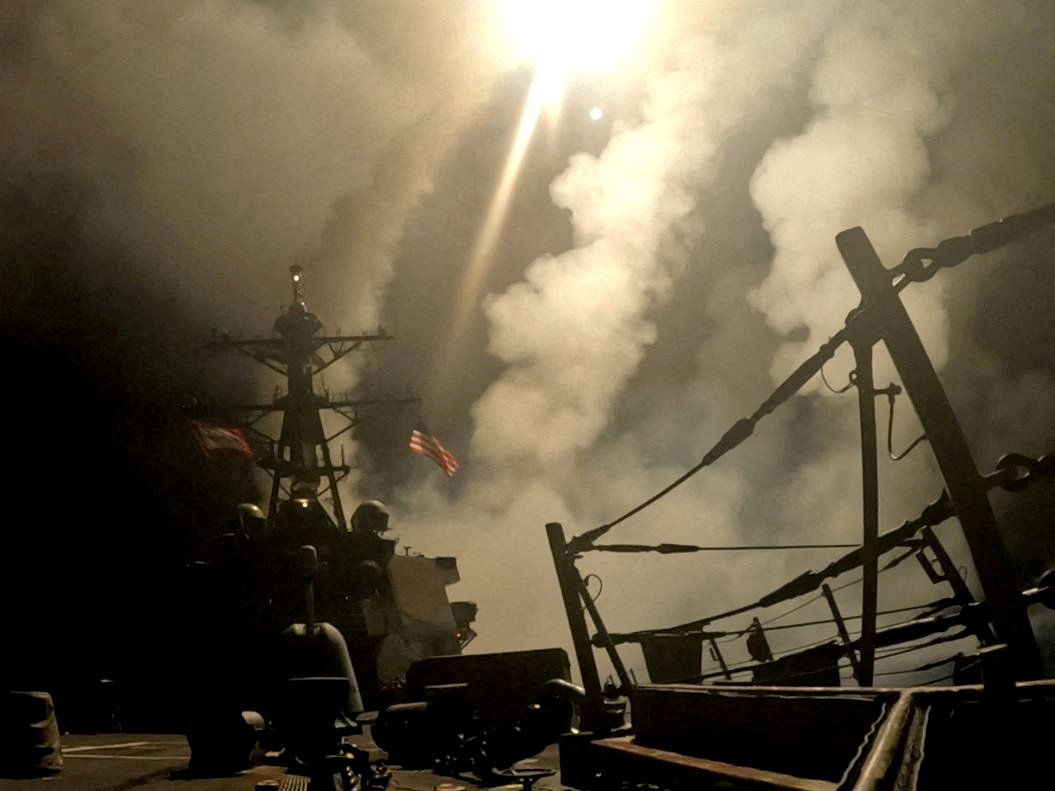
A ship fires missiles at an undisclosed location in Yemen after US President Donald Trump launched military strikes against the Iran-aligned Houthis on March 15, 2025. (US Central Command/Handout via REUTERS)
The bill aims to fully integrate the PMF into Iraq’s state security forces. However, critics say it has been hijacked by rival Shiite blocs jostling for advantage within the organization.
In its current form, the bill is unlikely to fill the US with confidence that the PMF will fully submit to central government control and renounce fealty to Iran. Abdul-Hussain described the bill as a “total smoke screen.”
He said: “Parliament is trying to enshrine PMF perks by law for fear that the next executive chief might not be Iran-friendly and could thus cut the $3.3 billion with a decree. Laws trump decrees, and that’s why the Iraqi parliament is racing to enshrine PMF funding in a law.
“The irony is that the same law does not demand that the organization follow a military order or be included under the military’s rank or supervision. They want to take the money but keep the hierarchy in the hands of the IRGC.”