

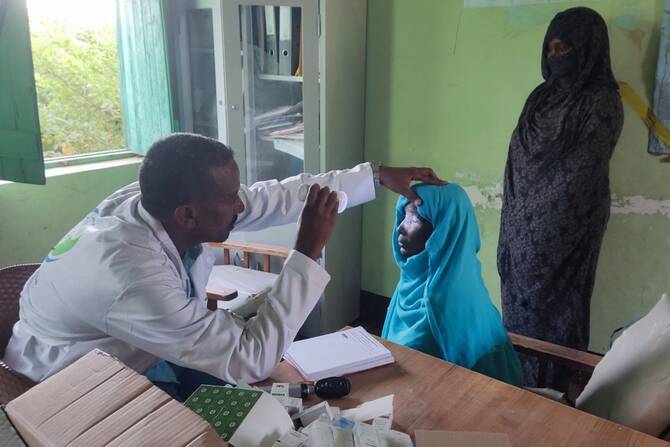

LONDON: Abandoned by the rest of the world and condemned to endure a crisis with no apparent end in sight, communities in war-torn Sudan are taking matters into their own hands, providing public services in place of state institutions that have long since collapsed.
Grassroots efforts are being made to help families who have chosen to remain in Sudan to cope with the trauma of war, from mental health support in emergency response rooms, known as ERRs, to volunteer networks reuniting displaced loved ones.
Two years into the conflict between the Sudanese Armed Forces and the paramilitary Rapid Support Forces, aid delivery remains sporadic, internet access unreliable, and violence a persistent threat to civilian lives and infrastructure.
Despite this, networks of volunteers, many of them war survivors themselves, have stepped into the vacuum to assist others — offering a quiet form of resilience in the face of events beyond their control.

Despite the resilience of these community-level initiatives, grassroots leaders say they cannot do it alone. (AFP)
“We provide free mental health services to individuals and groups who are victims of war,” Maab Labib, a mental health professional and coordinator of the psychosocial support team at the Bahri Emergency Room, one of the most active ERRs in the capital, told Arab News.
“We currently have 25 therapists and psychologists. So far, we’ve provided individual psychological support to over 1,500 people.”
Founded in the first week of the war, the team’s reach now extends well beyond Bahri to other parts of Khartoum and multiple states across Sudan. The initiative combines online consultations with in-person group sessions held in safe areas.
“Our services are not limited by age, gender or nationality,” said Labib. “We have supported Sudanese and non-Sudanese, survivors of gender-based violence, and even soldiers.”
However, the weight of the war has not spared the caregivers. “The service providers themselves are displaced and traumatized. We offer peer-to-peer emotional support, but the lack of resources and the constant threat of violence make it very hard to continue.”
In the absence of functioning public institutions, the Bahri Emergency Room team is part of a wider constellation of mutual aid structures that emerged from Sudan’s revolutionary fabric.
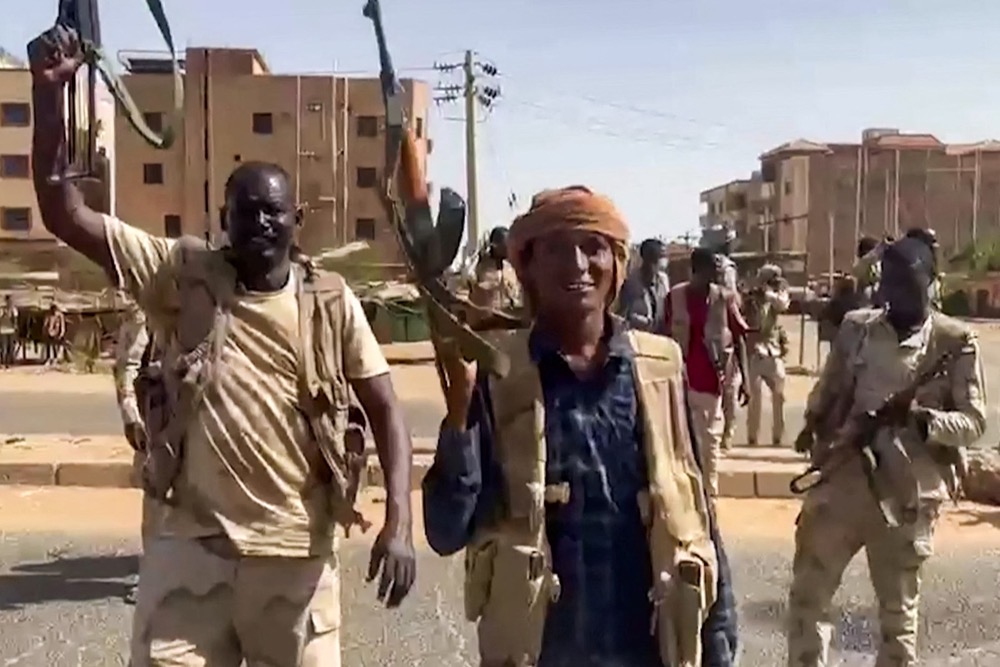
Two years into the conflict between the Sudanese Armed Forces and the paramilitary Rapid Support Forces, aid delivery remains sporadic. (AFP)
These include communal kitchens, neighborhood support groups, and psychological first aid training programs — many of which trace their origins to the 2018-19 uprising against long-time ruler Omar Bashir.
According to Guido Lanfranchi, a research fellow at the Clingendael Institute, a Dutch think tank, these local support networks reflect a deeper political dimension.
“They are a beacon of hope, showing that people can come together to support each other even as the state collapses and militarization deepens,” he told Arab News. “They don’t have power to influence military dynamics, but they keep alive the spirit of the revolution.”
Yet that very symbolism has made them targets. “Mutual aid groups are being attacked by both sides,” Anette Hoffmann, also of the Clingendael Institute, told Arab News.
“Early in the war, the SAF issued a law banning service committees. In RSF-controlled areas, groups have been accused of collaborating with the enemy. And some volunteers have even been asked by the RSF to work with them in exchange for money.”
She added: “Romanticizing their efforts is dangerous. They are desperate for support and very capable of managing large-scale funding — yet the international community has largely turned away.”
According to the UN, almost 25 million people — more than half of Sudan’s population — are now in need of humanitarian assistance, making it one of the world’s largest and fastest-growing crises.
The recent suspension of USAID-funded programs has worsened the situation dramatically, especially in regions where US-backed partners were among the few delivering food, medical supplies, and protection services.

Networks of volunteers, many of them war survivors themselves, have stepped into the vacuum to assist others. (AFP)
The shutdown has forced numerous nongovernmental organizations to scale back or cease operations altogether, increasing the burden on under-resourced local initiatives.
For many communities, the loss of these lifelines has meant the difference between a meal and an empty stomach, between trauma support and suffering in silence.
That vacuum is deeply felt by grassroots groups trying to maintain food programs and trauma support across multiple regions.
The Safe Haven Organization, formerly known as the Save Geneina Initiative, is one such group. It operates across both Sudan and Chad, managing kitchens and child-friendly spaces in displacement centers.
“In Sudan, we supported 4,500 families a day through our kitchens,” Mozamul Mohammed Ali, himself a refugee and now project manager in Adre, eastern Chad, told Arab News.
“But some kitchens had to stop due to lack of funds. In places like Algazira and Sennar, we simply could not continue.”
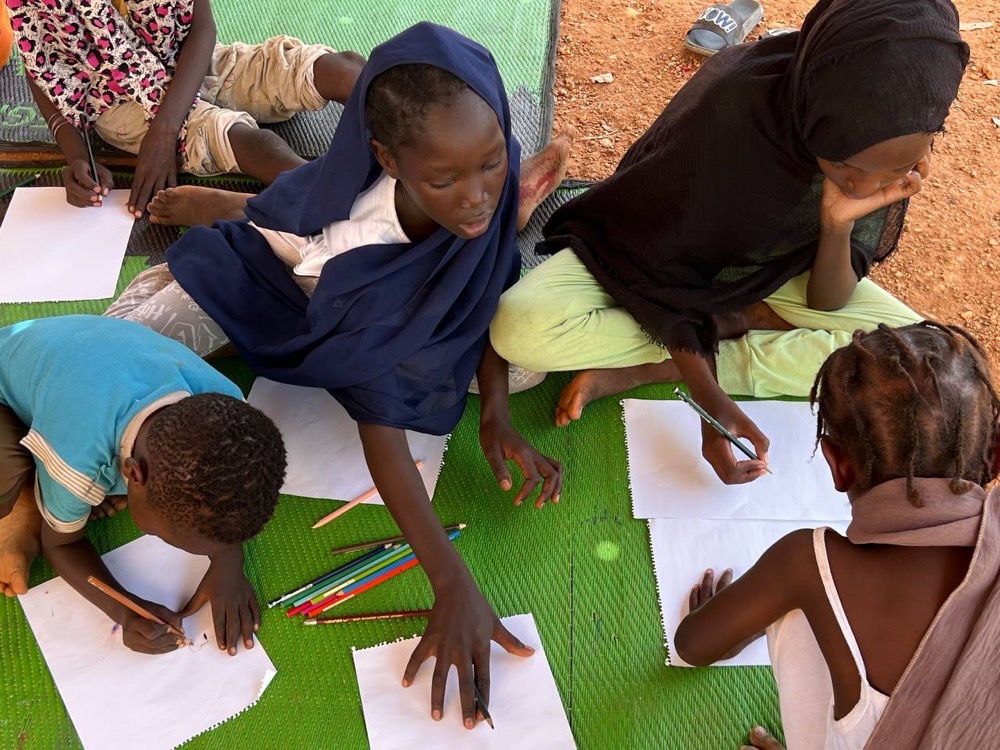
Grassroots efforts are being made to help families who have chosen to remain in Sudan to cope with the trauma of war. (AFP)
Ali, who lives in a refugee camp, described the pressures local initiatives now face.
“When other NGOs — especially those backed by USAID — pulled out, it fell to us to cover more and more people,” he said. “We depend on crowdfunding, and we keep going because we’re part of the same community.”
As a result, they have had to adapt over time. “At first it was just food, then healthcare, then mental health. Now we’re doing reunifications,” he said.
“We found a 9-year-old boy who was separated from his family for nearly a year while crossing into Chad. Our volunteers located him in Abeche, and after receiving psychological support, he was reunited with his parents.”
Inside Sudan, the organization’s reach continues despite the chaos. “We work in army-held areas, using volunteers from within each community,” said Ali.
“But there are more displaced people now. More trauma. Inflation is up. Fuel is scarce. Even communication is hard — blackouts and bad networks slow everything down.”
Mental health problems, in particular, are a growing concern. “There’s a significant rise in trauma-related disorders, especially among women and children,” Mohammed Abkar Goma, a trauma center manager for Safe Haven, told Arab News.

According to Guido Lanfranchi, a research fellow at the Clingendael Institute, a Dutch think tank, these local support networks reflect a deeper political dimension. (AFP)
“But stigma remains high. People are afraid to seek help.”
To bridge this gap, the group also trains non-specialists in psychological first aid. “We focus on breathing, grounding, listening,” said Goma. “Our goal is to help people hold each other through trauma — especially in camps and shelters where professional services are not available.”
Despite the resilience of these community-level initiatives, grassroots leaders say they cannot do it alone. “The needs have become more complex,” said Ali.
“We started with just food and shelter. Now, we need sustained health services, education, and trauma care. And we need the international community to recognize that we can manage these programs only if we get the support.”

According to the UN, almost 25 million people — more than half of Sudan’s population — are now in need of humanitarian assistance. (AFP)
Lanfranchi of the Clingendael Institute believes Sudan’s grassroots activists — the remnants of a once flourishing civil society — need all the help they can get.
“It’s a form of quiet political defiance,” he said. “The state is collapsing. International actors are absent. And yet, these community groups are stepping in — not just to survive, but to resist fragmentation.”
And despite the risks posed by Sudan’s armed actors, the volunteers say they have no choice but to continue. “We are not heroes,” said Ali. “We just couldn’t watch our people suffer without doing something.”


