- King Salman performed Eid Al-Fitr prayer at Al-Salam Palace in Jeddah
- Weeklong celebration ushers in the most festive period in the Islamic calendar
RIYADH: Eid Al-Fitr, a highlight of the Islamic calendar that marks the culmination of the fasting month of Ramadan, is being celebrated with religious fervor and joy as Saudi Arabia led worldwide celebrations with Eid prayers on Sunday morning.
Many Arab countries, including Saudi Arabia, the UAE, Qatar, Bahrain and Kuwait, celebrating Eid Al-Fitr were joined by Muslims in Europe and the US, while several other countries — among them Oman, Jordan, Syria, Indonesia, Malaysia and Australia —announced that the holiday will begin on Monday.
The variation, common in the lunar Hijri calendar, is the result of differences in moon sightings that determine the end of Ramadan, the month of fasting and spiritual reflection observed by Muslims worldwide.
Eid Al-Fitr — the annual Islamic celebration that runs for the first five days of Shawwal, the 10th month of the Hijri calendar — began on Sunday with early morning Eid prayers, 15 minutes after sunrise in accordance with the Umm Al-Qura calendar.
Anticipating the Eid prayer, worshippers in the pre-dawn hours filled designated prayer halls and mosques prepared in cities, governorates, and villages throughout the Kingdom.
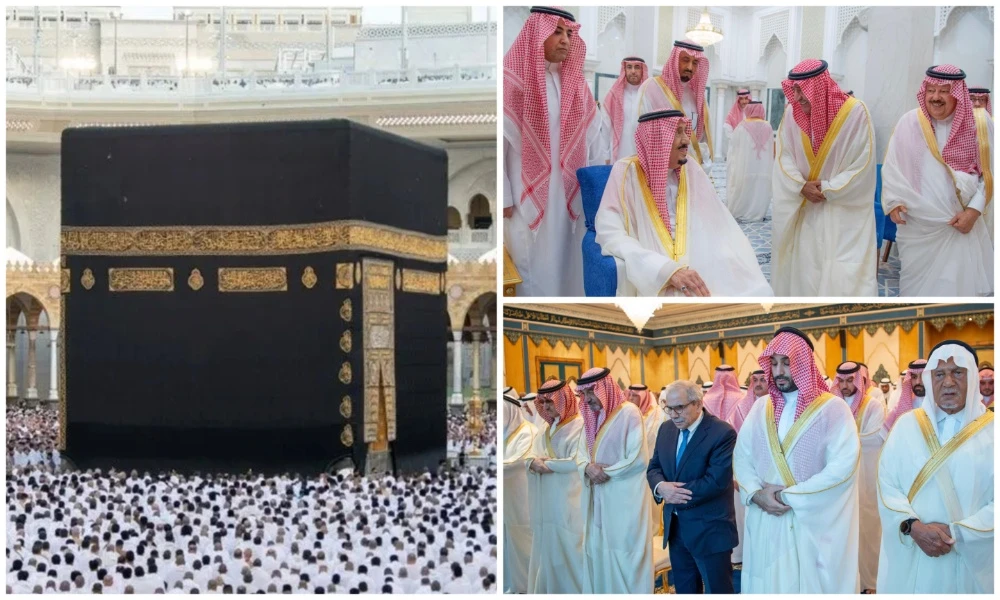
King Salman performed Eid Al-Fitr prayers at Al-Salam Palace in Jeddah. Joining him were several princes and senior officials, who conveyed their congratulations on the joyous occasion of Eid, the Saudi Press Agency reported.
Crown Prince Mohammed bin Salman performed Eid prayers with worshippers at the Grand Mosque in Makkah.
Thousands of Muslims filled the Grand Mosque and the Prophet’s Mosque in Madinah for the Eid Al-Fitr prayer in an atmosphere of faith, joy, security and tranquility.
The imam of the Grand Mosque, Sheikh Dr. Abdulrahman Al-Sudais, led the prayer and delivered a sermon, extending his congratulations on the occasion of Eid Al-Fitr.
Madinah Governor Prince Salman bin Sultan performed the Eid Al-Fitr prayer at the Prophet’s Mosque with crowds of worshippers on Sunday morning, where the mosque’s imam, Sheikh Dr. Abdullah Al-Buaijan, led the prayer and delivered a sermon.
Minister of Interior Prince Abdulaziz bin Saud extended the greetings of King Salman and Crown Prince Mohammed bin Salman, to ministry employees on the occasion of Eid Al-Fitr, and expressed their appreciation to all security sectors for their exceptional efforts and dedication.
Minister of Defense Prince Khalid bin Salman was at Al-Safa Palace in Makkah to receive commanders and senior officials from the ministry, while Minister of National Guard Prince Abdullah bin Bandar bin Abdulaziz was in Jeddah to receive commanders of the ministry along with senior civil and military officials. The ministers conveyed greetings from the king and the crown prince to the officials for their services to the nation.
There were 122,286,712 visitors to the Grand Mosque in Makkah and the Prophet’s Mosque in Madinah during Ramadan, according to the CEO of the General Authority for the Affairs of the Grand Mosque and the Prophet’s Mosque, Ghazi Al-Shahrani.
Al-Shahrani said the number of Umrah performers was 16,558,241, while worshippers totaled 92,132,169 at the Grand Mosque and 30,154,543 at the Prophet’s Mosque.
He expressed his congratulations to King Salman and Crown Prince Mohammed bin Salman on the occasion of Eid Al-Fitr, and also his gratitude to all who contributed to serving the guests of God.
With the Eid Al-Fitr prayer over, worshippers exchanged celebratory greetings.
“The week-long festivity, with the culmination of the fasting month of Ramadan and the beginning of the Eid holidays, has ushered in the most festive celebration in the Islamic calendar as families organize get-together meetings and feasts, and people exchange greetings offering presents and delicacies,” Sara Aldossary, a Riyadh resident, told Arab News.
“The dawn of Eid Al-Fitr in Saudi Arabia is a time of vibrant tradition and heartwarming connection. As worshippers rise between Fajr and Eid prayers, a special atmosphere fills the air, where warm greetings are exchanged, homes are adorned with festive displays, children gleam in new clothing, and Eid gifts are lovingly prepared for awaiting guests. The aroma of traditional dishes mingles with fragrant incense, and colorful decorations create a welcoming atmosphere for visitors on this special occasion,” she added.
“On this biggest festive occasion, we get together with our relatives and friends to enjoy it together. This evening some of my friends are coming to our house for the celebration. We will also visit them the next day and this will continue during the holiday continuing until the next weekend. We exchange greetings, share presents and delicacies. Some families also go out to picnic spots and spend time together,” said Bilal Ahmed, a Jubail resident.
“Eid is a time of joy, gratitude and togetherness with your loved ones. One of the most beloved Eid Al-Fitr customs is exchanging Eid gifts, or Eidiyah, as a sincere way to express gratitude and love to family and friends,” said Alaa Alshammari, a Riyadh resident.
Comprehensive civil and security arrangements are in place for the annual festival to be safely enjoyed.
The capital has been adorned with special decorative arrangements, including banners bearing “Eid Saeed” on main roads in the city greeting passersby.
The Saudi General Entertainment Authority has unveiled a nationwide celebration featuring concerts, theatrical performances, fireworks, and a variety of activities across the Kingdom’s entertainment zones, offering unforgettable experiences for residents and visitors on Eid Al-Fitr.
Musical concerts will take place in Riyadh, Shaqra, Abha, Qassim, Jeddah, and Eastern Region cities, while theatrical productions will take center stage in Riyadh (April 1-19), Jeddah (April 1-6), and Dammam (April 1-3).
Fireworks will illuminate the sky at 9 p.m. in key locations, including Boulevard World in Riyadh, Jeddah Art Promenade, Alkhobar Corniche, and Arruddaf Park in Taif.
Eid celebrations kicked off on Day 1 at Riyadh’s Boulevard City, Boulevard World, VIA Riyadh, and Jeddah Art Promenade, with City Hub in Alkhobar hosting festivities on Day 2, providing diverse and family-friendly entertainment.
Streets in major cities including Riyadh and Jeddah have been decorated with colorful lights to celebrate the annual event.