SAN FRANCISCO: Elon Musk on Friday said his artificial intelligence startup xAI is buying his social networking platform X in a deal valuing the company once known as Twitter at $33 billion.
“This combination will unlock immense potential by blending xAI’s advanced AI capability and expertise with X’s massive reach,” Musk said in a post on his social network.
X has more than 600 million users, and its future is “intertwined” with that of xAI, launched two years ago, according to Musk.
“Today, we officially take the step to combine the data, models, compute, distribution and talent,” Musk said of combining the two companies.
“This will allow us to build a platform that doesn’t just reflect the world but actively accelerates human progress.”
The companies are being combined in an all-stock deal that values xAI at $80 billion and X at $33 billion, factoring in the social network’s $12 billion debt.
Musk bought Twitter for $44 billion in late 2022 in a transaction that included debt and launched xAI the following year, spending billions of dollars on high-end Nvidia chips for the venture.
xAI in February released the latest version of its chatbot, Grok 3, which the billionaire hopes will find traction in a highly competitive sector contested by the likes of ChatGPT and China’s DeepSeek.
Musk has promoted Grok 3 as “scary smart,” with 10 times the computational resources of its predecessor that was released in August last year.
Grok 3 is also going up against OpenAI’s chatbot, ChatGPT — pitting Musk against collaborator-turned-arch rival Sam Altman.
Musk and Altman were among the 11-person team that founded OpenAI in 2015.
Created as a counterweight to Google’s dominance in artificial intelligence, the project got initial funding from Musk.
Musk left three years later, and then in 2022 OpenAI’s release of ChatGPT created a global technology sensation — which made Altman a tech world star.
Their relationship has become increasingly toxic and litigious ever since.
X’s billionaire owner, the world’s richest person, is a major financial backer of US President Donald Trump and heads a Department of Government Efficiency that has been slashing the ranks of government employees.
Industry analysts at Emarketer this week forecast that ad revenue at X will grow this year as brands fear retaliation by politically connected Musk if they don’t spend on the platform.
“Many advertisers may view spending on X as a cost of doing business in order to mitigate potential legal or financial repercussions,” said Emarketer principal analyst Jasmine Enberg.

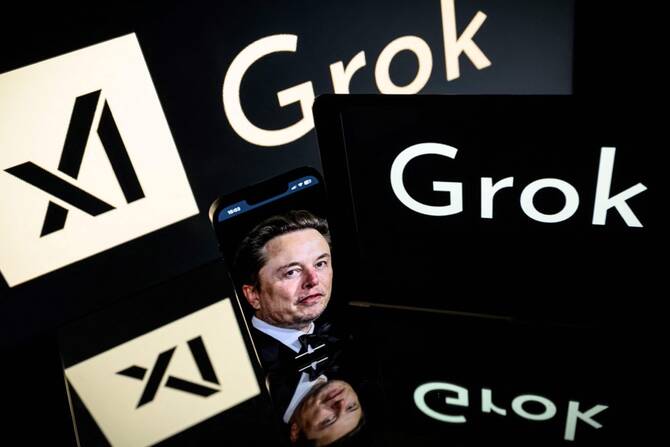
Elon Musk says xAI startup buying X platform
https://arab.news/7n86t
Elon Musk says xAI startup buying X platform
Iran war unsettles India’s packaged water makers as bottles, caps get pricey
- Higher polymer prices hurt bottled water industry
- Industry worth $5 billion has big multinational players like Pepsi, Coca-Cola
NEW DELHI: The Iran war is rattling India’s $5 billion packaged water market just ahead of the sweltering summer season.
One of the world’s fastest growing bottled water markets is seeing some manufacturers hike prices for distributors, as supply disruptions linked to the war fuel higher costs in everything from plastic bottles to caps, labels and cardboard boxes.
Though retail prices are yet to feel the heat and bigger companies are absorbing the pain, about 2,000 smaller bottled water makers have increased rates for their resellers by around 1 rupee per bottle, a 5 percent hike, which will rise by a further 10 percent in coming days, according to the Federation of All India Packaged Drinking Water Manufacturers’ Association.
Consumers usually pay less than 20 rupees, or around 20 US cents, for a one-liter bottle.
“There is chaos and within the next 4-5 days, this will start impacting customer prices,” said Apurva Doshi, the federation’s secretary general.
Rising oil prices have increased the cost of polymer, which is made from crude oil and is a key material for the industry’s plastic bottles. The cost of material used in making plastic bottles has risen by 50 percent to 170 rupees per kilogram, while the price of the caps has more than doubled to 0.45 rupees apiece. Even corrugated boxes, labels and adhesive tape are costing much more, industry letters showed.
Clean water is a privilege in the country of 1.4 billion people where researchers say 70 percent of the groundwater is contaminated, leaving people reliant on bottled water. Companies including Bisleri, Coca-Cola’s Kinley, Pepsi’s Aquafina, billionaire Mukesh Ambani’s Reliance and Tata all compete for a share of the $5 billion market. The companies did not respond to Reuters request for comment.
PREMIUM WATER FACES HEAT TOO
Within the broad bottled water market, natural mineral water is a $400 million business in India and a new, fast-growing wellness product for India’s wealthy.
The premium water segment accounted for 8 percent of the bottled water market last year in India, compared to just 1 percent in 2021, Euromonitor says.
Aava, which sells mineral water sourced from the foothills of the Aravalli mountains, has increased prices of its water bottles by 18 percent for resellers, Shiroy Mehta, CEO of the company, told Reuters.
“Most manufacturers are absorbing 40-50 percent of the cost to ensure that they don’t lose clients. It’s a poor situation for the beverage industry ahead of the summer season,” he said.
The mass market, however, is dominated by companies that produce “drinking water” to be sold in 1-liter bottles to customers. Clear Premium Water, a brand of India’s Energy Beverages, said in a notice to its distributors there had been an “unprecedented and continuous surge” in prices of key raw materials used in packaging and production.
“It is no longer possible for us to absorb the escalating costs while maintaining existing product prices,” the notice said.