MOGADISHU: Somalia’s Al-Shabab militia shows signs of resurgence after making gains in strategic regions and coming close to assassinating the president with a roadside bomb last week.
The extremist group was on the defensive in 2022 and 2023 after a concerted military push by the government and its international partners.
However, analysts say those gains are being reversed at a time when support from the US and African Union is looking increasingly shaky.
The group has seized key locations in Middle and Lower Shabelle, coastal regions on either side of the capital Mogadishu.
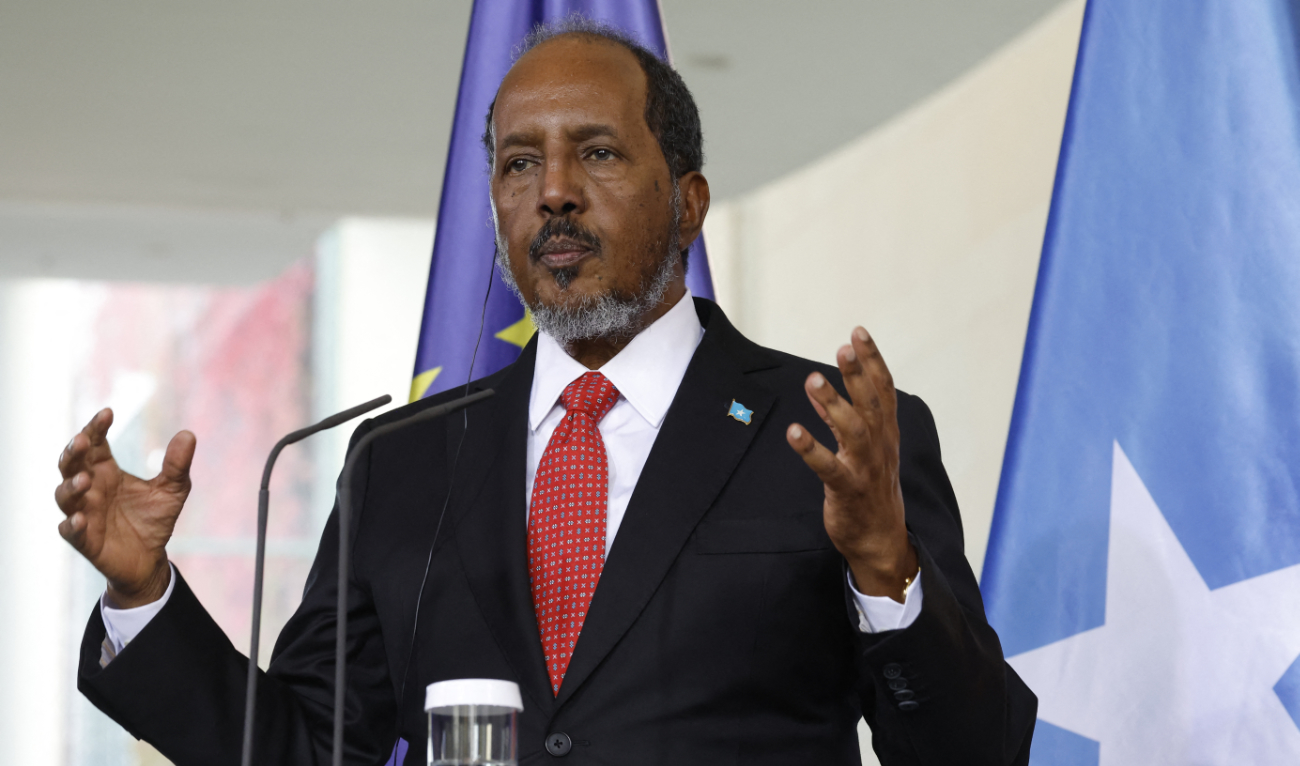
And a bomb blast that narrowly missed the convoy of President Hassan Sheikh Mohamud on March 18 showed that Al-Shabab again poses a significant risk in the capital itself.
On Wednesday, Somali officials said the group had taken control of the center of a key town in Middle Shabelle, Masaajid Cali Gaduud.
That came just a day after the president traveled to the region in a high-profile bid to push back the militants.
“There were explosions and heavy gunfire this morning,” Abdulkadi Hassan, resident of a nearby village, said by phone.
“The Somali government forces and local community militias have retreated from the town, and Al-Shabab are now in control.”
Analyst Matt Bryden, co-founder of research group Sahan and an expert on the conflict, said this was typical of recent clashes.
He said the government had lost strategic chokepoints, including three of four bridges in Lower Shabelle.
“We see the evidence of an army in disarray and in retreat,” said Bryden.
He said the government was enlisting clan militias, police and prison guards — “throwing everything it has into the war effort.”
“People in Mogadishu also are beginning to fear the government is not capable of securing the city and that there’s a chance of Al-Shabab fully encircling or possibly even at one stage overrunning the city,” said Bryden.
The president has remained defiant, establishing a temporary headquarters in Cadale, about 220 km north of Mogadishu.
“The war will not stop; we are not coming back from where we are now, and we will attain the victory we seek,” Mohamud told troops gathered at nearby Adale earlier this week.
However, the government faces the threat of reduced international support.
African Union-led forces began supporting the Somali government in 2007, eventually becoming the largest multilateral peacekeeping force in the world, with more than 20,000 troops at its peak.
Although renewed under a new name, the AU Support and Stabilization Mission in Somalia, or AUSSOM, in January, Washington has yet to confirm its crucial financial contribution.
“Security assistance for the government is being cut, particularly the American assistance, but probably European contributions will shrink as well,” said Bryden.
“The combination of these factors raises the possibility that from July, but possibly even sooner, the balance of forces will shift increasingly toward Al-Shabab,” he said.
Other analysts say Al-Shabab is still far from threatening the capital, and its advances come from the government taking its eye off the ball.
“The government’s been more focused on politics, on other issues,” said Omar Mahmood of International Crisis Group.
He said Al-Shabab had been exploiting local clan grievances in Middle Shabelle and a broader uncertainty around the president’s struggles to introduce direct elections.
“The country is not united right now ... and part of this has to do with politics around the constitution and electoral plans that the government is trying to institute,” said Mahmood.
Al-Shabab “probably saw this as an opportune time to strike ... But this is a long-standing war. I see it as closer to a stalemate than anything else.
“I don’t see this narrative where there’s this march toward Mogadishu right now,” he said.