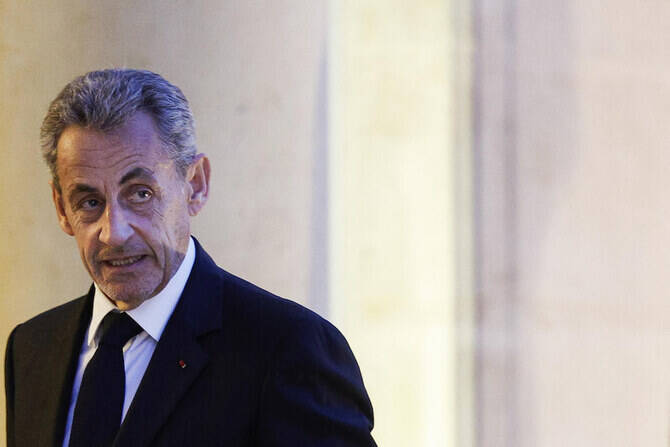
PARIS: French prosecutors on Thursday requested a seven-year prison sentence and a 300,000-euro (around $325,000) fine for former President Nicolas Sarkozy, in connection with allegations that his 2007 presidential campaign was illegally financed by former Libyan leader Moammar Gadhafi’s government.
The National Financial Prosecutor’s Office, known by its French acronym PNF, also called for a five-year ban on Sarkozy’s civic, civil and family rights — a measure that would bar him from holding elected office or serving in any public judicial role.
The case, which opened in January and is expected to conclude on April 10, is considered the most serious of the multiple legal scandals that have clouded Sarkozy’s post-presidency.
The 70-year-old Sarkozy, who led France from 2007 to 2012, faces charges of passive corruption, illegal campaign financing, concealment of embezzlement of public funds and criminal association. He has denied any wrongdoing.
The accusations trace back to 2011, when a Libyan news agency and Gadhafi himself said that the Libyan state had secretly funneled millions of euros into Sarkozy’s 2007 campaign.
In 2012, the French investigative outlet Mediapart published what it said was a Libyan intelligence memo referencing a 50 million-euro funding agreement. Sarkozy denounced the document as a forgery and sued for defamation.
French magistrates later said that the memo appeared to be authentic, though no conclusive evidence of a completed transaction has been presented.
Investigators also looked into a series of trips by Sarkozy’s associates to Libya between 2005 and 2007.
In 2016, Franco-Lebanese businessman Ziad Takieddine told Mediapart that he had delivered suitcases filled with cash from Tripoli to the French Interior Ministry under Sarkozy. He later retracted his statement. That reversal is now the focus of a separate investigation into possible witness tampering.
Sarkozy and his wife, Carla Bruni-Sarkozy, have both been placed under preliminary investigation in that case.
Sarkozy’s former ministers Claude Guéant, Brice Hortefeux, and Éric Woerth are also on trial, along with eight other defendants. But prosecutors have made clear the central figure is the former president himself — accused of knowingly benefiting from a “corruption pact” with a foreign dictatorship while campaigning to lead the French republic.
While Sarkozy has already been convicted in two other criminal cases, the Libya affair is widely seen as the most politically explosive — and the one most likely to shape his legacy.
In December 2024, France’s highest court upheld his conviction for corruption and influence peddling, sentencing him to one year of house arrest with an electronic bracelet. That case stemmed from tapped phone calls uncovered during the Libya investigation. In a separate ruling in February 2024, a Paris appeals court found him guilty of illegal campaign financing in his failed 2012 reelection bid.
Sarkozy has dismissed the Libya allegations as politically motivated and rooted in forged evidence. But if convicted, he would become the first former French president found guilty of accepting illegal foreign funds to win office.
A verdict is expected later this year.


![]()

French prosecutors seek 7-year sentence for Sarkozy in Libya campaign financing trial
Short Url
https://arab.news/caksu
French prosecutors seek 7-year sentence for Sarkozy in Libya campaign financing trial
- The National Financial Prosecutor’s Office also called for a five-year ban on Sarkozy’s civic, civil and family rights
- The accusations trace back to 2011, when a Libyan news agency and Gadhafi himself said that the Libyan state had secretly funneled millions of euros into Sarkozy’s 2007 campaign


Latest updates


© 2026 SAUDI RESEARCH & PUBLISHING COMPANY, All Rights Reserved And subject to Terms of Use Agreement.