

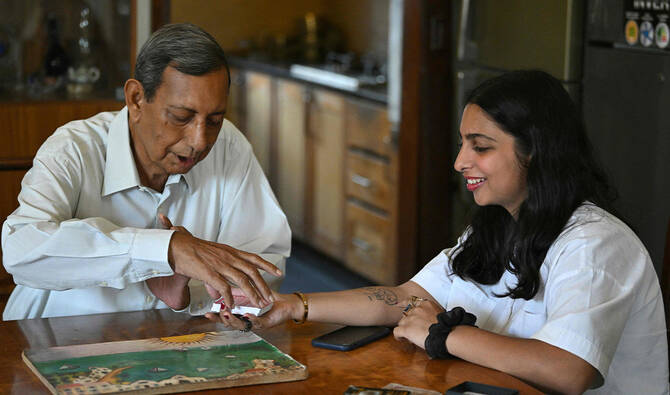

KARACHI: From a gated community for her Zoroastrian faith in Pakistan’s megacity Karachi, 22-year-old Elisha Amra has waved goodbye to many friends migrating abroad as the ancient Parsi community dwindles.
Soon the film student hopes to join them — becoming one more loss to Pakistan’s aging Zoroastrian Parsi people, a community who trace their roots back to Persian refugees from today’s Iran more than a millennium ago.
“My plan is to go abroad,” Amra said, saying she wants to study for a master’s degree in a country without the restrictions of a conservative Muslim-majority society.
“I want to be able to freely express myself,” she added.
Zoroastrianism, founded by the prophet Zarathustra, was the predominant religion of the ancient Persian empire, until the rise of Islam with the Arab conquests of the seventh century.
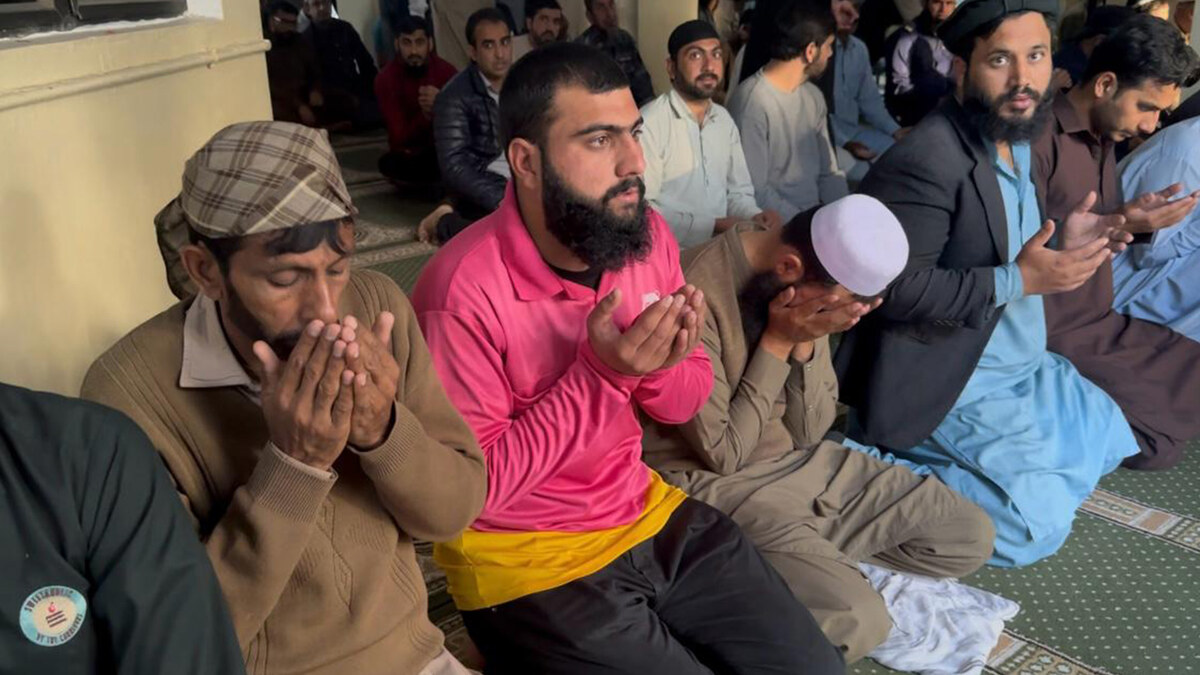
Dinshaw Behram Avari shows the portraits of his late father Behram Avari (C) along with deceased grandparents Dinshaw Avari (L) and Khorshed Avari (R), at the Beach Luxury Hotel in Karachi, Pakistan on February 28, 2025
Once the Parsi community in Pakistan had as many as 15,000-20,000 people, said Dinshaw Behram Avari, the head of one of the most prominent Parsi families.
Today, numbers hover around 900 people in Karachi and a few dozen more elsewhere in Pakistan, according to community leaders, many staying together in compounds like where Amra lives.
She acknowledges her life is more comfortable than many in Pakistan — the Parsis are in general an affluent and highly educated community.
But says she wants to escape the daily challenges that beset the city of some 20 million people — ranging from power cuts, water shortages and patchy Internet to violent street crime.
“I’d rather have a life where I feel safe, and I feel happy and satisfied,” she said.
Zubin Patel, 27, a Parsi working in e-commerce in Karachi, has seen more than two dozen Parsi friends leave Karachi for abroad in the past three years.
“More than 20-25 of my friends were living in Karachi, they all started migrating,” he said.
That is not unique to Parsis — many young and skilled Pakistanis want to find jobs abroad to escape a country wracked with political uncertainty and security challenges, a struggling economy and woeful infrastructure.
The number of highly skilled Pakistanis who left for jobs abroad more than doubled according to the latest figures from the Pakistan Economic Survey — from 20,865 in 2022, to 45,687 in 2023.
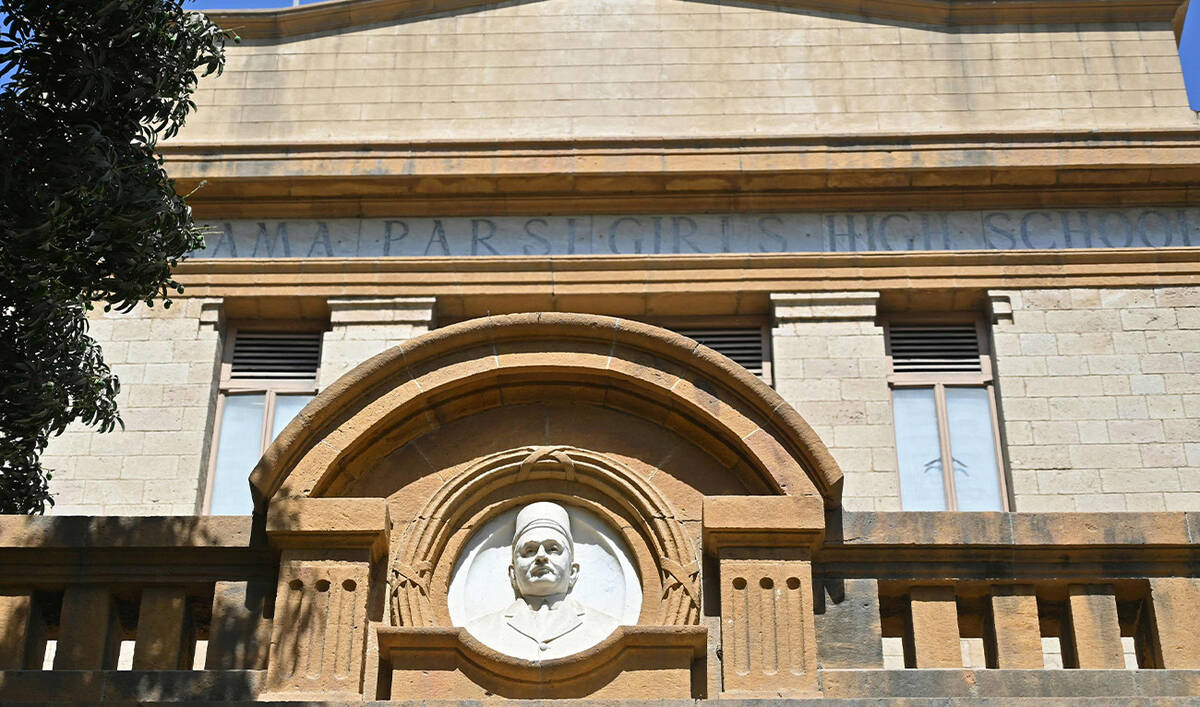
The front elevation of the Mama Parsi Girls High School, which has the bust of Ardeshir Hormushji Mama, its Zoroastrian founder, engraved on its facade in Karachi, Pakistan on March 17, 2025 (AFP)
Parsis are struggling to adjust in a fast-changing world.
The religion, considered among the oldest in the world, forbids conversion and mixed marriages are frowned upon.
“There is a better chance to find a Zoroastrian partner in Canada, Australia, UK and America than in Pakistan,” said Avari, who heads of a chain of hotels.
He points out that Parsi population of Toronto is some 10 times greater than Karachi.
Avari, 57, said that a wave of Parsis left Pakistan during the hard-line military rule of Zia-ul-Haq in the 1980s, who enforced a program of Islamization.
Since then, militant violence has targeted religious minorities, and while Parsis say they have not been targeted, they remain wary.
He suggested the community’s high levels of education and Western outlook to life meant many eyed a future abroad, while for those who do stay, family size is shrinking.
“Couples are more interested today in looking after their career; they are not interested in family,” he said.
“When they do get married, they will have one child — and one child is not enough to make a positive impact on the population.”
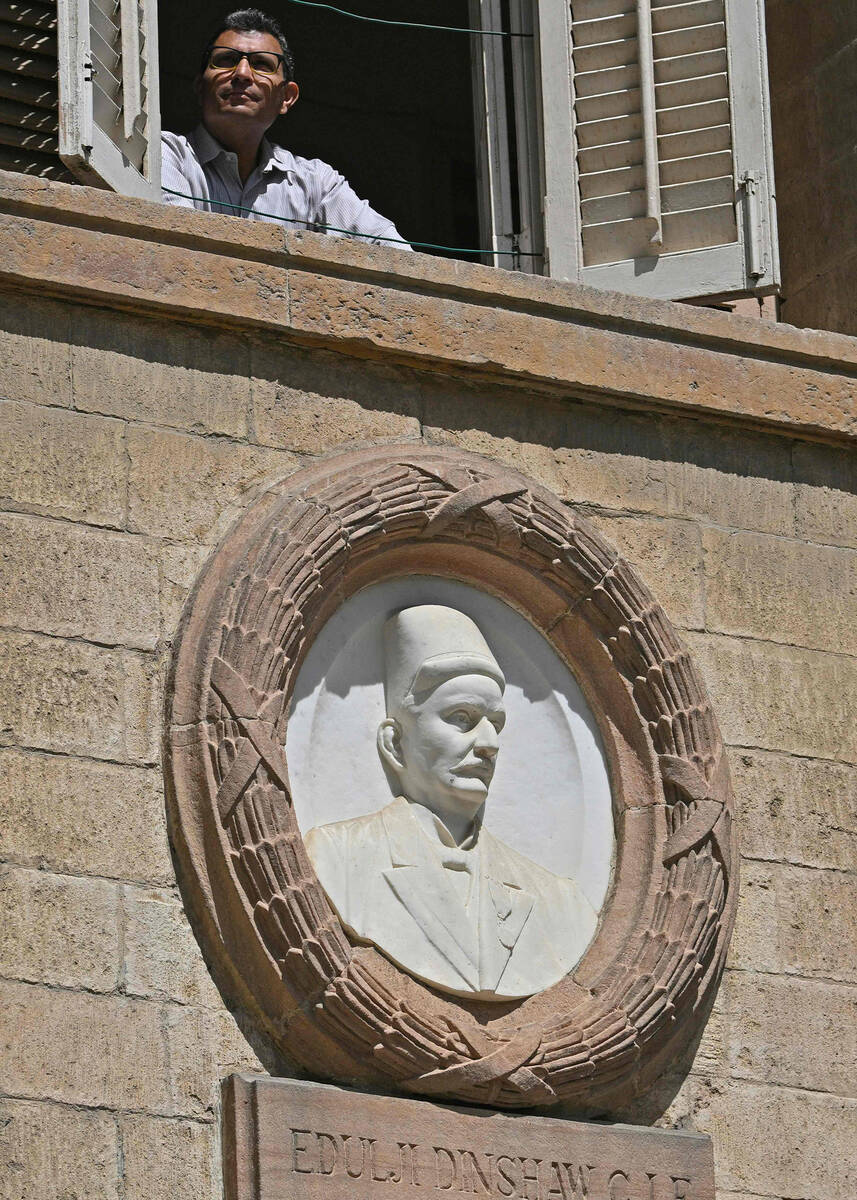
a man looks from a window above a bust of Edulji Dinshaw, one of the school's founders, carved on the exterior of the Mama Parsi Girls School's yellow limestone structure in Karachi, Pakistan on March 17, 2025. (AFP)
Parsi members were among the pioneers of the shipping and hospitality industries in Karachi, and the city’s colonial-era historic district is dotted with Parsi buildings including hospitals and schools.
But as the community declines, many buildings have crumbled, with as many as half the homes in elegant tree-lined streets of the century-old Sohrab Katrak Parsi Colony lying abandoned.
For many among the younger generation, the only pull left keeping them in Pakistan is their aging relatives.
Patel, the e-commerce worker, said he would leave if he could.
“It would be a difficult decision,” he said. “But if I have an opportunity which would give my parents ... a healthy lifestyle, then I’d obviously go for it.”
Amra, who visits her 76-year-old grandfather almost daily, worries that her parents will be alone when she leaves.
“You have to figure out a way, eventually, to either bring them to you or come back,” she said.


