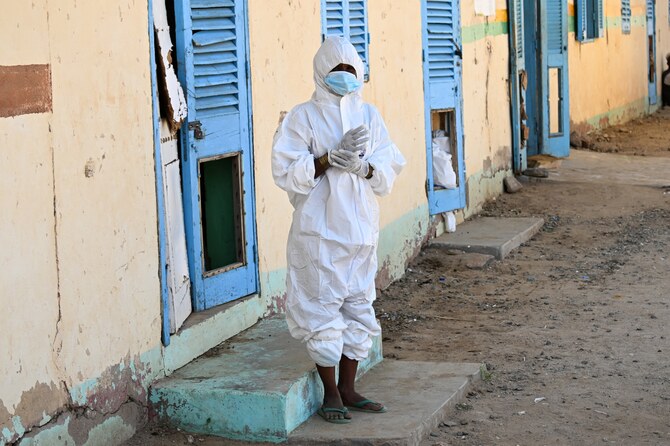
NAIROBI: South Sudan is enduring its worst cholera outbreak in two decades, the United Nations said Monday, with the country reporting almost 700 deaths in a six month period.
The deeply impoverished nation — despite its major oil deposits — has been plagued by insecurity since declaring independence in 2011.
Parts of the country have lately seen fresh waves of violence, with clashes between forces allied to President Salva Kiir and his long-time rival, First Vice President Riek Machar, displacing tens of thousands.
UNICEF said that 40,000 cholera cases were reported from the end of September to March 18, “including 694 deaths country-wide, its worst outbreak in 20 years.”
It said half the cases were children under 15.
South Sudan and Angola were facing the most severe of several outbreaks across eastern and southern Africa, the agency said.
Angola reported over 7,500 cases, including 294 deaths from 7 January 2025 to 18 March 2025, UNICEF said, warning there were “high risks for further escalation.”
Earlier this month the UN Office for the Coordination of Humanitarian Affairs (OCHA) in South Sudan said 50,000 people had been displaced since February as violence flared in northeastern Upper Nile State.
It said a cholera treatment unit in the Upper Nile State’s Nasir county had closed, with 23 humanitarian workers forced to leave.
The region has been the main focus of clashes that are threatening a fragile power-sharing agreement between Kiir and Machar.
South Sudan has seen a steady increase in cholera — an acute form of diarrhea that is treatable with antibiotics and hydration, but which can be deadly if untreated — over the past three years.
In 2022 the country marked its first resurgence in five years, following an outbreak between June 2016 and December 2017 that killed 436 people.
In December, medical charity Doctors Without Borders (MSF) warned South Sudan was seeing “alarming and rapid increase” in the disease.
It said 92 people had died following an outbreak in Unity state, and that it had treated over 1,210 people in just four weeks in Bentiu city.


![]()

South Sudan suffering worst cholera outbreak in 20 years: UNICEF
Short Url
https://arab.news/6hrb2
South Sudan suffering worst cholera outbreak in 20 years: UNICEF
- South Sudan reporting almost 700 deaths in a six month period


Latest updates




© 2026 SAUDI RESEARCH & PUBLISHING COMPANY, All Rights Reserved And subject to Terms of Use Agreement.