

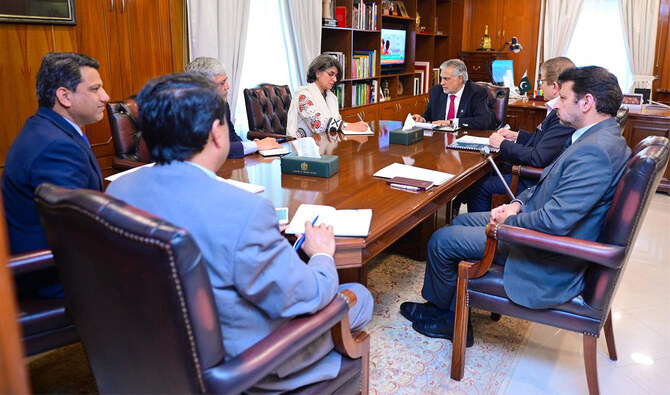

ISLAMABAD: Pakistan’s deputy prime minister and foreign minister, Ishaq Dar, has called for a “sustained dialogue” between Pakistan and Afghanistan to address a surge in militancy and other issues, the Pakistani foreign ministry said on Monday.
The call for the dialogue followed a recent three-day visit to Afghanistan by Pakistan’s special representative, Ambassador Muhammad Sadiq Khan, to discuss bilateral relations with authorities in Kabul.
Pakistan-Afghanistan relations have soured lately due to security, political and border issues, with Islamabad accusing the Taliban-led Afghan government of sheltering anti-Pakistan militants behind cross-border attacks. Kabul denies these claims.
Tensions escalated this month after a train hijacking by the Baloch Liberation Army (BLA) group in Pakistan’s Balochistan province, which killed over 60 passengers, security personnel and militants. Pakistan said BLA fighters remained in contact with their handlers in Afghanistan while holding the passengers hostage for a day.
“DPM [Dar] emphasized the importance of sustained dialogue with the interim Afghan government to address Pakistan’s concerns and promote bilateral relations,” the Pakistani foreign ministry said in a statement.
Ambassador Sadiq gave a detailed briefing to Dar regarding his engagements with Afghan authorities, including Acting Afghan Foreign Minister Amir Khan Muttaqi.
"During the meeting [with Muttaqi], both sides exchanged views on all issues of mutual concern, including peace and security, trade and economic cooperation, as well as people-to-people contacts," the Pakistani foreign ministry said.
"The Special Representative reaffirmed Pakistan’s commitment to continued engagement and mutually beneficial ties with Afghanistan, and underscored the importance of addressing all issues of concern, particularly security, to further consolidate bilateral ties... the two sides also reinforced the commitment to a mutually beneficial bilateral relationship, with a view to achieving lasting regional peace and stability."
Pakistan has been battling twin insurgencies — one mounted by religiously motivated groups like the Tehreek-e-Taliban Pakistan (TTP) in the country’s northwestern Khyber Pakhtunkhwa (KP) province and the other by ethnic Baloch separatists in Balochistan. Both provinces border Afghanistan.
Islamabad says the takeover of Kabul by the Afghan Taliban in 2021 has emboldened the TTP and other militant groups who have safe havens in Afghanistan. Afghan officials deny the allegation and insist that Pakistan’s security issues are an internal matter of Islamabad.
During his visit to Afghanistan, Ambassador Khan also met with Acting Afghan Commerce Minister Nooruddin Azizi and discussed with him bilateral trade and economic relations as well as cooperation in the areas of transit and connectivity.
"The two sides agreed to harness full potential of regional trade and connectivity for the mutual benefit of both countries," the Pakistani foreign ministry said.
"The DPM/FM expressed satisfaction at the discussions held with the Afghan side and issued directions to further consolidate bilateral ties, including through high-level engagement and enhancement of trade and transit cooperation."


