
LONDON: It might only be March, but we’ve already been treated to the TV highlight of 2025. And I write this fully aware that shows including “Andor,” “A Knight of the Seven Kingdoms,” “The Bear,” “The Last of Us,” “Stranger Things,” and many more are still to come. None, though, will be better than “Adolescence,” created by actor Stephen Graham and writer Jack Thorne and directed by Philip Barantini.
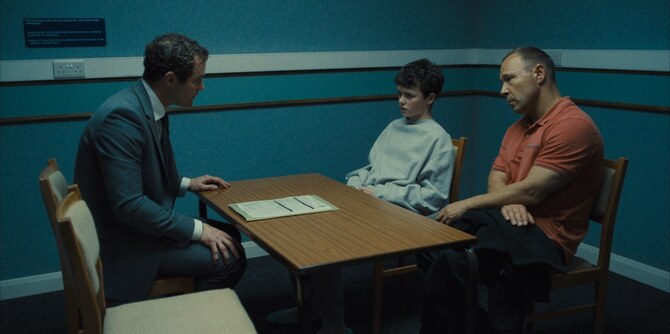
The four-part series tells the story of 13-year-old Jamie Miller, accused of the murder of a schoolmate. Each episode is shot in real time, in a single take, and follows a different aspect of the investigation and its fallout. Graham plays Jamie’s father Eddie, with Ashley Walters and Faye Marsay as investigating officers Bascombe and Frank, and Erin Doherty (recently seen opposite Graham in “A Thousand Blows”) as child psychologist Briony Ariston. Jamie is played by Owen Cooper, putting in a debut performance that is as astonishing as it is harrowing.
“Adolescence” is not a whodunnit — Jamie’s guilt is made plain early. Rather, it’s a whydunnit, which also explores the impact it has on his family and friends. Thorne and Graham don’t hold back, hurling viewers into a world that picks at ideas of toxic masculinity (it’s no surprise Andrew Tate gets a namedrop), bullying, parental pressure, and teenage attitudes to dating. It’s a heady mix of horrifying revelations — about modern teenage pressure, about Jamie’s mindset and temper, about the effect it has on his parents as they try to come to terms with the shocking things their beloved son has done.
Technically, “Adolescence” is a masterpiece. The balletic production processes that must have been involved are simply staggering, but they suck the audience in and refuse to let them go, demanding we share in every uncomfortable second. And the cast are even better. Cooper is terrifyingly convincing, and Graham is astonishing as a father trying to look with love at a son he no longer recognizes. But, across the board, the performances are staggeringly good.
“Adolescence” may be one of the most upsetting shows released this year — at times, it’s excruciating — but it is also a remarkable work of art.