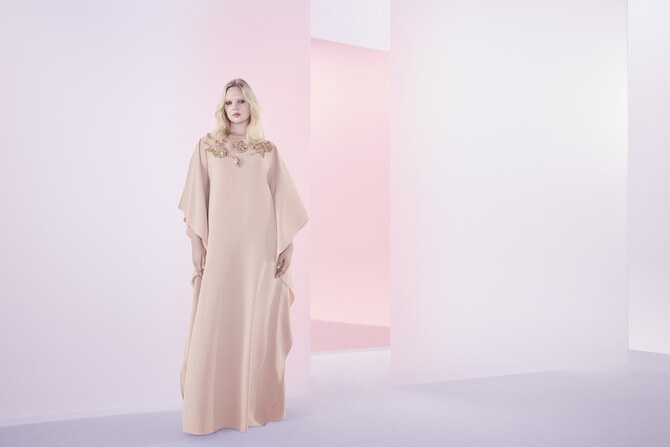
Zuhair Murad unveils Marina Rinaldi collection inspired by the Tang dynasty

Zuhair Murad designed the brand’s Spring/Summer 2025 capsule collection inspired by China’s Tang dynasty. (Supplied)
Short Url
Updated 18 March 2025
Follow

Zuhair Murad unveils Marina Rinaldi collection inspired by the Tang dynasty

DUBAI: Lebanese designer Zuhair Murad has unveiled his latest collaboration with Italian label Marina Rinaldi. Murad designed the brand’s Spring/Summer 2025 capsule collection inspired by China’s Tang dynasty. 

Drawing from the dynasty’s introduction of peony cultivation in imperial gardens, Murad infused the collection with images of the flower.

The collection focuses largely on eveningwear.
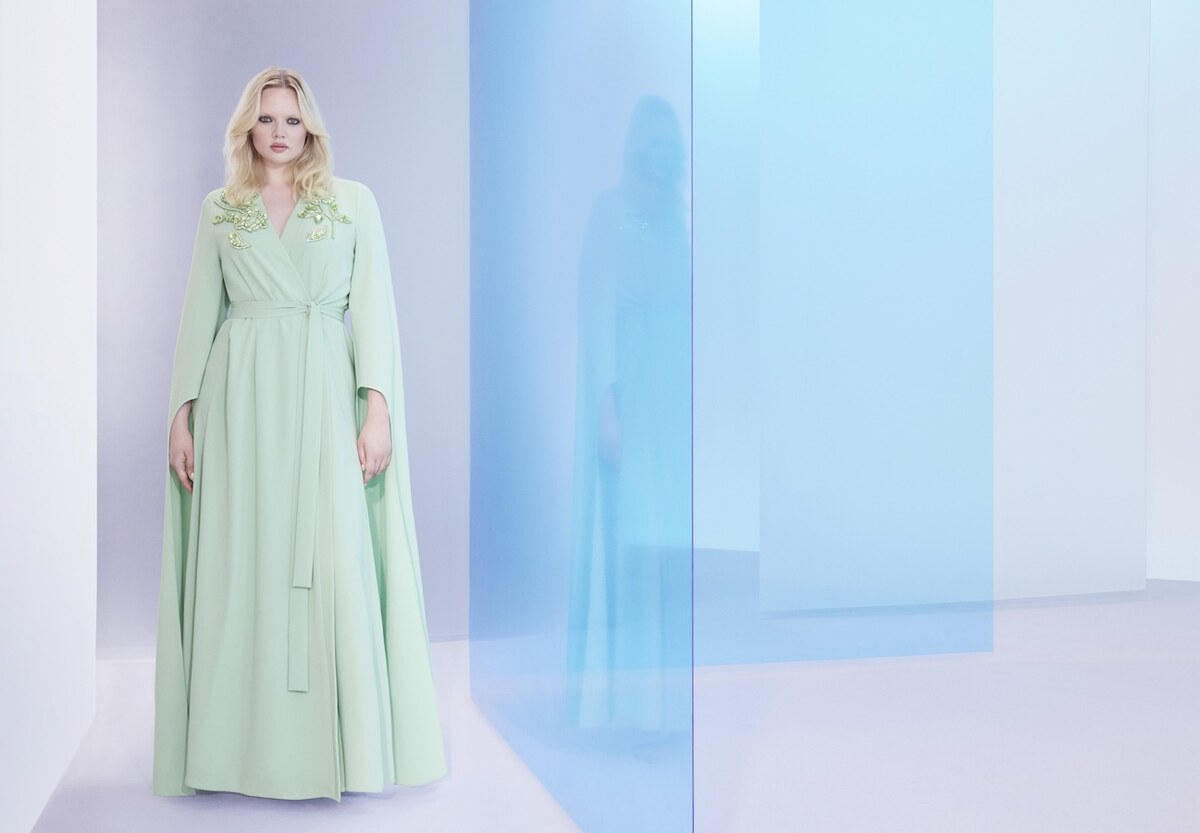


The collection focuses largely on eveningwear. (Supplied)

“Grand evening gowns go beyond the pure object, they are a way of investing in one’s personal history,” the designer said in a released statement. True to his signature style, the collection features hourglass silhouettes and intricate hand-embroidered details.

The collection’s color palette mirrors another element of Tang dynasty artistry — delicate chinaware. Soft shades of cream, sky blue, aquamarine green and pink infuse the flowing chiffon gowns, pleated bodices and long plisse skirts. 

“These looks wrap and enhance all women,” said Murad, highlighting the collection’s inclusive and flattering designs. The pieces are crafted from a mix of luxurious fabrics, including cady, pure silk georgette and shimmering sequins hand-sewn onto tulle to create a wave effect.
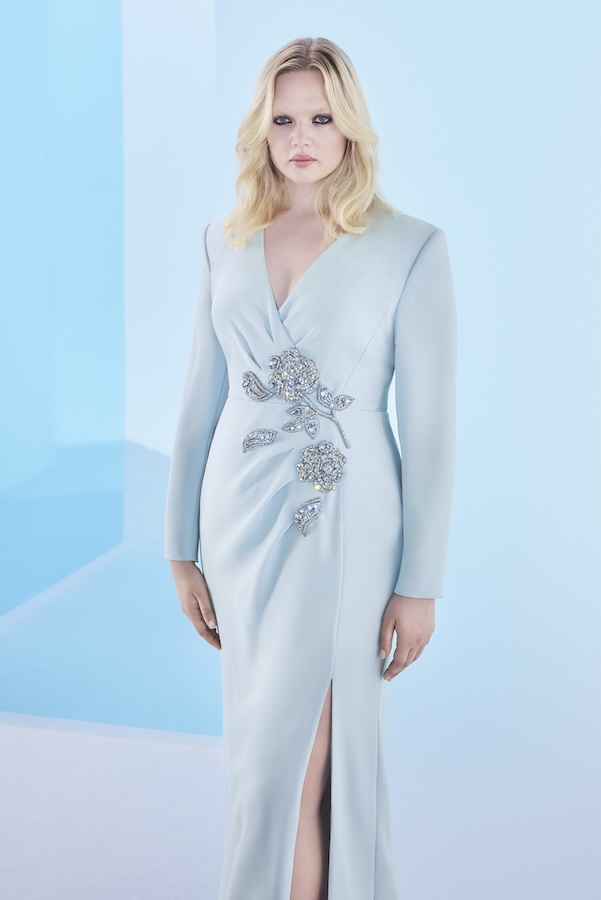


This is Murad’s second collection for Marina Rinaldi. (Supplied)

The silhouettes range from semi-fitted bodices that gently flare out to rich, flowing kaftans adorned with peony motifs. The collection also features long-sleeved gowns with deep V-necklines that emphasize the waist, along with sleek trouser suits for a modern touch.

The Tang dynasty ruled china from 618 to 907, with an interregnum between 690 and 705. The period was known for its flourishing arts and culture scene, with imperial ceremonies reviving the practice of hosting orchestras and companies of dancers. China in this period was also open to outside influences as as Arabian and Persian seamen did trade in the area.

This is Murad’s second collection for Marina Rinaldi that merges historical influences with contemporary fashion. 

The designer has been recognized for his detailed craftsmanship in haute couture and bridal fashion. Since founding his brand in 1997, he has gained international attention. His creations have been worn by celebrities such as Jennifer Lopez, Beyonce, Priyanka Chopra Jonas, Taylor Swift, Celine Dion, Sofia Vergara, Blake Lively, Kristen Stewart, and Scarlett Johansson on major red carpets. 

He is also one of a handful of Arab designers on the official Paris Fashion Week and Paris Haute Couture Week calendars.


Israa Allaf on her Saudi fashion brand The Untitled Project 

Updated 11 min 43 sec ago
Follow

Israa Allaf on her Saudi fashion brand The Untitled Project 

  • ‘It’s a fusion culture that really represents Saudi,’ creative director and founder tells Arab News 

DUBAI: In 2018, when Israa Allaf launched her Saudi fashion brand The Untitled Project, “it was really hard to find something that really represented individuality,” she tells Arab News. “I really wanted to create something unique — something that felt Westernized yet at the same time felt Arab, and that you could wear as a cover-up.” 

At the time, modest fashion often left little room for self-expression. “The abaya, for example, was always worn closed, and we wanted to showcase how you can incorporate it and style it within your own clothing and have something that’s really unique to you, that you really won't find anywhere else,” Allaf says. 

In a Saudi fashion scene that has become increasingly polished and trend-driven, The Untitled Project stands out for its flowing cover-ups, richly layered prints and experimental silhouettes.  

Allaf, who studied marketing, began by designing the pieces herself before stepping into the role of creative director and building a team around her.  

“That’s why you can also see with the designs that we have many different themes. We have different artists from all around the world creating something — it’s a bit more of a fusion culture that really represents Saudi, but shows a different type of craft,” she explains. 

That idea of fluidity is also built into the brand’s name. “I actually came up with the name before even (thinking about starting the company),” Allaf says, adding that she wanted to avoid the rigid associations that come with most labels. “Brand names really put you in a box… and we didn’t want that. A woman has layers. She’s not one thing.”  

That philosophy shapes who she designs for: two main types of women. One who leans into statement pieces, another who dresses according to the occasion. 

Though Allaf is now based in Riyadh, her company’s soul remains deeply tied to Jeddah, especially the city’s beach culture and relaxed aesthetic.  

“In Riyadh, they like to wear their abayas long. In Jeddah, they like to wear them short. They like their slippers. They like their ankle-length pieces, or even shorter pieces, and we really embody the Jeddah girl brand,” Allaf says. “We’d say we’re more colorful — having, like, seven-plus colors in one piece and making it still look beautiful on a woman.”  

Behind every item of The Untitled Project’s clothing — all of which are produced in Saudi Arabia — is a meticulous process that can stretch over months, sometimes focusing on just a single print or a single abaya, Allaf says. Her goal is always to ensure each design reaches its strongest possible version before it is ever released. 

The clothes are created using only silk, linen and cotton, chosen for their natural feel and their ability to showcase the brand’s intricate prints. 

Sustainability is also central to the brand’s identity, with organic materials and a strong focus on reusing fabric. Leftover textiles, embroidery and archived materials from previous collections are redesigned and reworked into new garments, allowing older pieces to take on a new life instead of being discarded. 

Small-batch production supports that approach. “Why make hundreds of a piece when we don’t know the demand? We’ll create a smaller batch and test it out on the market,” says Allaf, adding that doing so leaves “room for experimentation.”  

Even the brand’s packaging is designed with reuse in mind. After customers began repurposing the original boxes — often as makeshift homes for their cats — the brand leaned into the idea, redesigning the packaging to encourage customers to reuse it for storage and everyday needs rather than throwing it away. 

“We intentionally wrote on the backs that they can be cat-house boxes. We wanted the customers to also reuse,” Allaf says.  

One of The Untitled Project’s most meaningful designs is “Scene Leaving the Corniche.”  

“I love it so much. It just looks great on all skin tones. It has symmetry and it has asymmetry as well,” says Allaf. With butterflies, flowers and palm motifs, it captures the brand’s identity.  

“That is going to be the new brand staple print,” she says. “It represents the brand’s personality the best.” 

Through fabric, form and community projects, Allaf continues to push the idea that fashion can be thoughtful, expressive and adaptable — just like the women she designs for.