Washington: SpaceX founder Elon Musk said Saturday its massive Starship rocket would leave for Mars at the end of 2026 with Tesla humanoid robot Optimus onboard, adding that human landings could follow “as soon as 2029.”
“Starship departs for Mars at the end of next year, carrying Optimus. If those landings go well, then human landings may start as soon as 2029, although 2031 is more likely,” Musk said on his X social network.
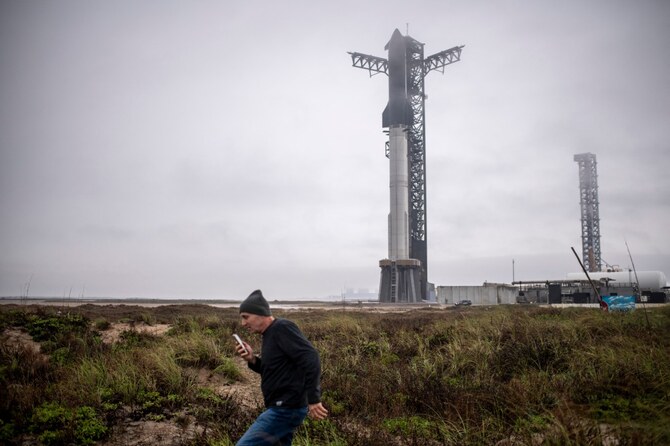
Starship — the world’s largest and most powerful rocket — is key to Musk’s long-term vision of colonizing Mars.
NASA is also awaiting a modified version of Starship as a lunar lander for its Artemis program, which aims to return astronauts to the Moon this decade.
But before SpaceX can carry out those missions, it must prove the vehicle is reliable, safe for crew, and capable of complex in-orbit refueling — critical for deep space missions.
SpaceX faced a setback this month when its latest test flight of the Starship prototype ended in a fiery explosion, even as the booster was successfully caught in its orbital test.
It was a near replay of the previous attempt.
Minutes after liftoff and booster separation, a live video feed showed the upper stage tumbling uncontrollably before the signal abruptly cut.
The Federal Aviation Administration (FAA) said SpaceX will be required to conduct an investigation before it can fly again.


![]()

Musk says Starship to depart for Mars at end of 2026
Short Url
https://arab.news/6hu9a
Musk says Starship to depart for Mars at end of 2026


Latest updates


© 2026 SAUDI RESEARCH & PUBLISHING COMPANY, All Rights Reserved And subject to Terms of Use Agreement.