JEDDAH: The Diriyah Biennale Foundation has unveiled Biennale Nights, a special Ramadan program at the Islamic Arts Biennale in Jeddah.
Held at the Western Hajj Terminal at King Abdulaziz International Airport, the event runs until May 25, offering visitors a cultural and spiritual experience that celebrates the holy month while showcasing Saudi Arabia’s rich Islamic heritage.

Under the warm glow of Ramadan nights, visitors at the Islamic Arts Biennale in Jeddah come together to celebrate faith, art, and tradition. (Supplied)
During Ramadan, visitors can take part in workshops featuring Arabic calligraphy and traditional craftsmanship, as well as interactive experiences exploring the artistic expressions associated with the holy month.
Sharing his experience, Ahmed Ramadan told Arab News: “This was my first time visiting the Islamic Arts Biennale, but I had planned to go for a while. When they announced the Ramadan events, I got even more excited. I feel that there is a strong connection between Ramadan activities and Islamic arts. I came with a group of friends, and we found many activities that suited young people.”
HIGHLIGHTS
• Guests can explore an array of international cuisines, indulge in specialty delicacies like dates, honey and chocolates, and enjoy traditional beverages such as Karak and Arabic coffee.
• The market also features henna art, storytelling sessions for children and game wagons, creating an engaging atmosphere for families.
He added: “We played some group games, enjoyed a variety of food, including traditional Saudi dishes and Ramadan sweets popular in the western region. Honestly, it was a wonderful experience.

The Islamic Arts Biennale serves as a global platform for dialogue and exploration of Islamic arts. (Supplied)
“The timing, in the middle of Ramadan, was ideal, after the initial days of the month, which are usually packed with family gatherings and invitations. It was a great opportunity for my friends and me to come together in such a unique place.”
Running from March 6-15, the Ramadan Market welcomes visitors daily from 8 p.m. to 2:00 a.m., offering a vibrant mix of activities and attractions.
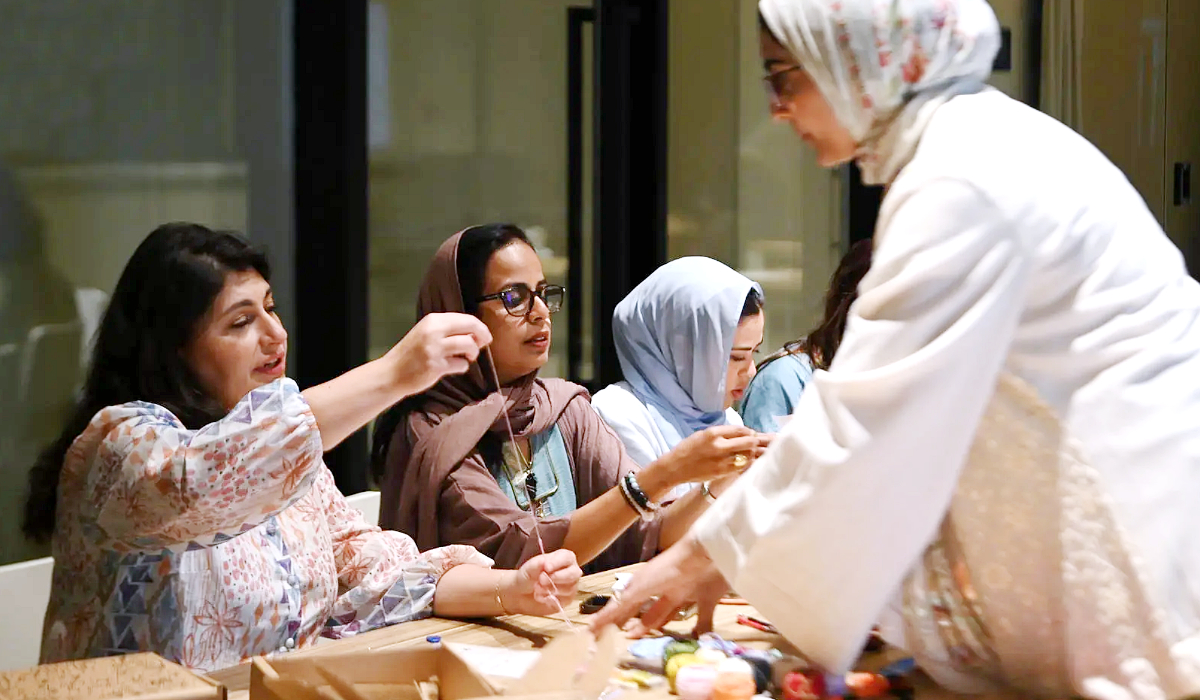
Under the warm glow of Ramadan nights, visitors at the Islamic Arts Biennale in Jeddah come together to celebrate faith, art, and tradition. (Supplied)
Guests can explore an array of international cuisines, indulge in specialty delicacies like dates, honey and chocolates, and enjoy traditional beverages such as Karak and Arabic coffee.
The market also features henna art, storytelling sessions for children and game wagons, creating an engaging atmosphere for families.

Under the warm glow of Ramadan nights, visitors at the Islamic Arts Biennale in Jeddah come together to celebrate faith, art, and tradition. (Supplied)
Adding to the festive spirit, live music and cultural performances take place, while visitors can find unique Ramadan-themed gifts at the Biennale Design Store.
For many, the Ramadan Market has been a memorable experience.
Walaa Ali, a visitor from Jeddah, said: “The venue offered a diverse range of activities specifically designed for the holy month of Ramadan. What made these activities special was how well they aligned with the spirit of the month, covering various disciplines and formats — some were workshops, others were entertainment spaces and some featured food.”
Rowa Haddad from Makkah said: “I found it to be the perfect place to visit with my family. The venue offers a variety of activities that cater to all family members, and what makes it even more special is the spiritual Islamic theme that fits both the location and the essence of this holy month. That’s why visiting this place was an excellent choice for us.”
In partnership with the Red Sea Film Foundation, the biennale also presents a curated selection of film screenings, delving into themes of resilience, faith and identity from across the Islamic world.
These experiences offer visitors a meaningful way to engage with art, culture and heritage, blending traditional Islamic aesthetics with contemporary artistic expression.
The Ramadan Market offers iftar and suhoor options, including curated iftar menus for pre-booked gatherings featuring dishes inspired by Saudi and Middle Eastern cuisines.
The Islamic Arts Biennale serves as a global platform for dialogue and exploration of Islamic arts. It is held at the Western Hajj Terminal in Jeddah, an award-winning architectural site that has long served as a gateway for pilgrims traveling to Makkah and Madinah.
The first biennale welcomed more than 600,000 visitors, and the second expands on this success with an even richer program.
The Ramadan events are open to all biennale visitors. Registration is available through the official website at biennale.org.sa.