

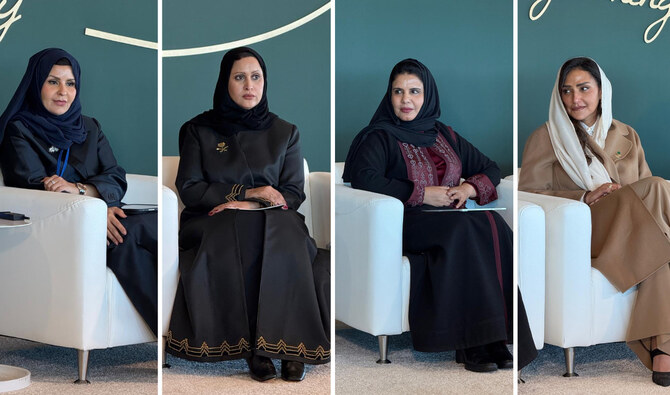

NEW YORK: The 69th session of the UN Commission on the Status of Women in New York provided a remarkable platform to highlight Saudi Arabia’s dramatic strides toward gender equality and women’s empowerment.
A high-level side event, titled “From Vision to Reality: Saudi Arabia’s Story of Women’s Empowerment,” captured the country’s transformative journey over the past decade, offering an inspiring account of progress, challenges, and aspirations.
The panel featured a diverse group of women leaders who have been at the forefront of the Kingdom’s reforms and initiatives in advancing women’s rights across various sectors.
These prominent figures shared insights from their personal experiences, reflected on the pivotal changes in the socio-political landscape, and celebrated the milestones achieved by Saudi women under Crown Prince Mohammed bin Salman Saudi Vision 2030, a national blueprint for future development.
One of the key voices in the conversation, Prof. Hanan Al-Ahmadi, assistant speaker of the Shoura Council, shed light on the legislative efforts and structural changes that have empowered women within the political sphere.
The council, Saudi Arabia’s legislative body, has played a pivotal role in shaping policies that directly impact women’s participation in public life.
Al-Ahmadi detailed how women have gained ground in the council, which now includes 30 female members, a 20 percent representation mandated by legislation. With this increased presence, the council has advanced over 200 resolutions focused on women’s empowerment, covering a wide array of areas from healthcare to employment.
This legislative change is part of a broader effort to empower women in leadership roles across all sectors. As Al-Ahmadi pointed out, Saudi Arabia now boasts female ambassadors, vice ministers, and high-ranking leaders across various governmental agencies — a testament to the country’s commitment to merit-based appointments where qualifications, rather than gender, are the foremost consideration.
“The number might not be as we wish. However, we focus on competency and qualification,” said Al-Ahmadi.
She added: “We don’t want women’s presence in leadership to be a mere symbolic presence. Women in leadership must have impact. So, I think that’s the focus in Saudi Arabia, and that’s why we have so many distinguished leaders . And the sky is the limit.”
Princess Lamia bint Majid, secretary general of Alwaleed Philanthropies, illustrated how philanthropy has played a crucial role in advancing women’s empowerment both within Saudi Arabia and across the globe.
The foundation, which operates in over 180 countries, has focused on initiatives aimed at empowering women through education, legal rights awareness, and economic opportunity.
Princess Lamia’s personal pride lies in the foundation’s Wa’iya project, which launched in 2013 to raise legal awareness among Saudi women about their rights. Through this initiative, over 12,000 women have been reached, with 2,200 female lawyers empowered to provide pro-bono legal services.
In addition, the foundation’s “Craftswomanship” project — Princess Lamia’s “own baby,” as she called it — has trained more than 3,500 women artisans, linking them to global markets and providing them with sustainable livelihoods.
“Those are ladies who are really preserving our culture, taking care of our history and tradition, and the funny thing is, they don’t understand the importance of the work they do on the community and on our vision and perspective,” said Princess Lamia.
“And when the Vision 2030 came, our visionary Prince Mohammed bin Salman, highlighted the importance of this culture and how this can be the most powerful soft power around the world. So we didn’t think twice, and we took this initiative.”
These projects reflect a broader movement within Saudi Arabia to embrace women’s contributions to culture and society, said Princess Lamia, a shift that has been supported by Vision 2030’s emphasis on economic diversification and inclusive growth.
Education has long been an area of strength for women in Saudi Arabia, and Prof. Einas Al-Eisa, president of Princess Noura bint Abdul Rahman University, the largest women’s university in the world, provided a compelling overview of how education has become a key driver for female empowerment.
Historically, Saudi women have outpaced men academically, with higher enrollment rates in schools and universities. However, despite these achievements, women faced significant barriers in transitioning from education to the workforce.
The arrival of Vision 2030 brought a dramatic shift in this regard, offering women greater opportunities in sectors traditionally dominated by men. As Al-Eisa explained, Vision 2030’s focus on women’s active participation in the workforce, alongside reforms such as childcare support and flexible working conditions, has made it possible for women to enter diverse industries like healthcare, ICT, and energy. Notably, women’s representation in Saudi Arabia’s ICT sector rose from a mere 7 percent to 35 percent, and the country is now home to women leading engineering schools and co-ed institutions.
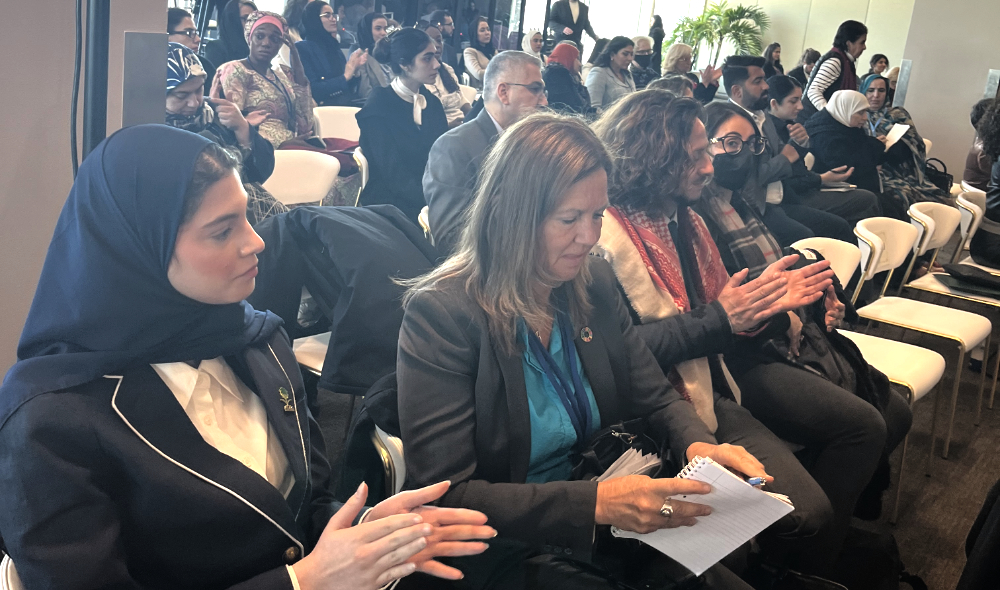
Dr. Maimoonah Al-Khalil, secretary general of the Family Affairs Council, reflected on the data-driven approach of Saudi Vision 2030, which is constantly evaluating progress in real time to ensure that women’s empowerment is moving forward at an accelerated pace.
With women’s labor force participation soaring from 17 percent to 36 percent since 2016, and the unemployment rate for women dropping from 34 percent to 13.6 percent, Saudi Arabia is surpassing its targets ahead of the 2030 deadline.
The percentage of women in leadership roles, particularly in STEM fields, has also seen significant growth, underscoring the depth of the societal transformation underway.
Al-Khalil highlighted that these reforms, which are deeply rooted in Saudi Arabia’s values and culture, have led to a thriving and diverse economy in which women are contributing not only in education and healthcare but also as entrepreneurs, freelancers, and leaders in new, high-tech industries.
Reflecting on the broader socio-cultural changes occurring in the Kingdom, Al-Eisa shared her personal journey as a woman in Saudi Arabia before the reforms. She spoke candidly about the struggles women faced in achieving their goals in the past, when efforts often felt like they were in vain.
However, with the introduction of Vision 2030, this sentiment has dramatically shifted. “The trust in women has yielded magnificent results,” she said, stressing that the key to success lies not just in hard work but in having the support and trust of the system and society at large.
The reforms implemented under Vision 2030 are not only seen as significant within the Kingdom, but are also making waves globally.
Saudi Arabia’s growing political and economic engagement, including the appointment of women as ambassadors and ministers, is creating a ripple effect that is inspiring other nations in the region and beyond to follow suit.
The Kingdom is at the forefront of a cultural and social revolution that is shaping the future of women in the country, the panelists concluded.
From education and healthcare to politics, business, and beyond, women are increasingly occupying spaces once thought to be out of reach. Yet, as Al-Khalil noted, the work is far from over.
“The sky is the limit,” she said, reflecting the ambitious spirit of Saudi Arabia’s ongoing journey toward equality, empowerment, and progress.
Panelists said that transformative strides made by Saudi women over the past decade serve as a powerful example of what can be achieved when political will, societal transformation, and a commitment to education and economic inclusion align.
With Vision 2030 continuing to guide the country’s future, Saudi Arabia’s story of women’s empowerment is far from finished — it is only just beginning.


