

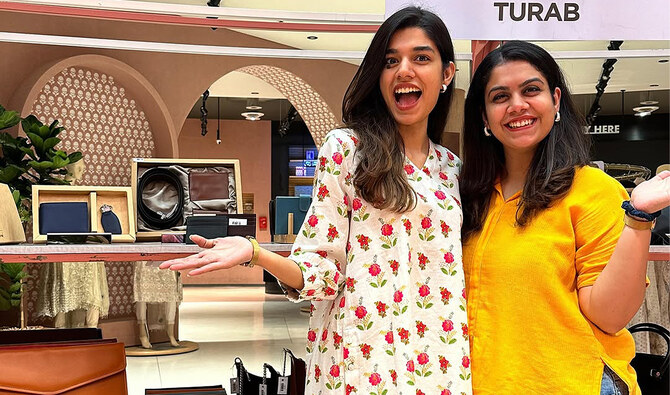

KARACHI: Turab Ali Ismail Ji Munniwala, a skilled craftsman, set up a small leather retail shop in Pakistan’s commercial capital of Karachi in 1975 and put his heart and soul into making leather bags of various shapes and sizes. His son, Aqeel Hussain, took over the business ten years later and focused it on corporate giveaways, but after the passing of Munniwala more than three decades later, it became difficult for Hussain to run the business alone.
In conservative Pakistan, people often expect a male heir like Hussain, now in his 60s, to carry forward the family’s business and legacy, but Hussain had no son and his daughters, Marium and Sakina, determined to honor their late grandfather’s 50-year legacy, took it upon themselves and amazed many by making Munniwala’s leather bag business an online success.
The sister duo, 32-year-old Marium and 25-year-old Sakina who both had full-time careers as a graphic designer and a corporate lawyer respectively, set out to take their grandfather’s business online in February 2022. Today, their venture, named ‘Turab’ after Munniwala, is breathing new life into a legacy that could have faded away without them.
“It wasn’t a planned thing initially, but it just sort of came into being that ‘okay, who’s going to help Abbu [our father]?’,” Sakina recalled how Turab came to life.
“When we basically started to grow up, it was always a thing that who is going to take this business forward because we don’t have a brother. Living in a desi [local] household, it’s always a thing that businesses are being led forward by sons in a family.”
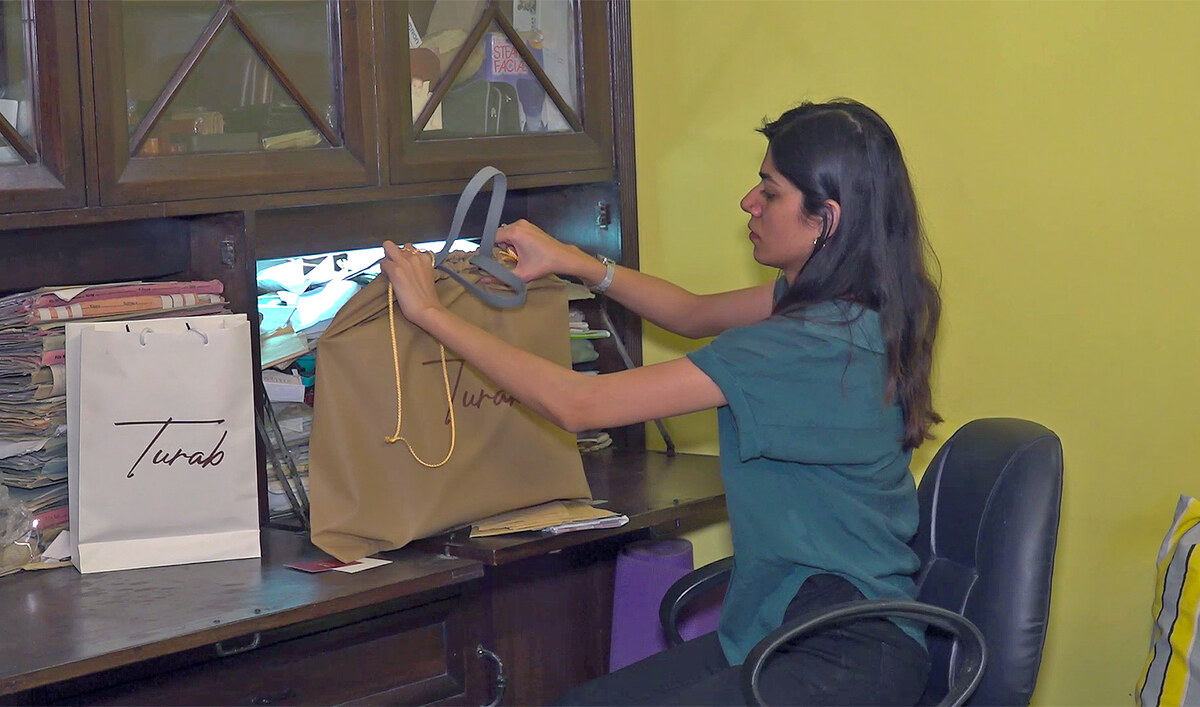
Sakina Hussain, co-funder of Turab, is holding a tote bag at her home in Karachi, Pakistan, on March 6, 2025. (AN photo)
Born and raised in Karachi, the sisters belong to the Dawoodi Bohra community. The family’s shop in Saddar still exists, with their grandfather’s working table still intact. Two of the workers, who started out with their father years ago, still work at the shop and mainly look after the production side of affairs with Hussain.
“People nowadays kill to buy pure leather products, but we don’t have the kind of market for pure leather products here. The players that we have in the market are really expensive for the masses to buy,” Sakina told Arab News.
“And that’s kind of where the idea of Turab came into being. We wanted to create something that’s not only good quality leather but also really affordable.”
Both Marium and Sakina have since been pushing their family legacy forward with a fresh, modern touch.
“As far as the designing is concerned, that’s where we come in. We decided to make the most modern and minimal products that you don’t find in the market,” Marium told Arab News.
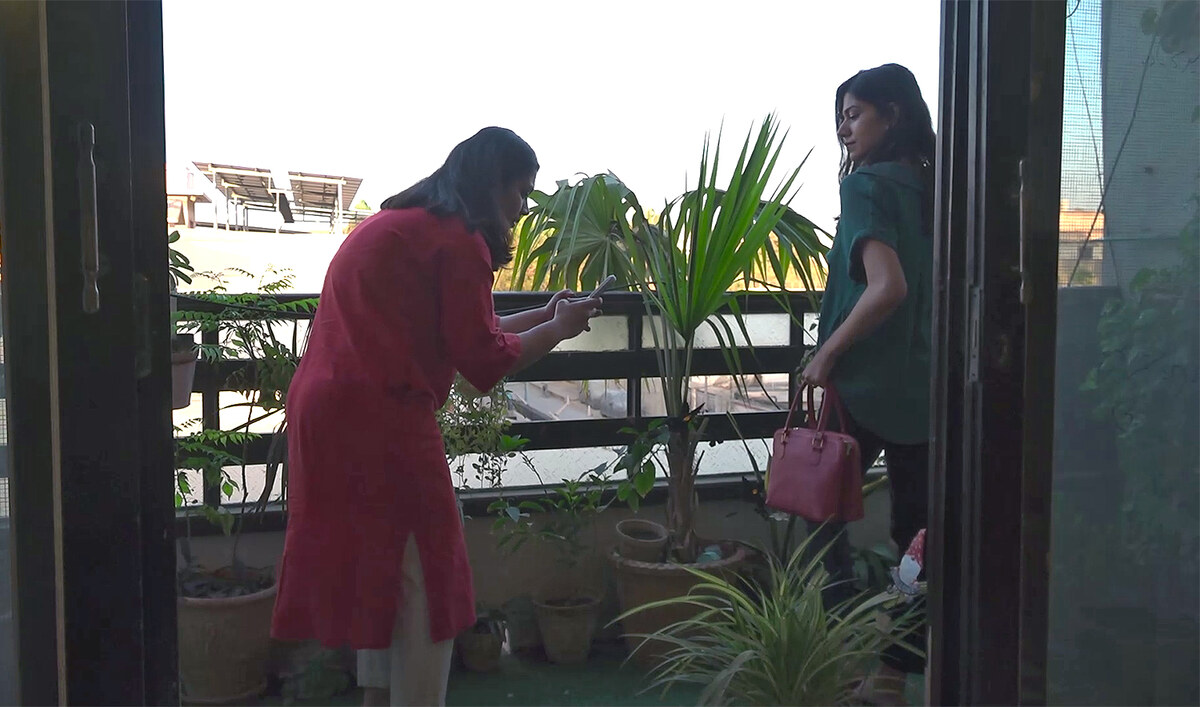
Marium Hussain (left) takes picture as Sakina Hussain poses for a picture with a Turab bag at their house in Karachi, Pakistan, on March 6, 2025. (AN photo)
Turab offers a range of leather products including tote bags, cross body bags, duffel bags, wallets, travel organizers and laptop sleeves in shades of red, green, orange, yellow and blue.
“Being two women, who like to carry good bags [and] funky colors, the inspiration comes from within. All the players in the market that we have for pure leather, they typically go around the shades of browns [and] blacks,” Sakina said.
“And while that’s a big classic, the youth of today really resonates with vibrant and funky colors and that’s something that we’ve tried to incorporate in our brand.”
As co-founders, the two sisters manage most domains of the online business themselves. The branding is taken care of by Marium.
She also does product photography herself, with Sakina modelling for it.
“It’s a home-based setup [and] that’s how it started. We started making all of our products at the shop and then we brought it home. We converted our dada’s [grandfather’s] room basically into the Turab room and that’s where we store all of our products,” Marium said.
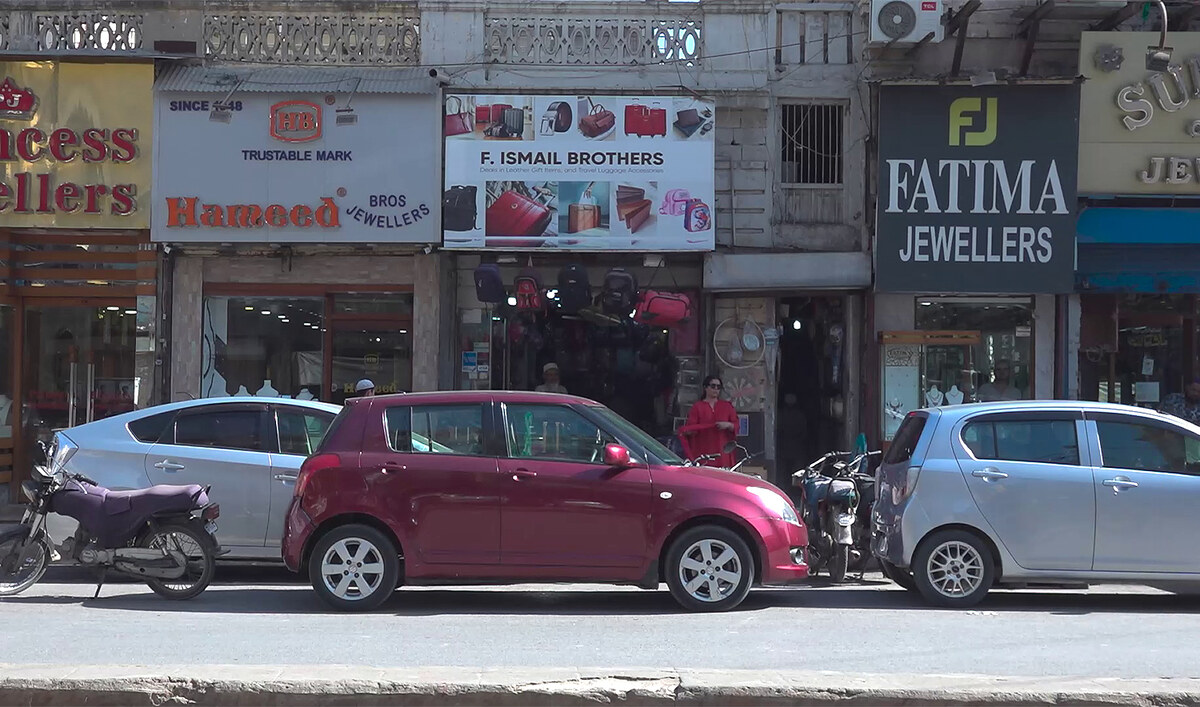
Marium Hussain, co-funder of Turab, stands outside her retail shop in Karachi, Pakistan, on March 6, 2025. (AN photo)
The sisters have been to pop-ups and exhibitions, which they say has really helped elevate their business.
But it has its challenges too.
“When people see two women behind the table, specifically men, they come and try to question the knowledge that we have about leather [and] about the product we are selling,” Sakina shared.
“They probably think that we don’t know enough or not more than them.”
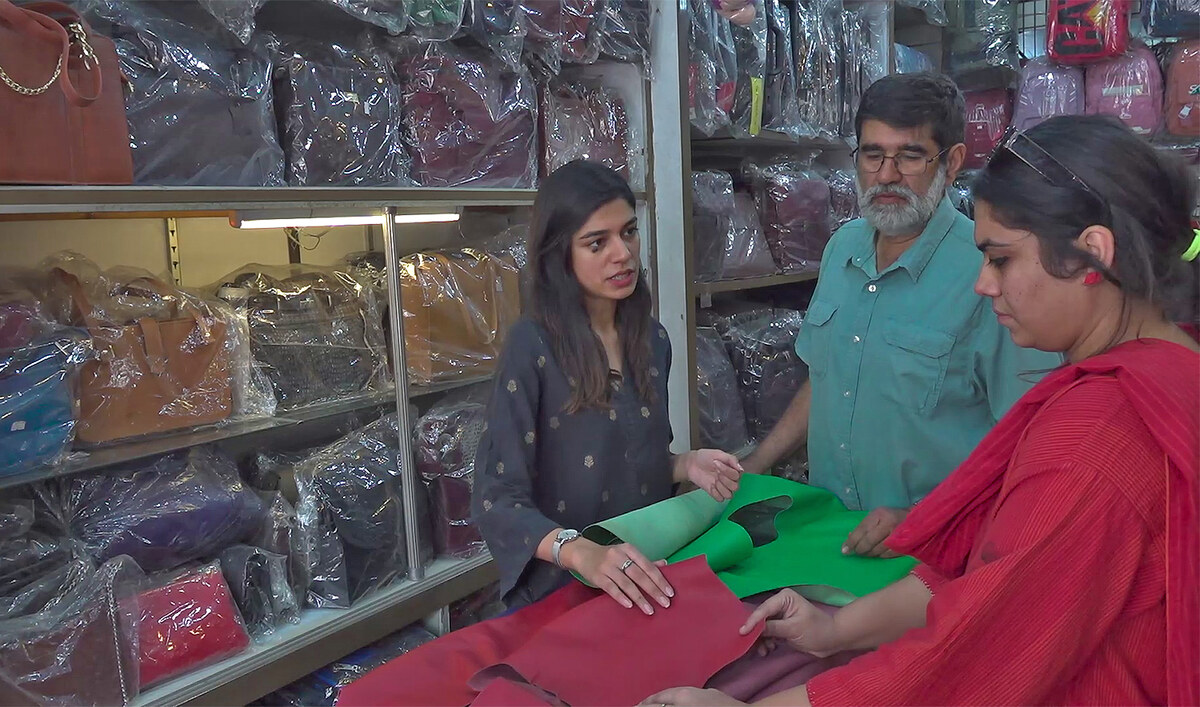
Marium Hussain (right), Sakina Hussain (left), and their father pick leather at their retail shop in Karachi, Pakistan, on March 6, 2025. (AN photo)
Marium, on the other hand, was initially not taken seriously by the artisans at her grandfather’s shop.
“I often go to [our shop in] Saddar to discuss the production side and the karigars [artisans] often don’t take me very seriously. They give me that look that, ‘we will talk to your dad. He knows, you don’t know’,” she said, adding that she hasn’t see any women anywhere near the leather goods production side at least.
However, her father vouched for the skill of both sisters to run the business.
“They catch everything very quickly,” he said. “The leather business is a bit technical. It took them about a year and a half [to learn], but now they can feel everything and tell you what is leather and what is not.”
The two sisters have carved a niche and the future looks promising as they plan to launch a physical outlet and make Turab a “household name” not just in Pakistan, but beyond.
“From packing orders every two days to one week, now packing every single day [and] multiple orders in a day, we have come a long way. And just going forward,” Marium said.
“We got a couple of orders from Dubai. Right now, I am talking to someone in Canada [and] the USA.”


