Kremlin: Zelensky’s letter to Trump on readiness to negotiate is positive

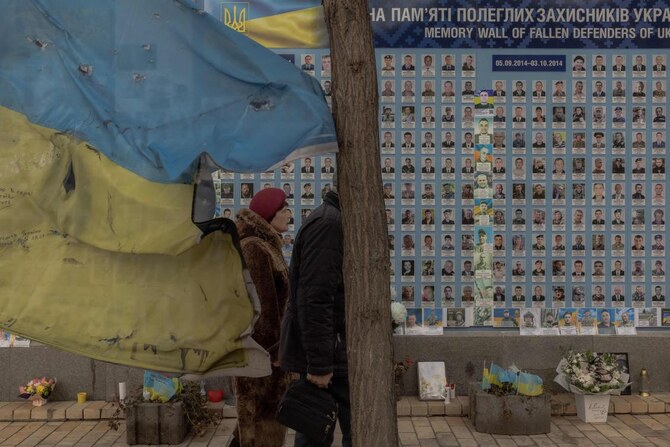
Above, residents visit the Wall of Remembrance of the Fallen for Ukraine memorial in downtown Kyiv on March 4, 2025. (AFP)
Short Url
Updated 05 March 2025
Follow

Kremlin: Zelensky’s letter to Trump on readiness to negotiate is positive

  • Kremlin spokesman Dmitry Peskov: ‘The question is who to sit down with. For now, the Ukrainian president is still legally prohibited from negotiating with the Russian side’

MOSCOW: Russia welcomes Ukrainian President Volodymyr Zelensky’s statement that Kyiv is willing to negotiate over the war, but it is not yet clear to Moscow who it might be negotiating with, the Kremlin said on Wednesday.
Zelensky made the statement in a letter to US President Donald Trump, which Trump made public on Tuesday.
“Ukraine is ready to come to the negotiating table as soon as possible to bring lasting peace closer. Nobody wants peace more than the Ukrainians,” Trump said in an address to Congress while quoting from the letter.
Asked how the Kremlin viewed this, spokesman Dmitry Peskov replied: “Positively.”
But he added: “The question is who to sit down with. For now, the Ukrainian president is still legally prohibited from negotiating with the Russian side. So, overall, the approach is positive, but the nuances have not changed yet.”
Peskov was referring to a Zelensky decree in 2022 that ruled out negotiations with President Vladimir Putin.


35 million Nigerians ‘risk hunger after global funding collapse’

Updated 23 January 2026
Follow

35 million Nigerians ‘risk hunger after global funding collapse’

  • The UN can only aim to ‌deliver $516 million to provide lifesaving aid to 2.5 million people this year, down from 3.6 million in 2025, which in turn was about half the previous year’s level

ABUJA: Nearly 35 million Nigerians are at risk of hunger this year, including 3 million children facing severe malnutrition, ​the UN said, following the collapse of global aid budgets.
Speaking at the launch of the 2026 humanitarian plan in Abuja, UN Resident and Humanitarian Coordinator Mohammed Malick Fall said the long-dominant, foreign-led aid model in Nigeria is no longer sustainable and ‌that Nigeria’s ‌needs have grown. 
Conditions in ‌the conflict-hit ​northeast ‌are dire, Fall said, with civilians in Borno, Adamawa, and Yobe states facing rising violence. 

BACKGROUND

UN Resident and Humanitarian Coordinator Mohammed Malick Fall said the foreign-led aid model in Nigeria is no longer sustainable and ‌that the country’s needs have grown.

A surge in terror attacks killed more than 4,000 people in the first eight months of 2025, matching the toll for all of 2023, he said.
The UN can only aim to ‌deliver $516 million to provide lifesaving aid to 2.5 million people this year, down from 3.6 million in 2025, which in turn was about half the previous year’s level.
“These are not statistics. These numbers represent lives, futures, and Nigerians,” Fall said.
He also said ​the UN had no choice but to focus on “the most lifesaving” interventions given the drop in available funding. 
Shortfalls last year led the World Food Programme to also warn that millions could go hungry in Nigeria as its resources ran out in December and it was forced to cut support for more than 300,000 children. 
Fall said Nigeria was showing growing national ownership of the crisis response in recent months through measures such as local funding for ‌lean-season food support and early-warning action on flooding.