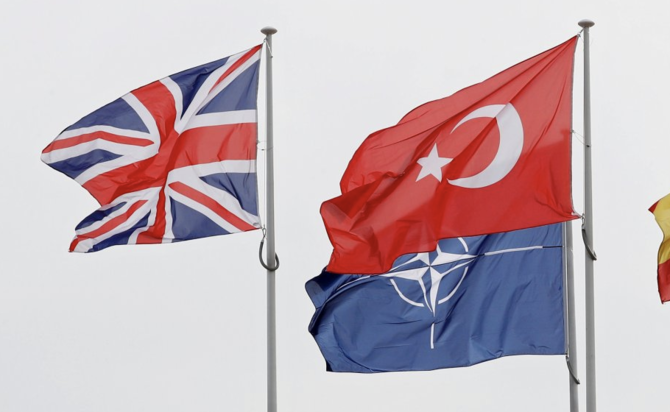
ANKARA: Turkish and British officials will discuss the Syrian Arab Republic’s future during a meeting in Ankara on Monday, with security, sanctions and economic development on the agenda, a Turkish foreign ministry source said on Sunday.
NATO-member Turkiye was a main backer of rebels who fought Bashar Assad for years and it has forged close ties with the new administration in Damascus following Assad’s ouster last year. It has promised to help rebuild Syria and offered assistance to train and equip its security forces.
Britain said last month it would adapt its Syria sanctions regimes after Assad’s fall, but will ensure asset freezes and travel bans imposed on members of the former government remain in place.
The Turkish source, who spoke on condition of anonymity, said Monday’s talks would be led by Turkish Deputy Foreign Minister Nuh Yilmaz and British junior Foreign Office Minister Hamish Falconer.
Yilmaz will emphasize the need for sanctions on Syria to be lifted unconditionally for rebuilding and economic development, the source said.
Yilmaz will also stress “the importance of the international community backing the Syrian administration’s steps toward achieving national reconciliation within a central government,” and push “to stop Israel’s actions openly violating and threatening Syria’s sovereignty,” the source added.
Reuters reported on Friday that Israel is lobbying the United States to keep Syria weak and decentralized, including by letting Russia keep its military bases there to counter Turkiye’s growing influence in Syria, according to sources familiar with the efforts.
Turkish Transport and Infrastructure Minister Abdulkadir Uraloglu said on Sunday Turkiye had completed an initial phase of repairs and maintenance, including installing new equipment, at Damascus airport as part of Ankara’s efforts to help rebuild the transport hub.


Turkish and British officials to discuss post-Assad Syria in Ankara talks
https://arab.news/8yqr3
Turkish and British officials to discuss post-Assad Syria in Ankara talks

- NATO-member Turkiye was a main backer of rebels who fought Bashar Assad for years
- Britain said last month it would adapt its Syria sanctions regimes after Assad’s fall


UN urges all sides to ‘see reason’ in Iran-US conflict
- “I deplore the military strikes across Iran this morning by Israel and the USA, and the subsequent retaliatory strikes by Iran,” Turk said
- “To avert these terrible consequences for civilians, I call for restraint and implore all parties to see reason, to de-escalate”
GENEVA: The United Nations’ rights chief deplored Saturday’s strikes in the Middle East and urged all parties to return to negotiations, saying attacks would only result in “death, destruction and human misery.”
“I deplore the military strikes across Iran this morning by Israel and the United States of America, and the subsequent retaliatory strikes by Iran,” Volker Turk said in a statement.
“As always, in any armed conflict, it is civilians who end up paying the ultimate price.
“Bombs and missiles are not the way to resolve differences but only result in death, destruction and human misery.
“To avert these terrible consequences for civilians, I call for restraint and implore all parties to see reason, to de-escalate, and for a return to the negotiating table where they had been actively seeking a solution only hours earlier,” he said.
“Failing to do so risks an even wider conflict, that will inevitably lead to further senseless civilian deaths and destruction on a potentially unimaginable scale, not just in Iran but across the Middle East region.”
On Thursday, US and Iranian negotiators held indirect talks in Geneva, through Omani mediators, on Tehran’s nuclear program — within sight of Turk’s offices in the Swiss city.
He reminded all parties that the protection of civilians was paramount in armed conflict, insisting that those who violated the rules of war must be held accountable.
Tedros Adhanom Ghebreyesus, head of the World Health Organization, said the agency was concerned by the “grave risk to people’s health” from the expanding conflict.
“The threat of nuclear facilities being impacted is especially worrying,” he said.
“All must be done to reduce any nuclear safety risk, which may affect people in the region,” he added.
“We urge leaders to choose the challenging path of dialogue over the senseless route of destruction.”


