Health experts advise Pakistanis against consuming deep-fried food in Ramadan

1 / 2
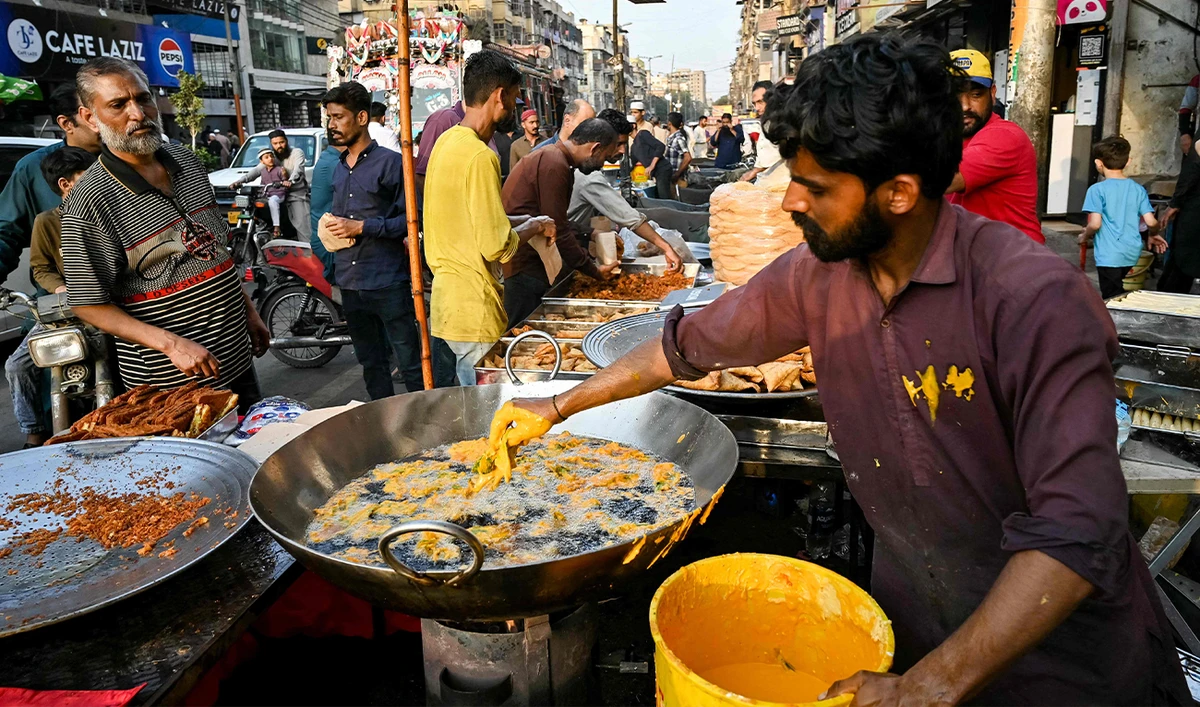
A man cooks fritters for iftar on the first day of the Islamic holy fasting month of Ramadan in Karachi, Pakistan, on March 2, 2025. (AFP)
2 / 2
A vendor prepares Khajla, a traditional desert at a shop ahead of the Islamic holy fasting month of Ramadan, in Karachi, Pakistan, on February 28, 2025. (AFP)
Short Url
Updated 02 March 2025
Follow

Health experts advise Pakistanis against consuming deep-fried food in Ramadan

  • Pakistan is a predominantly Muslim country where more than 90 percent of its over 240 million people practice Islam
  • The South Asian nation observed the first fast on Sunday, following Taraweeh prayers and pre-dawn suhoor meals

ISLAMABAD: Pakistani health experts have warned about the dangers of deep-fried food in Ramadan meals, Pakistani state media reported on Sunday, as the South Asian country welcomed the holy fasting month.
Fasting in Ramadan, the ninth and the holiest month in the Islamic calendar, is one of the five pillars of Islam and this is the time of the year when religious fervor is rekindled throughout the Muslim world.
Millions of Pakistanis offered special Taraweeh prayers last night and consumed pre-dawn suhoor meals across the nation, marking the beginning of the holy month of Ramadan from Sunday.
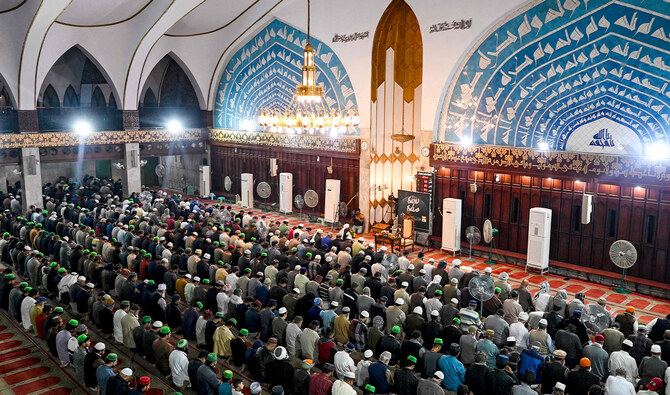


Muslims offer the first Tarawih prayers to mark the start of the Islamic holy fasting month of Ramadan at Data Darbar mosque in Lahore, Pakistan, on March 1, 2025. (AP)

As people observed the first fast, health experts urged them to avoid samosas, spring rolls, and fried doughnuts, and opt for healthier alternatives such as grilled meats, steamed vegetables and fresh fruit.
“Fried foods, oily snacks, and rich desserts are a recipe for disaster, especially during Ramadan and these foods can lead to digestive issues, bloating, and discomfort,” Dr. Talha Imad, a Pakistani nutritionist, was quoted as saying by the state-run APP news agency.
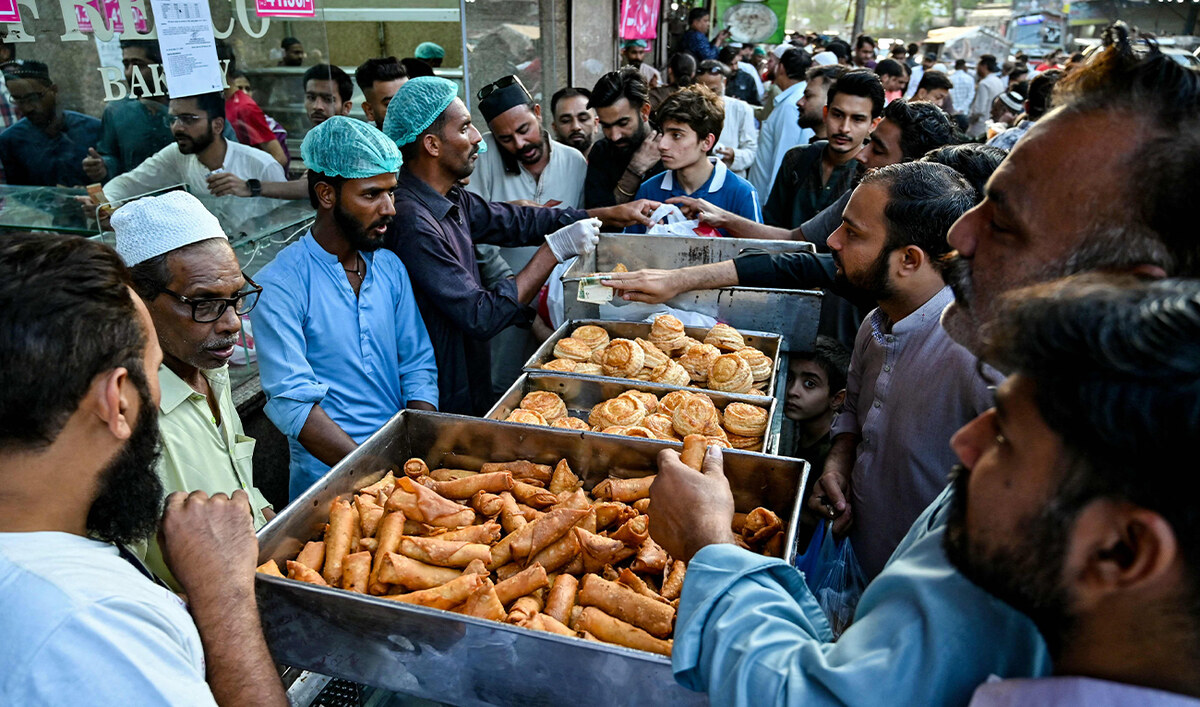


Muslims buy fritters for iftar on the first day of the Islamic holy fasting month of Ramadan in Karachi, Pakistan, on March 2, 2025. (AFP)

Pakistan is a predominantly Muslim country where more than 90 percent of its over 240 million people practice Islam, and most of them fast during the holy month.
Experts say deep-fried food is high in calories, fat and sodium, and it is risky to consume it while fasting during Ramadan.
“Fasting during Ramadan can be challenging, and consuming deep-fried foods can exacerbate dehydration, digestive issues, and other health problems,” Dr. Saima Khan said, adding that by making informed food choices, people can ensure a healthy and blessed Ramadan.
“Ramadan is a time for spiritual reflection and renewal, and taking care of our physical health is an important part of it.”
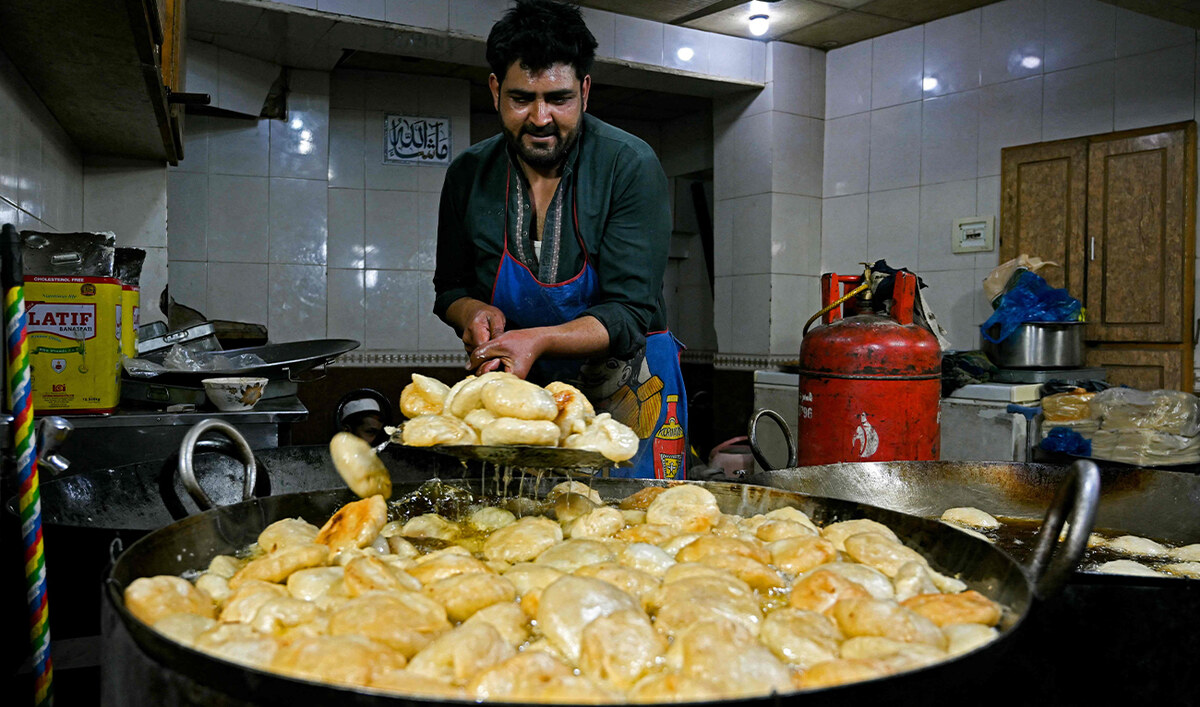


A shopkeeper cooks fritters for iftar on the first day of the Islamic holy fasting month of Ramadan in Rawalpindi, Pakistan, on March 2, 2025. (AFP)


Dr. Imad advised Pakistanis to break their fast with dates and water to replenish energy and hydration, and to opt for lean proteins, whole grains and steamed vegetables.
“Choose fresh fruits and nuts as healthy snacks,” he said, urging people to limit their intake of sugary drinks and desserts.

Pakistan, seven Muslim nations back Palestinian technocratic body, stress Gaza-West Bank unity

Updated 15 January 2026
Follow

Pakistan, seven Muslim nations back Palestinian technocratic body, stress Gaza-West Bank unity

  • The National Committee for the Administration of the Gaza Strip was announced on January 14
  • Muslim nations call for consolidation of the ceasefire and unimpeded humanitarian aid into Gaza

ISLAMABAD: Pakistan and seven other Muslim-majority countries on Thursday welcomed the formation of a temporary Palestinian technocratic body to administer Gaza, stressing that it must manage daily civilian affairs while preserving the institutional and territorial link between the Gaza Strip and the West Bank amid the ongoing peace efforts.

In a joint statement, the foreign ministers of Pakistan, Egypt, Jordan, Saudi Arabia, Qatar, Türkiye, Indonesia and the United Arab Emirates said the newly announced National Committee for the Administration of the Gaza Strip would play a central role during the second phase of a broader peace plan aimed at ending the war and paving the way for Palestinian self-governance.

“The Ministers emphasize the importance of the National Committee commencing its duties in managing the day-to-day affairs of the people of Gaza, while preserving the institutional and territorial link between the West Bank and the Gaza Strip, ensuring the unity of Gaza, and rejecting any attempts to divide it,” the statement said.

The committee, announced on Jan. 14, is a temporary transitional body established under United Nations Security Council Resolution 2803 and is to operate in coordination with the Palestinian Authority, the ministers said.

The statement said the move forms part of the second phase of US President Donald Trump’s Comprehensive Peace Plan for Gaza, which the ministers said they supported, praising Trump’s efforts to end the war, ensure the withdrawal of Israeli forces and prevent the annexation of the occupied West Bank.

The top leaders of all eight Muslim countries attended a meeting with Trump in New York last September, shortly before he unveiled the Gaza peace plan.

The ministers also called for the consolidation of the ceasefire, unimpeded humanitarian aid into Gaza, early recovery and reconstruction and the eventual return of the Palestinian Authority to administer the territory, leading to a just and sustainable peace based on UN resolutions and a two-state solution on pre-1967 lines with East Jerusalem as the Palestinian capital.